

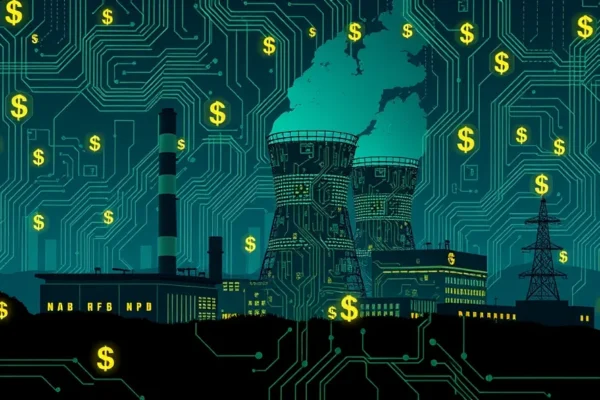
A New Era for the Iowa Nuclear Plant
In a significant shift for the energy sector, the US Department of Energy (DOE) recently moved to provide a conditional loan of approximately 1.5 billion dollars to restart the Duane Arnold nuclear plant in Iowa. This facility, previously shuttered in 2020 by owner NextEra Energy, is now at the center of a high-stakes strategy to power the next generation of artificial intelligence. While the official announcement highlights the role of government funding in reviving dormant clean energy assets, the move signals a deeper, symbiotic relationship between the tech sector and nuclear energy providers.
Strategic Rationale for the Nuclear Revival
The primary driver behind the push to bring the Iowa nuclear plant back online is the insatiable demand for power from AI technology. AI data centers operate around the clock and require massive amounts of constant, reliable electricity, often referred to as baseload power. Unlike solar or wind energy, which are intermittent, nuclear energy provides a steady stream of power that is essential for maintaining the uptime required by hyperscale cloud providers like Google.
For NextEra Energy, the deal represents an opportunity to revitalize an existing asset that already possesses the necessary grid interconnections and permits, which are notoriously difficult to obtain today. By utilizing the DOE loan program, they can lower their cost of capital, making the complex process of restarting a retired reactor financially viable. This move allows them to secure a long-term, credit-worthy customer, essentially de-risking the project before a single watt is generated.
Competitive Context and Market Positioning
The race to secure clean energy for AI is intensifying, with Google, Microsoft, and Amazon all competing for similar power sources. By exploring the restart of the Iowa nuclear plant, Google is signaling that it is no longer content to rely solely on the open market for power. Instead, the company is moving toward direct investment and long-term contracts with energy infrastructure providers.
This creates a clear divide in the industry. Companies that can secure dedicated clean energy sources will likely enjoy a competitive advantage, as they can bypass the rising costs and potential shortages on public power grids. Competitors who do not have similar arrangements may face higher operating costs or, worse, limits on their data center expansion due to energy scarcity. The winner in this race will be the company that can most effectively guarantee its power supply while meeting its own sustainability goals.
Industry Implications for Energy Infrastructure
The potential restart of the Duane Arnold plant is a bellwether for the broader energy industry. It signals that nuclear energy is undergoing a renaissance as a critical component of data center growth. The US Department of Energy has made clear through its funding programs that it views existing nuclear assets as an underutilized resource that can be scaled relatively quickly compared to building new reactors from scratch.
Industry peers are likely to follow this trend, leading to a surge in demand for the refurbishment of aging energy infrastructure. We can expect to see more partnerships between tech giants and utility companies as the sector shifts from general power procurement to specific, tailored energy solutions. This restructuring of the power market may lead to more stable, long-term contracts, but it could also create friction with traditional residential and industrial energy consumers if supply becomes constrained.
Financial and Operational Impact
From a financial perspective, the 1.5 billion dollar loan serves as a low-cost catalyst that shifts the risk profile of the project. By securing this funding, NextEra Energy can manage the capital-intensive nature of a nuclear restart without putting undue strain on their balance sheet. For Google, these costs are likely viewed as a strategic hedge against the volatility of energy markets, where prices for power are expected to climb as AI demand outpaces supply.
Operationally, this is a complex undertaking. Restarting a plant that has been offline for years is not as simple as flipping a switch. It involves rigorous safety inspections, regulatory reviews, and potential upgrades to technology that may have become obsolete. While the long-term financial impact could be a lower, more predictable cost for energy, the short-term reality is one of heavy upfront spending and technical execution risk.
Execution Risks and Challenges
While the strategy is sound in theory, execution remains a significant hurdle. Nuclear power is heavily regulated, and any hiccup in safety protocols could lead to costly delays. Historically, these types of projects are susceptible to budget overruns and timeline slippage. Furthermore, the regulatory environment is in flux; political shifts can impact the availability of government funding and the speed at which permits are approved.
There is also the challenge of public perception. Although nuclear energy is increasingly viewed as a clean energy solution, it still faces opposition from groups concerned about waste management and long-term safety. If public or local regulatory opposition mounts, the project could face significant legal or procedural roadblocks that would jeopardize its operational timeline.
Stakeholder Implications and Cultural Shifts
This project has varying impacts on stakeholders. For investors, the focus is on whether this represents a smart use of capital or a risky bet on an old technology. For employees, it means a potential revival of high-skilled jobs in the region, providing a boost to the Iowa economy. For data center clients, the impact is more subtle: it reinforces the reliability of their cloud infrastructure, which is a key selling point in an age where downtime can be incredibly expensive.
Culturally, this move signals a shift in how tech companies define their operations. No longer are they just software or hardware providers; they are becoming masters of their own energy supply chains. This requires a level of engineering and utility-scale management expertise that most tech firms did not need a decade ago.
Outlook and Next Steps
If the restart of the Iowa nuclear plant is successful, it will likely serve as a blueprint for future projects. Key milestones to watch include the successful completion of safety assessments by federal regulators and the signing of definitive power purchase agreements between the plant and its tech partners. Investors should monitor the project’s timeline and budget to see if it remains within the initial projections provided during the loan announcement.
The success or failure of this initiative will be measured not just in power generation, but in the cost per megawatt-hour compared to traditional energy alternatives. If the costs are kept under control, we should expect a wave of similar announcements across the United States within the next 24 to 36 months.
Key Questions and Answers
Is the restart of the Iowa nuclear plant a guaranteed solution for Google AI energy needs? No. While it provides a significant boost, the energy needs of AI technology are scaling exponentially. This plant is one part of a larger, diversified strategy that will likely include wind, solar, and potentially small modular reactors in the future.
Why is the US Department of Energy providing this funding? The government views clean energy infrastructure as a national priority. By helping to restart existing nuclear plants, the DOE hopes to increase the domestic supply of reliable, carbon-free electricity to support the growing AI sector while meeting climate targets.
What are the main risks associated with this project? The primary risks are regulatory delays, technical complications in restarting the old facility, and cost overruns. Nuclear operations are strictly governed by safety standards that require meticulous adherence, making the project’s timeline difficult to forecast with absolute certainty.
How does this impact the Iowa economy? The project provides a substantial stimulus to the local economy. It creates long-term, high-quality jobs for plant operations and maintenance, and it stabilizes energy supplies for the region, which can be an attractive feature for other businesses looking to invest in Iowa.
When will we see the benefits of this investment? The process of restarting a shuttered nuclear plant is measured in years, not months. While the loan is a critical first step, it will likely take several years of preparation and regulatory approval before the plant contributes to the grid on a meaningful scale.
Note: All business strategies, including those involving nuclear energy infrastructure and government loan programs, are subject to significant execution risk. Market conditions, regulatory changes, and technical challenges may impact the projected outcomes of these initiatives.











