

The Digital Backbone and the Shadow of Geopolitics
Data centers are the invisible engines of the modern world. Every time you stream a movie, send an email, or use a mobile banking app, you are tapping into a vast, physical network of servers stored in climate-controlled warehouses. As our reliance on digital services grows, the demand for these facilities has skyrocketed. However, this growth has met with intense local resistance, often referred to as infrastructure opposition. Increasingly, tech companies are framing this local pushback through the lens of China geopolitical risk, suggesting that stalling data center construction plays into the hands of foreign rivals. But behind the boardroom rhetoric lies a more complex reality rooted in community concerns, land use, and the struggle for digital sovereignty.
The tech industry argues that data centers are critical infrastructure, no different from the power grid or the water supply. According to reports from the Uptime Institute, global investment in these facilities has surged as AI and cloud computing demand more processing power than ever. Yet, when communities protest, the narrative often shifts from local environmental impact to national security. By invoking the threat of a technologically superior China, industry leaders attempt to bypass local planning hurdles, arguing that any delay in capacity weakens domestic competitiveness. It is a strategic pivot that moves the conversation from the backyard to the global stage.
How Data Centers Keep the Modern World Online
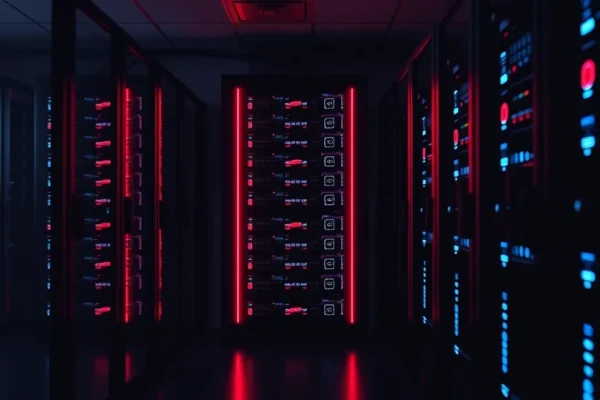
Think of a data center like a massive library, but instead of books, it houses thousands of high-powered computers. These computers store the “internet” as we know it. To function, they require two primary resources: a tremendous amount of electricity and massive quantities of water for cooling. Because these machines generate intense heat, they must be housed in specialized rooms with industrial air conditioning or liquid cooling systems.
The core mechanism here is digital distribution. Data enters these facilities via fiber-optic cables, is processed by servers, and is then sent back out to your device. When we talk about digital sovereignty, we are referring to the desire of nations to keep their data within their own borders, controlled by their own laws. This is why location matters. If a country cannot build its own data centers, it must rely on servers located in other nations, which creates concerns regarding who can access that data and how it is protected. Tech companies often leverage this anxiety, suggesting that if a local community blocks a new project, they are effectively outsourcing their digital future to foreign powers.
Where Data Centers Are Reshaping the Landscape
Today, data centers are being deployed across the globe to support the rise of Generative AI. Companies like Microsoft, Amazon Web Services, and Google are currently in a race to secure massive tracts of land near power grids. In the United States and Europe, many of these projects are currently in the early adoption or planning phase, facing significant scrutiny from local government boards.
For example, industrial hubs in Northern Virginia—the world’s largest data center market—have seen local activism grow as residents voice concerns over noise pollution and electricity consumption. Meanwhile, in places like Ireland and the Netherlands, authorities have placed temporary moratoriums on new construction to assess the impact on local energy grids. While companies claim these facilities are essential for economic growth and keeping pace with global tech policy, the practical reality is that these sites are often built in rural or suburban areas that were not designed to handle the industrial load required for 24/7 server operations.
The Battle for Influence in Global Tech
The narrative of China geopolitical risk is not occurring in a vacuum. It is part of a broader competition between the United States, Europe, and China to lead the AI era. While the U.S. relies on the private sector to build out this digital infrastructure, China has invested heavily in state-led projects to become a global leader in computing power.
The advantage for Western firms is their ability to innovate at speed through competition. However, this decentralized approach creates a disadvantage when it comes to long-term planning. Unlike the centralized infrastructure development seen in China, Western data center construction is subject to local zoning laws, environmental regulations, and public opinion. Tech companies argue that their competitors in China do not face the same NIMBYism—Not In My Backyard—challenges. By casting public opposition as a national security failure, these firms seek to shift the burden of proof from their environmental impact onto the shoulders of the concerned local citizen.
Social and Economic Implications of Data Center Growth
The long-term impact of this infrastructure expansion is profound. Economically, data centers create high-paying jobs in maintenance and engineering, but they also occupy significant space and consume electricity that might otherwise serve residential needs. The move toward digital sovereignty suggests that in the future, your local economy may be judged by how much “digital real estate” it provides.
Socially, the tension is growing. Surveillance fears have permeated public sentiment. Because data centers are the focal points of digital traffic, local residents often worry about how the information passing through their town is being monitored, even if those concerns are largely disconnected from the technical reality of the servers themselves. As these facilities become more visible, the public is demanding more transparency regarding how tech companies manage the energy, water, and security requirements of their operations.
The Hurdles Facing Industry Expansion
Despite the high-stakes narrative, significant bottlenecks remain. The primary limitation is energy availability. The current grid infrastructure was not built for the massive power demands of modern AI training clusters. Beyond energy, there is a clear adoption barrier related to community trust. When companies prioritize fast-tracking permits through government lobbying rather than engaging in honest public discourse, they breed skepticism.
Technical challenges also persist. Managing the heat generated by AI chips requires constant innovation in liquid cooling and energy-efficient hardware. Many companies are promising “green” data centers, but the transition to renewable energy for these sites is slow and expensive. Simply put, building these centers requires more than just capital; it requires a social license to operate that tech giants have yet to fully earn.
The Future Trajectory of Digital Infrastructure
The next few years will see a shift toward smaller, more efficient, and modular data centers. Experts suggest that rather than relying solely on massive, centralized warehouses, the industry will pivot toward “edge computing”—placing smaller data centers closer to the user to reduce load on the main grid. Watch for developments in AI-optimized cooling and modular designs that allow facilities to blend more seamlessly into existing industrial zones.
The timeline for this transition is likely to span the next five to ten years. As regulatory frameworks evolve, companies will need to provide more than just the “China threat” argument to win local approval. They will need to demonstrate that their infrastructure projects offer tangible benefits, such as localized energy grid stabilization and long-term economic investment for the communities that host them.
Key Questions and Answers
Is the China geopolitical risk a legitimate reason to ignore local data center opposition?
While digital sovereignty is a real national priority, labeling all local opposition as a geopolitical threat is an oversimplification. Most public opposition stems from legitimate concerns regarding local energy usage, water consumption, and land development, rather than foreign influence.
What is NIMBYism in the context of data center construction?
NIMBYism, or Not In My Backyard, refers to the opposition by residents to proposed developments in their local area. In the case of data centers, residents often object due to the noise of cooling fans, the aesthetic impact of windowless buildings, and the heavy strain on local electrical grids.
How does public sentiment affect the tech industry?
Public sentiment forces tech companies to either improve their project transparency or risk years of litigation and permit denials. When companies ignore community input, it often results in a backlash that stalls innovation far longer than open communication would have.
Are data centers actually a security risk?
Data centers are targets for cyber-attacks, and protecting them is a matter of critical infrastructure security. However, this is largely a matter of cybersecurity and physical hardening, not necessarily a risk caused by the physical proximity of the building to a local community.
How long until data center technology becomes mainstream and sustainable?
The industry is currently in a rapid growth phase. While basic data center technology is mature, sustainable, climate-neutral operations are still in the early stages of development and are expected to become the industry standard over the next decade as regulatory pressures increase.
Note: This article is based on an analysis of public policy trends, current energy industry reports from the Uptime Institute, and reported civil infrastructure debates in the United States and Europe as of 2024. The information provided is for educational purposes and does not constitute financial or political advice.











