

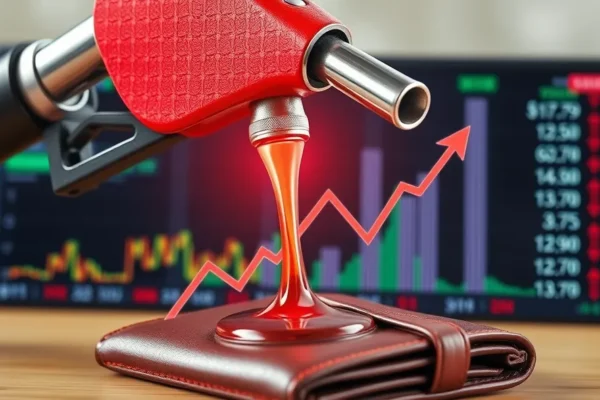
The Squeeze on Stocks: How Gas Prices and Bond Market Shifts Affect Your Money
Imagine you’re a baker, and suddenly the cost of flour and sugar skyrockets. You have to charge more for your cakes, or you make less profit. This is a bit like what’s happening in the financial world right now, with rising gas prices and shifts in the bond market putting pressure on stocks and, consequently, your personal finances. Understanding these connections can help you navigate the current economic landscape and make more informed decisions about your money.
Understanding the Core Concepts
What Are Gas Prices and Why Do They Matter?
Gas prices refer to the cost of gasoline, the fuel that powers most cars and trucks. When these prices rise significantly, it means it costs more to fill up your car. This impacts your daily life by increasing transportation costs, which can then ripple through to the prices of almost everything you buy, as it costs more to produce and transport goods.
What is the Bond Market?
The bond market is where investors buy and sell bonds. Think of a bond as an IOU. When governments or companies need to borrow money, they issue bonds. Investors who buy these bonds are essentially lending money, and in return, they get paid interest over time and their original loan amount back when the bond “matures” (reaches its end date). The bond market is a huge part of the financial world, and its activity can tell us a lot about investor confidence and the overall health of the economy.
What Are Stocks and How Are They Squeezed?
Stocks, also known as equities, represent ownership in a company. When you buy a stock, you own a small piece of that business. Investors buy stocks hoping the company will grow and become more profitable, increasing the value of their shares and potentially paying out dividends (a share of profits). When we say stocks are “squeezed,” it means their prices are being pressured downwards or are struggling to go up. This happens when conditions make it less attractive or more risky to own stocks.
Understanding these concepts is crucial because they directly influence the value of your investments, the cost of goods and services you consume, and your overall financial well-being. When these fundamental pieces of the economy shift, it’s like a domino effect, and everyone feels the impact on their personal finance.
How the Squeeze Happens: The Chain Reaction
It’s not just one thing; it’s a combination of factors creating this squeeze on stocks. Let’s break down how rising gas prices and bond market shifts interact:
The Impact of Rising Gas Prices
Step 1: Higher Fuel Costs for Businesses. When gas prices go up, it becomes more expensive for businesses that rely on transportation. Think of trucking companies, airlines, and delivery services. Their operating costs increase.
Step 2: Increased Production and Shipping Costs. These higher transportation costs are often passed on to consumers. This means the price of goods you buy, from groceries to electronics, can go up. This is a key driver of inflation impact.
Step 3: Reduced Consumer Spending. When people spend more on essentials like gas and groceries, they have less money left for other things, like dining out, entertainment, or even saving. This can slow down the economy as demand for goods and services decreases.
Example: Imagine a bakery that needs to transport its bread to various stores. If gas prices double, their delivery costs skyrocket. They might have to raise the price of a loaf of bread, or they might sell fewer loaves because consumers are cutting back on spending.
Shifts in the Bond Market
Step 1: Rising Interest Rates. Often, changes in the bond market are tied to decisions by central banks (like the Federal Reserve in the US) about interest rates. When inflation is a concern (like when gas prices are high, contributing to inflation), central banks may raise interest rates to cool down the economy. This makes borrowing money more expensive.
Step 2: Bonds Become More Attractive. As interest rates rise, newly issued bonds offer higher returns (more interest). This makes them a more appealing investment compared to stocks, especially for investors seeking stability. For example, a bond that used to pay 2% interest might now pay 4% or 5%.
Step 3: Money Flows Out of Stocks. When investors see better, safer returns in bonds, they may sell their stocks to buy bonds. This selling pressure can drive down stock prices. Think of it like a popular restaurant suddenly having a less popular competitor next door that offers a better deal – people might switch.
Example: Sarah has a portion of her investment portfolio in stocks and another in bonds. When interest rates rise and new bonds offer a 5% return, she might consider selling some of her stocks, which have uncertain growth, to invest in these higher-paying, safer bonds. This selling action contributes to the stocks squeezed narrative.
These two forces—rising gas prices (contributing to inflation) and bond market shifts (often driven by interest rate hikes)—work together. They make everyday living more expensive and make investments like stocks less attractive, creating a challenging environment for investors and impacting personal finance.
Why This Matters to You and the Economy
The squeeze on stocks due to these factors has a broad reach:
Impact on Personal Finance
Higher Living Costs: As mentioned, increased gas prices directly impact your wallet through higher fuel costs. This then leads to higher prices for most goods and services, eroding your purchasing power. This is the core of inflation impact on consumer finances.
Investment Portfolio Performance: If you have money invested in stocks, you may see the value of your investments decrease or stagnate. This can affect your long-term financial goals, such as retirement savings or a down payment on a house. Managing your portfolio becomes more challenging.
Job Security and Wage Growth: When companies face higher costs and slower consumer demand, they may slow down hiring, reduce expansion plans, or even consider layoffs. This can affect job security and the potential for wage increases.
Economic Implications
Market Volatility: This situation often leads to increased market volatility, meaning stock prices can swing up and down more rapidly and unpredictably. This makes it harder for businesses to plan and for investors to make confident decisions.
Slower Economic Growth: When consumers spend less and businesses invest less, the overall pace of economic growth can slow down. This can create a less optimistic economic outlook.
Central Bank Policy: The actions of central banks, like raising interest rates, are a direct response to these economic pressures. Their goal is to manage inflation and stabilize the economy, but these actions also have significant consequences for borrowing costs and investment returns.
Who Benefits and Who is Affected?
Affected Negatively: Consumers feel the pinch of higher prices. Stock market investors may see their portfolios decline. Companies with high transportation costs or those heavily reliant on consumer spending are also negatively impacted.
Potentially Benefit: Investors who prioritize safety and are seeking higher yields might benefit from rising interest rates in the bond market, as they can earn more on their investments. Companies that are essential goods providers or energy producers might see increased demand and profitability during inflationary periods.
Historical and Current Context
Periods of rising energy prices and shifting bond markets are not new. Throughout history, oil price shocks (like those in the 1970s) have often coincided with periods of inflation and economic uncertainty. Similarly, central banks have consistently used interest rate policy to manage economic cycles.
What has triggered current interest in this topic is the confluence of several factors. Geopolitical events have disrupted global energy supply chains, leading to sharp increases in gas prices. Simultaneously, many economies are still recovering from the pandemic, and governments have injected significant stimulus, which can contribute to inflation. In response, central banks globally have been raising interest rates aggressively to combat this inflation. For instance, the US Federal Reserve has implemented several rate hikes in recent years. According to the Bureau of Labor Statistics, the Consumer Price Index (CPI) has shown significant increases in recent periods, highlighting the inflation impact. These actions directly influence the bond market, making its shifts a critical area of focus for understanding the current economic outlook.
Practical Implications for Your Financial Life
Navigating this environment requires a thoughtful approach to your personal finance. Here’s how to think about it:
Managing Your Budget
With higher gas prices and general inflation, it’s more important than ever to review your budget. Identify areas where you can cut back on non-essential spending to offset the rising costs of necessities.
Evaluating Your Investments
The stocks squeezed environment means it’s a good time to review your investment strategy. Understand your risk tolerance. If you’re heavily invested in stocks that are particularly vulnerable to economic downturns, you might consider diversifying your portfolio. This might involve looking at sectors that are less sensitive to consumer spending or considering investments that perform better in a rising interest rate environment.
Staying Informed
Pay attention to news about energy prices, inflation rates, and central bank policy. Understanding these broader trends can help you anticipate potential impacts on your own finances and investments.
Common Misconceptions
Misconception: “My stocks are losing value, so I should sell everything.”
Correction: Selling everything during a market downturn can lock in losses. For long-term investors, periods of market weakness can sometimes present buying opportunities for solid companies at lower prices. However, this depends heavily on individual circumstances and investment goals. Always consider if your portfolio management aligns with your time horizon.
Misconception: “Rising gas prices only affect people who drive a lot.”
Correction: Gas prices are a significant component of transportation costs for businesses, which affects the prices of almost all goods and services. So, even non-drivers are indirectly impacted through higher prices for everything from food to electronics.
Related Financial Concepts
Understanding the current squeeze on stocks connects to several other key financial ideas:
- Inflation: The general increase in prices and fall in the purchasing value of money. Rising gas prices are a major contributor to inflation.
- Interest Rates: The cost of borrowing money. Central banks use interest rates as a tool to manage inflation and economic growth, significantly influencing the bond market.
- Market Volatility: The degree of variation in trading that a given security or market experiences over time. High volatility often accompanies economic uncertainty.
- Diversification: Spreading your investments across various asset classes (like stocks, bonds, real estate) to reduce risk.
- Economic Outlook: The future prospect for the economy. Factors like gas prices and bond yields are key indicators of the economic outlook.
Learning about these related concepts can provide a more comprehensive understanding of how money and markets work.
Frequently Asked Questions
How do rising gas prices affect inflation?
Rising gas prices directly increase transportation costs for businesses, which then pass those costs onto consumers through higher prices for goods and services. This is a significant contributor to overall inflation, reducing the purchasing power of your money.
Can individuals control bond market shifts or gas prices?
Individual investors cannot directly control global gas prices or the vast bond market. However, by understanding these forces, individuals can adjust their personal finance strategies and investment strategy to adapt to changing economic conditions.
What is the connection between the bond market and interest rates?
When interest rates rise, newly issued bonds typically offer higher interest payments, making them more attractive to investors. Conversely, when interest rates fall, existing bonds with higher interest rates become more valuable. This relationship is fundamental to how bond prices move.
How does market volatility impact my personal finance?
Market volatility means your investments can experience larger and more rapid price swings. This can be unsettling and may affect your ability to meet short-term financial goals if you need to sell investments during a downturn.
What is central bank policy and why is it important?
Central bank policy refers to the actions taken by a country’s central bank (like adjusting interest rates or managing the money supply) to influence the economy. These policies are crucial because they can impact inflation, employment, and borrowing costs for consumers and businesses.
What are some strategies for portfolio management during uncertain times?
During uncertain times, effective portfolio management might involve rebalancing your holdings to align with your risk tolerance, ensuring diversification across different asset classes, and focusing on long-term investment goals rather than short-term market fluctuations.
Disclaimer This educational content is for informational purposes only and does not constitute financial advice. Financial situations vary greatly, and individual circumstances are unique. Consult with a qualified financial professional before making any financial decisions.











