

Meet Meta’s Muse AI A Bid to Bring AI Assistants to Everyone
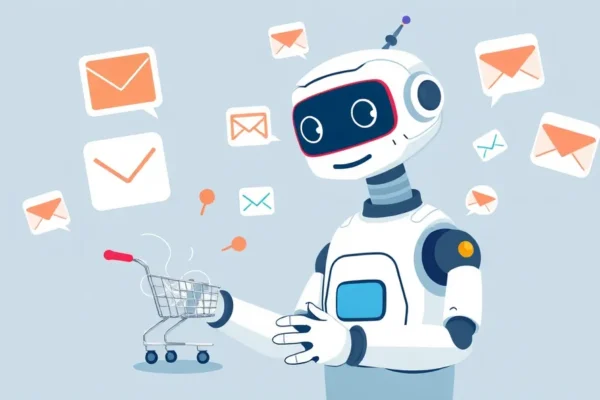
Meta, the company behind Facebook and Instagram, has unveiled its latest artificial intelligence initiative, Muse. This development signals Meta’s ambitious push to create AI agents capable of assisting with a wide range of everyday tasks, from drafting emails to summarizing information. The creation of Muse is a key part of Meta’s broader AI strategy to not only innovate but also to catch up in the fiercely competitive AI race against giants like OpenAI, Anthropic, and Google. This new AI agent aims to democratize access to advanced artificial intelligence technology, making it a practical tool for individuals and businesses alike.
How Muse AI Aims to Understand and Act
At its core, Muse AI is designed to be an intelligent assistant. Think of it like a highly skilled personal assistant who can understand complex instructions and execute them across various digital platforms. Instead of just responding to simple queries, Muse is being developed to engage in more nuanced tasks. For instance, it can process information from different sources, synthesize it, and then generate new content or take actions based on that understanding. This involves leveraging what are called large language models (LLMs), which are sophisticated AI systems trained on massive amounts of text and data. These models allow Muse to comprehend human language, learn patterns, and generate human-like text. Meta is also exploring ways to integrate multimodal capabilities, meaning Muse could eventually understand and process not just text but also images and other forms of media, much like how humans perceive the world. This approach aims to make the AI agent more versatile and intuitive to interact with.
Where Muse AI Stands Today and Its Potential Uses
Currently, Muse AI is still in its developmental stages, and Meta has been selective about what capabilities are publicly demonstrated. The company has showcased early versions of Muse that can generate image variations based on text prompts, a feature reminiscent of some of the AI art generation tools already available. This highlights its potential in creative applications. Beyond image generation, Meta envisions Muse as a core component of future personal assistants integrated into its social media platforms and virtual reality experiences. While not yet available for general public use as a standalone personal assistant, elements of its technology are likely being tested and integrated into existing Meta products, such as Meta AI chat features within WhatsApp and Instagram. The availability of Muse AI in a widely accessible form is still some time away, with Meta continuing to refine its capabilities.
The AI Race Meta’s Position and Rivals
Meta’s investment in Muse AI is a clear response to the rapid advancements made by its competitors in the artificial intelligence space. OpenAI, with its ChatGPT, has set a high bar for conversational AI and has seen widespread adoption. Google, a long-standing leader in AI research, continues to develop its own powerful AI models like Gemini, aiming for seamless integration across its vast ecosystem of products. Anthropic, another significant player, focuses on developing safe and robust AI systems. In this competitive landscape, Meta’s Muse AI aims to differentiate itself by focusing on integration with its massive social graph and immersive technologies like the metaverse. While OpenAI and Google have demonstrated impressive general-purpose AI capabilities, Meta’s strength lies in its ability to deploy AI agents within a network of billions of users. The challenge for Meta is to translate its research prowess into user-facing products that can rival the fluidity and utility of existing AI agents.
Reshaping Our Digital Lives and Work
The ambition behind Muse AI is to fundamentally change how individuals interact with technology for their daily tasks. Imagine an AI agent that can proactively help manage your schedule, summarize long email threads, draft social media posts, or even assist in planning events by coordinating with friends across different platforms. This has the potential to significantly boost productivity for individuals and small businesses. For content creators, tools like Muse could automate aspects of content generation and image creation. Economically, widespread adoption of such intelligent AI agents could lead to shifts in demand for certain job roles, while creating new opportunities in AI development and management. Socially, the implications are profound, offering enhanced accessibility and support for many, but also raising questions about privacy, data security, and the potential for AI to influence online interactions. The short-term impact will likely be seen in improved features within existing apps, while long-term, it could usher in an era of truly personalized digital assistants.
Navigating the Hurdles Ahead for Muse AI
Despite the exciting potential, Muse AI, like all advanced AI technologies, faces significant limitations and challenges. One of the primary hurdles is ensuring accuracy and reliability. LLMs can sometimes “hallucinate,” meaning they generate plausible-sounding but incorrect information. For a personal assistant, such errors can be problematic. Another challenge is the computational power and cost required to run these advanced AI models efficiently, especially for real-time interactions. Meta, like other AI developers, is also grappling with the ethical considerations of AI, including bias in training data that can lead to unfair or discriminatory outputs, and the need for robust privacy safeguards when AI agents have access to personal information. Furthermore, widespread user adoption depends on ease of use, trust, and clear value proposition compared to existing tools. The technology is still maturing, and the ability for Muse AI to seamlessly and reliably perform a wide range of complex tasks is a work in progress.
The Road Ahead for AI Assistants
The future trajectory for Muse AI and similar AI agents points towards increasingly sophisticated and integrated digital companions. We can expect to see advancements in how AI agents understand context across multiple interactions, learn user preferences over time, and perform more complex, multi-step tasks. Research is ongoing to improve the reasoning capabilities of these models, making them less prone to errors and more adept at handling novel situations. For Muse, the integration into Meta’s ecosystem – from social media to the metaverse – is a key strategic direction. This could lead to AI agents that are deeply embedded in our digital lives, offering highly personalized assistance. Milestones to watch will include the expansion of multimodal capabilities, allowing for more natural interactions involving voice, images, and video, and the development of AI agents that can proactively offer help rather than just responding to commands. While concrete timelines are hard to predict, the pace of AI innovation suggests these developments could unfold over the next few years.
Frequently Asked Questions About Meta’s Muse AI
What is Meta AI’s Muse?
Muse AI is Meta’s initiative to develop advanced AI agents designed to assist users with a broad spectrum of everyday digital tasks, aiming to make artificial intelligence more accessible and practical for everyday use.
How is Muse AI different from other AI assistants?
While many AI agents focus on answering questions or generating text, Muse AI is being developed with a strong emphasis on integration within Meta’s vast social platforms and future metaverse experiences, aiming for deeper contextual understanding and proactive assistance.
Is Muse AI available to the public now?
Currently, Muse AI is largely in a development and research phase. While some of its underlying technologies may be appearing in experimental features or existing Meta AI chat experiences, a standalone, widely available Muse AI agent is not yet released.
Who are Meta AI’s main competitors in the AI race?
Meta AI faces significant competition from companies like OpenAI (known for ChatGPT), Google (with its Gemini models), and Anthropic, all of whom are developing powerful AI technologies and agents.
What are the potential real-world applications of Muse AI?
Potential applications include personalized productivity tools for drafting emails and documents, creative assistance for image generation, enhanced social media interaction management, and support within immersive virtual environments.
What are the biggest challenges facing Muse AI and similar technologies?
Key challenges include ensuring the accuracy and reliability of AI outputs, addressing ethical concerns like bias and privacy, managing computational costs, and achieving widespread user trust and adoption.
This article discusses the current state and potential of Meta’s Muse AI, based on public announcements and general industry trends. As with any emerging technology, capabilities and timelines may evolve, and specific features are subject to ongoing research and development.











