

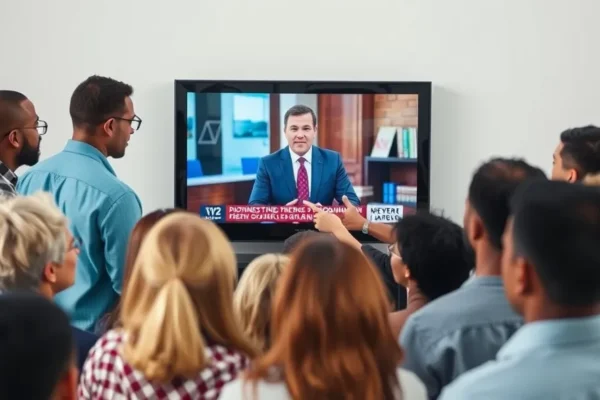
The New Strategy of Audience Connection
In the rapidly evolving world of cable news, the traditional model of broadcasting to a passive audience is facing a major shift. The industry is moving away from a one-way street of information toward a more interactive, community-based approach. At the center of this movement is MS NOW, a strategic initiative designed to cultivate a dedicated fan community. By prioritizing deeper viewer interaction, this project seeks to turn casual watchers into active participants who feel a sense of belonging to the network.
The push for this change was highlighted by a high-profile conversation between Rachel Maddow and Rebecca Kutler, the Senior Vice President of Content Strategy at MSNBC. This discussion served as a formal introduction to the goals of MS NOW, emphasizing that the future of the news network lies in listening to its audience. By creating a space where viewers can engage directly with the personalities and topics they care about, the network is testing a new media strategy that prioritizes loyalty and long-term engagement over simple ratings.
How Audience Engagement Mechanics Work
To understand the mechanics of MS NOW, think of it like a digital town square. In a traditional television broadcast, the anchor speaks and the audience listens. There is no feedback loop. The MS NOW framework replaces this with a two-way digital ecosystem where viewers can provide input, join discussions, and access behind-the-scenes content that informs the broader reporting process.
The core mechanism relies on data-driven feedback loops. When a viewer interacts with a specific segment or participates in a digital poll, the network gathers information about what topics resonate most deeply. This is not just about tracking clicks; it is about building a profile of interest that allows the producers to tailor future segments to the community’s concerns. By involving the viewer in the editorial flow—such as asking for questions ahead of a Rachel Maddow broadcast—the network creates a sense of investment. The viewer is no longer just watching the news; they are helping to shape the conversation.
Current State and Real World Applications
This approach to a fan community is currently in an active testing phase. MS NOW acts as a digital hub that aggregates exclusive clips, commentary, and opportunities for direct viewer interaction. While the backbone of the operation remains cable news television, the digital interface serves as the primary meeting ground for the community.
Industry observers note that this is part of a broader pivot toward audience-centric programming. Companies like MSNBC are increasingly using platforms like the MS NOW app and web portal to bridge the gap between broadcast television and mobile-first users. Currently, the service is accessible to any viewer interested in deeper dives into political discourse, with specific segments featuring high-profile talent like Rachel Maddow serving as the anchor for the community’s growth. This is a mainstream initiative, but it is still maturing as the network refines the balance between editorial independence and community feedback.
The Competitive Landscape of Media Strategy
MSNBC is not alone in its quest to build a loyal fanbase. The entire cable news sector is under pressure from social media platforms and independent content creators who have mastered the art of community building. Competitors like CNN and Fox News are employing similar strategies, though their execution varies significantly. Some rely on digital newsletters, while others have pushed heavily into streaming-only content.
Where MS NOW differs is in its focus on the intellectual connection between the host and the viewer. While some competitors focus on high-energy, personality-driven clips designed for viral distribution, the MS NOW strategy emphasizes long-form continuity and academic-style engagement. The advantage here lies in the “authority” of the network’s roster. By leveraging the existing trust in figures like Rachel Maddow, the network lowers the barrier for entry for users who are already fans, making the transition from passive viewer to community member more natural than if they were starting from scratch.
Implications for Media and Society
The rise of the MS NOW fan community has significant implications for how we consume information. In the short term, this model creates a more satisfied audience because viewers feel their voices are being heard. Economically, this builds a “moat” around the network, making it harder for viewers to churn or switch to a competitor. A loyal, engaged community is more valuable to advertisers and more resilient during market shifts.
Socially, however, this trend presents a double-edged sword. While community building fosters a sense of belonging, it can also lead to the creation of information silos. When a news network prioritizes the interests of its core fans, it may inadvertently limit the diversity of viewpoints presented. The long-term impact on the democratic process remains a subject of debate among media ethicists, who question whether news networks should prioritize catering to a “base” or maintaining a broader, more neutral stance.
Limitations and Challenges in Community Building
Building a successful fan community is fraught with technical and cultural challenges. One of the primary bottlenecks is the disparity between legacy broadcasting hardware and modern digital engagement tools. Integrating a live television broadcast with a real-time digital chat or feedback system requires low-latency technology that is expensive to maintain at scale.
Furthermore, there is an adoption barrier regarding the technology itself. While many users are comfortable with social media platforms, asking them to adopt a specific network-branded app for news is a steep request. There is also the challenge of moderation. As a community grows, the volume of viewer interaction can become unmanageable, making it difficult to maintain the quality of the discourse. If the community is flooded with toxic content or low-quality feedback, the value proposition for the serious user drops immediately.
Future Trajectory and Looking Ahead
The future of MS NOW is likely to involve deeper integration with generative artificial intelligence. As the community grows, AI could be used to summarize thousands of viewer questions or comments, distilling them into clear themes that the editorial team can address on air. This would allow for a much more massive scale of interaction than is currently possible.
We can expect to see a move toward “personalized broadcasting,” where the digital app interface changes based on a user’s history and preferences. While this is not yet available, the roadmap points toward a more predictive model of engagement. By 2026, experts anticipate that these news communities will function more like social networks, with advanced features for hosting internal forums and direct Q&A sessions with journalists.
Key Questions and Answers
What is the core goal of MS NOW?
The goal is to build a vibrant fan community by bridging the gap between cable news television and digital interaction. It aims to transform passive viewers into active participants who feel more connected to the network’s journalists and editorial process.
Is the MS NOW fan community exclusive?
No, it is designed for a broad audience. While it leverages existing loyalty to high-profile figures like Rachel Maddow, it is intended to be an inclusive digital space for anyone interested in deep political reporting and engagement.
How does this media strategy differ from traditional news?
Traditional news is a one-way broadcast, whereas this strategy uses audience engagement as a tool for editorial direction. Through platforms managed by people like Rebecca Kutler, the network uses real-world input from fans to inform its reporting priorities.
What are the primary risks of this approach?
The primary risks include the potential for creating information silos, the technical difficulty of managing large-scale, real-time viewer interaction, and the challenge of keeping the quality of the discourse high as the community expands.
When will these interactive features become mainstream?
The foundation of this community is already in place and active. We can expect to see more advanced, AI-integrated features rolled out as the network continues to iterate on its digital strategy over the next 24 months.
Note: This article is based on current industry developments and public statements from network representatives. The technology surrounding digital audience engagement is in a state of rapid evolution, and specific features of the MS NOW platform may change as the network iterates based on user data.











