

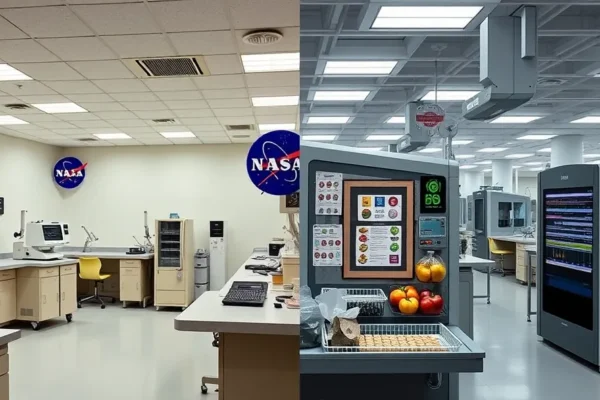
From Rockets to Ravioli How NASA Food Testing Shaped Our Food Safety
The journey of food from farm to fork has always been fraught with peril. For centuries, outbreaks of foodborne illness were a grim reality, often striking without warning and leaving a trail of sickness and death. While tragedies like those depicted in Upton Sinclair’s 1906 novel The Jungle eventually spurred the creation of regulatory bodies like the U.S. Food and Drug Administration (FDA) and the U.S. Department of Agriculture (USDA), these systems were largely reactive. They stepped in after contamination or illness occurred. The space race, however, introduced a new, unprecedented challenge: feeding humans in an environment where failure was not an option. NASA’s stringent food testing protocols, born out of the extreme demands of spaceflight, fundamentally shifted the paradigm of food safety, pushing industries towards proactive, preventative systems that benefit us all today.
The Critical Need for Safe Space Food
When humanity set its sights on the stars, feeding astronauts became a critical mission in itself. Unlike any food consumed on Earth, space food had to be safe not just from immediate spoilage but also from microscopic threats that could incapacitate an astronaut in the unforgiving vacuum of space. A single case of food contamination could have catastrophic consequences, jeopardizing not only the mission but also the lives of the crew. This extreme pressure cooker environment demanded a level of food safety far beyond existing terrestrial standards. NASA, therefore, had to invent and implement a system that could guarantee the safety of every bite an astronaut took, long before that food ever reached orbit. This necessity sparked significant innovation in how food is produced, processed, and tested.
A Proactive Approach to Food Protection
The core innovation stemming from NASA’s space food program was the adoption and refinement of a proactive, systematic approach to food safety. Instead of inspecting food at the end of the production line and hoping for the best, NASA developed methods to identify and control potential hazards at every step of the food’s journey. This concept is known as Hazard Analysis and Critical Control Points, or HACCP.
Think of HACCP like a meticulous detective meticulously tracing every possible clue to prevent a crime before it happens. Instead of waiting for a crime (foodborne illness) to occur and then investigating, HACCP focuses on identifying all the potential places a “crime” could occur – what we call hazards. These hazards could be biological (like bacteria), chemical (like cleaning residues), or physical (like fragments of glass).
Once these potential hazards are identified, HACCP focuses on the “critical control points” – specific steps in the food production process where these hazards can be prevented, eliminated, or reduced to acceptable levels. For example, a critical control point for a pre-packaged meal might be the cooking temperature and time, ensuring that any harmful bacteria are destroyed. Another might be the packaging process, ensuring it seals properly to prevent recontamination.
This system, pioneered by NASA for its astronauts, was a dramatic departure from the more traditional, end-product testing that characterized much of FDA and USDA food inspection history. It represented a significant leap from a reactive model, where regulators might step in after reports of food contamination, to a proactive model, where potential problems are anticipated and managed from the outset.
From Orbit to Your Dinner Plate
The impact of NASA’s pioneering work in food safety extends far beyond the confines of the International Space Station. The principles and practices developed for space food technology have deeply influenced modern food safety regulations worldwide, including those enforced by the FDA and USDA.
In the 1970s, as the space program matured, NASA shared its findings and methodologies with civilian food industries. This knowledge transfer was crucial. The HACCP system, in particular, proved to be a highly effective framework for improving food safety across a vast range of products. It provided a structured, science-based way for food manufacturers to systematically identify and control risks.
Today, HACCP is a cornerstone of food safety regulations in many countries. It is mandatory for certain high-risk food industries, such as seafood and juice processing, under FDA regulations. The USDA also utilizes HACCP principles in its meat and poultry inspection systems. This means that the rigorous standards developed to keep astronauts safe are now helping to protect consumers from food contamination right here on Earth. The transition from a primarily inspection-based system to a preventative one, largely driven by the lessons learned from space food, has undoubtedly saved countless lives and improved public health safety.
The Competitive Landscape of Food Safety
While NASA was the catalyst for the widespread adoption of proactive food safety, the development and implementation of HACCP and similar systems have involved numerous stakeholders. Regulatory bodies like the FDA and USDA play a crucial role in setting standards, auditing compliance, and enforcing regulations. Food manufacturers themselves have invested heavily in developing their own internal HACCP plans and ensuring their employees are trained in these safety protocols.
In terms of competing approaches, traditional end-product testing still exists as a supplementary measure, but it is no longer the primary strategy for preventing foodborne illnesses. The advantage of the HACCP system lies in its preventative nature. It’s like having a sophisticated alarm system that detects a fire before it spreads, rather than just calling the fire department after the house is engulfed in flames.
Other food safety initiatives and certifications, such as ISO 22000 and various GFSI (Global Food Safety Initiative) recognized schemes, build upon the foundational principles of HACCP, offering more comprehensive food safety management systems. These represent a continuous evolution, but the core idea of proactively identifying and controlling hazards traces its lineage back to the demands of feeding astronauts.
Transforming Industries and Protecting Public Health
The implications of NASA’s influence on food safety standards are profound and far-reaching. Economically, the implementation of robust food safety systems like HACCP has reduced the incidence of costly food recalls, outbreaks, and associated legal liabilities for food businesses. It fosters greater consumer confidence, which is essential for market stability and growth.
Socially, the impact is arguably even greater. The shift towards proactive food safety has significantly contributed to a decline in foodborne illnesses, enhancing public health and well-being. For consumers, it means a greater assurance that the food they purchase is safe to eat. The lessons learned from space exploration have demonstrably made our food supply safer.
In the short term, we continue to see ongoing refinement and digitization of HACCP systems, with advanced data analytics and real-time monitoring becoming more prevalent. Long-term, we can expect even more integrated and automated food safety solutions, further minimizing human error and enhancing traceability.
Challenges and the Road Ahead
Despite the success of HACCP and NASA’s influence, challenges remain. Implementing a comprehensive HACCP plan requires significant expertise, resources, and ongoing commitment from food businesses, particularly small and medium-sized enterprises. Training staff and maintaining rigorous documentation can be demanding.
Furthermore, emerging threats and novel food production methods, such as those involving cultured meat or advanced vertical farming, require continuous adaptation and updating of food safety protocols. Ensuring that these new technologies are developed with safety built-in from the start is crucial.
Another limitation is the inherent complexity of the global food supply chain. Tracing contamination back to its source can still be difficult, especially with complex international sourcing. While technology is improving traceability, human error and the sheer scale of global production present ongoing hurdles.
The Future of Proactive Food Safety
The trajectory of food safety is undeniably towards increasingly sophisticated and integrated proactive systems. Building on the foundation laid by NASA, we can anticipate several key developments:
- Advanced Analytics and AI: Artificial intelligence and machine learning will play a larger role in predictive food safety, analyzing vast datasets to identify potential risks before they manifest.
- Enhanced Traceability Technologies: Technologies like blockchain are being explored to provide immutable records of a food product’s journey, offering unparalleled transparency and rapid identification of contamination sources.
- Real-time Monitoring: Sensors and smart packaging will enable continuous monitoring of food conditions throughout the supply chain, alerting stakeholders to deviations in temperature, humidity, or other critical factors.
- Genomic Surveillance: Advanced genetic sequencing will allow for rapid identification and tracking of microbial pathogens, helping to pinpoint the origins of outbreaks more effectively.
These advancements aim to create a food system that is not only resilient but also highly responsive to potential threats, ensuring the safety of our food supply for generations to come.
Key Questions and Answers About NASA’s Food Safety Legacy
Is the food safety system inspired by NASA still relevant today?
Absolutely. The principles of proactive hazard analysis and critical control points (HACCP), pioneered by NASA for space missions, form the bedrock of modern food safety regulations enforced by agencies like the FDA and USDA.
How did NASA’s food testing differ from traditional food inspection?
NASA’s approach was fundamentally proactive. Instead of inspecting food after it was made, they designed systems to prevent contamination and hazards at every stage of production. This contrasts with older, reactive models that often responded after foodborne illnesses occurred.
What is HACCP and why is it important for food safety standards?
HACCP stands for Hazard Analysis and Critical Control Points. It’s a systematic, science-based approach to prevent food safety problems by identifying potential hazards and establishing controls at critical points in the food production process. It is crucial because it moves food safety from a reactive to a preventative strategy.
Who benefits most from these advanced food safety standards?
Ultimately, consumers benefit the most through a safer food supply, reducing the risk of foodborne illnesses. Food businesses also benefit from reduced recalls, improved efficiency, and enhanced consumer trust.
Are there any limitations to the current food safety systems influenced by NASA’s work?
Yes, challenges remain. Implementing comprehensive systems like HACCP can be resource-intensive for smaller businesses, and the complexity of global supply chains still presents traceability hurdles. Continuous adaptation to new food technologies is also necessary.
When can we expect to see even more advanced food safety technologies implemented?
Many advanced technologies like AI-driven risk prediction and enhanced blockchain traceability are already in early adoption phases. Widespread mainstream implementation will likely occur over the next 5-10 years as the technologies mature and become more cost-effective.
This article explores the historical influence of NASA’s food testing protocols on modern food safety regulations. While the principles discussed are widely adopted, ongoing research and technological development continue to evolve the field of food safety.











