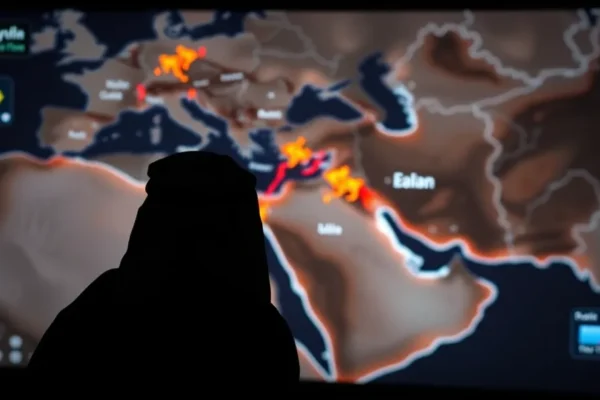
Understanding Geopolitical Risk and the Saudi Economy
To understand the challenges facing the Saudi Crown Prince, Mohammed bin Salman, we first need to understand a concept called geopolitical risk. In simple terms, geopolitical risk is the chance that political decisions, conflicts, or instability in a specific part of the world will cause financial losses or disrupt the global economy.
Think of geopolitical risk like a neighborhood’s reputation. Imagine you are renovating your house to turn it into a beautiful bed-and-breakfast to make extra money. You are spending a lot of time and effort on the interior design and guest rooms. However, if the street outside becomes dangerous due to frequent fights between neighbors or crime, guests will be afraid to visit. It does not matter how beautiful your house is; the instability of the neighborhood prevents your business from succeeding.
For the Saudi Crown Prince, Mohammed bin Salman, the house is the Saudi Arabian economy, and the neighborhood is the Gulf region. Understanding this risk is important because Saudi Arabia is one of the largest oil producers in the world. When things go wrong in the Middle East, it does not just affect the people living there; it affects the price of gas, the cost of shipping goods, and the stability of global stock markets.
How Military Threats Impact Economic Stability
Geopolitical risk works through a chain reaction. When military threats increase, they create a ripple effect that touches everything from government budgets to the prices you pay at the store. Here is a step-by-step breakdown of how this mechanism works:
- The Trigger: A group, such as Houthi rebels or Iraqi militants, launches an attack on oil infrastructure or threatens shipping lanes in the Red Sea.
- The Market Reaction: Investors see this and worry that oil supplies will be cut off. This creates a “risk premium,” which is essentially an extra cost added to the price of a commodity because of the danger involved in getting it.
- The Cost of Capital: If a country is seen as unstable, foreign companies are less likely to build factories or offices there. To convince them to invest, the government may have to offer higher returns or take on more debt, which increases the cost of doing business.
Imagine a scenario where a foreign tech company wants to build a data center in Riyadh. If the Saudi Crown Prince, Mohammed bin Salman, can guarantee a peaceful region, the company invests billions. But if Houthi rebels successfully strike energy plants, that company might decide the risk is too high and move their investment to a more stable region, like Singapore or Europe.
A real-world example happened in 2019 with the attacks on Abqaiq and Khurais, two major Saudi oil processing facilities. These attacks caused a temporary but massive spike in global oil prices because the world suddenly realized how vulnerable the supply chain was to military threats. This event showed that regardless of economic plans, physical security is the foundation of financial stability.
Why Regional Stability Matters to Your Wallet
You might wonder why the leadership struggles of one country affect your personal finances. The connection lies in the global nature of energy and trade.
Personal Financial Impact
When military threats from Houthi rebels disrupt shipping in the Red Sea, shipping companies must take longer routes around Africa. This increases the cost of fuel and labor for ships. Those costs are eventually passed down to you. Whether it is the price of a piece of electronics or the cost of a gallon of gas, geopolitical instability often leads to higher prices for consumers.
Economic Impact on Markets
Inflation is the general increase in prices and the fall in the purchasing value of money. When oil prices spike due to Middle East security concerns, it drives up inflation globally. Central banks, like the Federal Reserve in the United States, often raise interest rates to fight inflation. This means your loans, mortgages, and credit card debts could become more expensive.
Who Wins and Who Loses?
In these scenarios, defense contractors and arms manufacturers often benefit because governments spend more on military hardware to protect themselves. On the other hand, long-term investors and the general public lose due to market volatility and higher living costs.
The Evolution of Saudi Arabia’s Foreign Policy
To understand the current crisis, we have to look at how Saudi Arabia’s approach has changed. For decades, the kingdom relied almost entirely on oil. However, the Saudi Crown Prince, Mohammed bin Salman, launched “Vision 2030.” This is a massive plan to diversify the economy, meaning the country wants to make money from tourism, technology, and entertainment instead of just oil.
This shift required a change in foreign policy. To attract billions of dollars in foreign direct investment (FDI), the kingdom needed to present itself as a modern, stable, and open society. However, several events complicated this image:
- The Yemen Conflict: The war against Houthi rebels has been long and costly, creating a humanitarian crisis and leaving the kingdom open to drone and missile attacks.
- Reputational Risks: The 2018 killing of journalist Jamal Khashoggi created a significant rift between the Saudi leadership and Western investors, making some companies hesitant to do business with the kingdom.
- Regional Rivalries: Constant tension with Iran and the activity of Iraqi militants create a climate of uncertainty in the Gulf region.
According to data from the International Monetary Fund (IMF), diversification requires steady growth in non-oil GDP. But it is difficult to maintain that growth when the government must divert huge sums of money toward military spending to counter regional threats.
Practical Ways to View Geopolitical News
When you see headlines about the Saudi Crown Prince, Mohammed bin Salman, or military tensions in the Middle East, it is helpful to look past the politics and focus on the economic indicators. Here is how to think about it in your financial life:
Watch the “Risk Premium”
When you hear about new threats from Houthi rebels, do not just look at the news report; look at the price of Brent Crude oil. If the price jumps suddenly, it is a sign that the market is pricing in geopolitical risk. This is often a leading indicator that inflation may rise in the coming months.
Correcting a Common Misconception
Many people believe that as long as Saudi Arabia has oil, it is financially safe. This is a misconception. While oil provides wealth, it does not provide stability. If the world moves toward green energy faster than Saudi Arabia can diversify its economy, the kingdom will face a financial cliff. Military threats accelerate this problem by scaring away the very investors needed to build a non-oil economy.
Actionable Insights
While you cannot control Middle East security, you can diversify your own assets. Avoiding over-concentration in a single sector or region helps protect your portfolio from the volatility caused by geopolitical shocks. Understanding the link between regional stability and inflation can also help you time larger purchases or adjust your savings goals.
Connecting the Dots with Other Financial Concepts
Geopolitical risk does not exist in a vacuum. To get a fuller picture, it is helpful to connect it to these related concepts:
- Diversification: Just as Saudi Arabia is trying to diversify its economy to survive without oil, individuals diversify their investments to survive market crashes.
- Sovereign Wealth Funds: The Public Investment Fund (PIF) of Saudi Arabia is one of the largest in the world. Understanding how these funds invest globally helps you see how Saudi wealth influences markets in the US, Europe, and Asia.
- Commodity Markets: Since oil is a commodity, studying how these markets work helps you understand why a conflict in the Gulf region causes price swings in unrelated goods.
Understanding the concept of inflation is particularly useful here, as it is the primary bridge between a military threat in the Middle East and the price of groceries in your local store.
Common Questions About Saudi Arabia and Regional Risk
How do Houthi rebels affect the global economy?
Houthi rebels often target shipping lanes in the Red Sea, which is a primary route for trade between Asia and Europe. This forces ships to take longer, more expensive routes, which increases the cost of goods and fuels global inflation.
Why is the leadership of Saudi Crown Prince, Mohammed bin Salman, so important to markets?
As the primary decision-maker for the world’s largest oil exporter, his policies on oil production and economic diversification directly impact global energy prices and foreign investment flows.
What is the main risk to regional stability in the Gulf region?
The main risks include the ongoing conflict in Yemen, tensions between Saudi Arabia and Iran, and the activity of Iraqi militants, all of which can lead to attacks on critical energy infrastructure.
Does the Jamal Khashoggi case still affect Saudi Arabia’s finances?
While many investors have returned, the event created a long-term reputational risk that makes some Western governments and ethical investment funds more cautious about partnering with the kingdom.
Can individuals protect themselves from geopolitical risk?
Individuals cannot stop geopolitical events, but they can manage the impact by diversifying their investments and maintaining an emergency fund to handle sudden price increases in energy or food.
Disclaimer: This article is provided for educational purposes only and does not constitute personal financial, investment, or legal advice. Financial situations vary based on individual circumstances; please consult a certified professional for personal financial advice. Past market trends involving geopolitical risk do not guarantee future outcomes.