

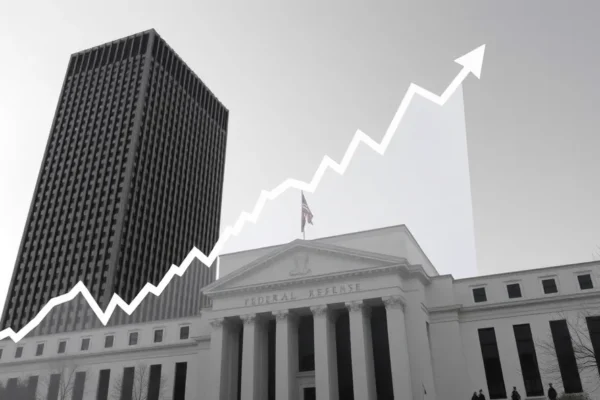
Wall Street Adjusts to a New Federal Reserve Reality
The global financial landscape is undergoing a significant shift as two of Wall Street’s most influential institutions, Morgan Stanley and Goldman Sachs, have updated their economic forecast models. Both firms recently signaled that the Federal Reserve may be forced to maintain or even increase interest rates for longer than previously anticipated. This pivot in monetary policy expectations stems from a series of resilient economic reports that have challenged the narrative of a rapid descent in inflation.
For the average investor, this represents a departure from the “pivot” sentiment that dominated market discourse throughout the first half of the year. As the Federal Open Market Committee (FOMC) navigates the balance between cooling price growth and maintaining employment, these revised projections from major investment banks serve as a critical compass for understanding current market volatility.
What Triggered the Shift in Interest Rate Expectations
The catalyst for this adjustment in outlook is a string of macroeconomic data that exceeded consensus expectations. According to the Bureau of Labor Statistics, headline inflation figures have proven stickier than anticipated, while consumer spending remains robust. When the economy displays this level of resilience, the FOMC is provided with more “headroom” to keep interest rates elevated to ensure that inflation returns to the central bank’s two percent target.
Goldman Sachs specifically highlighted in recent client notes that the sustained strength in the labor market reduces the immediate pressure on the Fed to cut rates. Similarly, Morgan Stanley strategists have pointed to the persistence of core services inflation as a reason to adjust their interest rate decision models. When major institutions like these shift their outlook, it often reflects a consensus among professional analysts that the “higher for longer” era is not just a temporary state, but a structural reality the market must now price in.
Understanding the Financial Context of Monetary Policy
To understand the gravity of these revisions, one must look at the historical context of the current economic cycle. Over the past eighteen months, interest rates have moved from near-zero levels to their current restrictive range. This transition represents the most aggressive tightening of monetary policy in over four decades. Historically, such swift adjustments create friction in the credit markets and force businesses to reassess their capital expenditure plans.
Morgan Stanley and Goldman Sachs monitor several key metrics to inform their economic forecast, including the Yield Curve—the difference between short-term and long-term government bond rates. When this curve remains inverted, it often signals investor anxiety regarding future growth. Furthermore, corporate earnings reports from the S&P 500 companies have shown that while top-line revenue remains stable, interest expenses have climbed significantly, placing pressure on net profit margins across the banking and manufacturing sectors.
Analyzing the Market Implications
The revision by Morgan Stanley and Goldman Sachs suggests that the market may have been too optimistic in pricing in multiple rate cuts for the current calendar year. From an analytical perspective, when the expectation for a Fed hike or a pause in cuts increases, investors typically rotate out of “growth” stocks—companies whose valuations depend heavily on future earnings—and move toward “value” stocks or short-term fixed-income securities.
Key metrics to watch in the coming weeks include the P/E (Price-to-Earnings) ratio of the S&P 500, which tends to compress when interest rates rise, as the “cost of money” increases. Additionally, daily trading volume in bond ETFs, such as the iShares 20+ Year Treasury Bond ETF (TLT), serves as a barometer for institutional sentiment regarding the Fed’s path. If market sentiment turns bearish, it indicates that investors are bracing for a period where borrowing costs remain a headwind for corporate expansion.
Opportunities Across the Investment Landscape
When the outlook for interest rates shifts, the ripple effects are felt across various sectors. Financial institutions, particularly large commercial banks, often benefit from higher net interest margins when rates stay elevated, as they earn more from the spread between what they pay depositors and what they charge for loans. Conversely, sectors like real estate and utilities—which rely heavily on debt financing—often face increased operational pressure.
The competitive landscape among investment banks also shifts during these cycles. Goldman Sachs and Morgan Stanley are not merely observers; they are active participants that must manage their own balance sheets against the backdrop of these changing policies. Investors looking at the broader market may notice that sectors with strong balance sheets and low debt-to-equity ratios are currently being viewed as more resilient, as they are better insulated from the cost of borrowing capital in a high-rate environment.
Future Outlook and Factors to Watch
The timeline for potential shifts in the Fed hike trajectory remains tethered to upcoming labor reports and the Consumer Price Index (CPI) releases. Markets are inherently unpredictable, and any sudden cooling in the jobs market or a sharp decline in retail sales could lead Morgan Stanley and Goldman Sachs to revise their interest rate forecasts once again. Investors should watch for the next FOMC meeting minutes, as they will provide granular detail into the internal debates among central bank officials.
The primary factor that could shift the outlook is a sustained trend of lower-than-expected inflation data. If the Fed sees clear, consistent evidence that price pressures are abating, they may pivot away from talk of a hike and toward a more neutral stance. However, until such data points materialize, the current consensus from Wall Street remains one of cautious vigilance.
Investor Frequently Asked Questions
How does a potential Fed hike impact my current portfolio?
A potential Fed hike generally increases borrowing costs, which can weigh on corporate earnings and dampen stock market performance, particularly in growth-heavy sectors. Fixed-income investors may see bond prices decline as new bonds are issued with higher yields, making existing, lower-yielding bonds less attractive by comparison.
Are Goldman Sachs and Morgan Stanley reliable indicators of Fed policy?
While Goldman Sachs and Morgan Stanley are among the most respected financial institutions globally, their economic forecasts are analytical models based on available data, not guarantees of future central bank actions. They provide professional insights that help institutional investors position their portfolios, but their predictions remain subject to change as new economic data is released.
What are the risks of a persistent interest rate environment?
The primary risk of a prolonged high interest rate environment is the potential for an economic slowdown, as higher borrowing costs reduce capital investment and consumer spending. Additionally, companies with high levels of floating-rate debt may face liquidity challenges, which could lead to increased volatility in the equity and credit markets.
How does the current interest rate decision compare to historical norms?
The current cycle is unique because it follows a period of extreme monetary stimulus implemented during the pandemic. Unlike historical cycles where rates were raised to manage cyclical inflation, the current Fed monetary policy is attempting to normalize an economy that experienced an unprecedented shift in both supply chain dynamics and consumer demand.
Where can I find updates on FOMC interest rate decisions?
The official source for all interest rate decisions is the Federal Reserve Board’s website, which publishes the FOMC statement immediately following their meetings. For analytical context, major financial news outlets and the research portals of banks like Goldman Sachs and Morgan Stanley provide timely commentary on how these decisions may influence the broader global economy.
Risk Disclaimer: Past performance does not guarantee future results. Financial markets are inherently volatile and subject to global economic conditions. The information provided is for educational purposes only and does not constitute financial advice. Investors should consult with a qualified financial advisor before making any investment decisions to ensure they align with their specific risk tolerance and financial goals.











