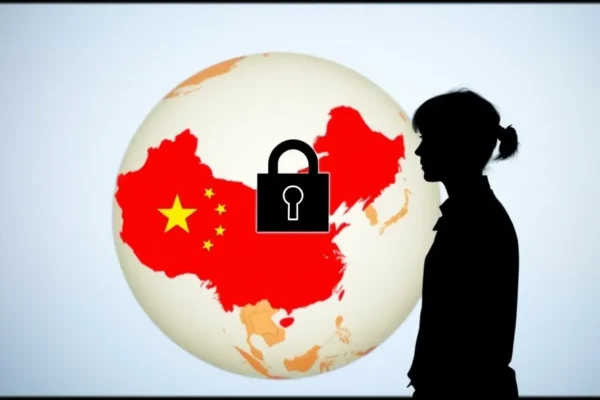
Understanding the Concept of National Resource Control
When we talk about a China travel law or new overseas travel restrictions, we are actually talking about a concept called human capital protection. To understand this, we first need to define what human capital is. In economics, human capital refers to the collective skills, knowledge, experience, and health that individuals possess, which makes them valuable to an economy. Think of it like a high-performing professional sports team. A team does not just want to win games; they want to protect their “playbook” (their strategy) and their “star players” (their most talented members). If a star player leaves for a rival team, or if a rival team steals the playbook, the original team loses its competitive advantage.
A nation functions much like that sports team. In the modern global economy, a country’s wealth is no longer just about how much gold or oil it has in the ground. Instead, wealth is increasingly found in advanced technology, unique scientific discoveries, and the highly trained skilled workers who create them. When a government introduces laws that monitor or restrict travel, they are essentially trying to “guard the playbook” and “keep the star players” within their borders to ensure their economic and national strength remains intact.
People should care about this because these laws represent a shift in how nations compete. When borders become more controlled, it changes how businesses operate, how scientists collaborate, and how individuals can move their lives and careers across the globe. Understanding this helps you see that travel restrictions are often not just about security, but about managing a nation’s most valuable economic assets.
How the Mechanism of Travel Oversight Works
To understand how these new regulations function, imagine a large corporation that has just developed a revolutionary new software. To protect this software, the company might implement strict rules about which employees can travel to certain locations and what information they can carry on their laptops. The China government is applying a similar logic on a national scale.
The mechanism typically works through a combination of border control, updated immigration policy, and increased scrutiny of specific professional sectors. Here is a step-by-step breakdown of how this might look in a real-world scenario:
- Sector Identification: The government identifies specific industries that are critical to national security, such as semiconductors, artificial intelligence, or biotechnology.
- Personnel Scrutiny: Individuals working in these fields, especially those categorized as skilled workers, may face extra layers of review when applying for exit visas or travel permits.
- Information Control: Laws regarding state secrets are expanded. This means that what a person knows—or even what they are permitted to discuss while abroad—is strictly monitored to prevent the accidental leak of sensitive data.
- Travel Monitoring: Under the new framework, the China travel law context suggests that the government may track where key experts go, who they meet with, and what technologies they are exposed to while overseas.
Think of it like a high-security laboratory. You can enter and leave, but you must show your ID at every door, you cannot take any files out with you, and if you go to a competitor’s facility, the security team will want a detailed report of your visit. This creates a “closed loop” intended to keep vital intellectual property and talent within the domestic economy.
The Economic and Personal Impact of Restricted Movement
Changes in international travel patterns are never just about the travelers themselves; they create ripples that affect the entire global economy. These impacts can be divided into personal and economic categories.
Personal Financial and Career Impact
For the individual, particularly those in high-tech or scientific roles, these overseas travel restrictions can limit career mobility. In the past, a scientist might have easily moved between universities in different countries to collaborate on research. Now, they may face delays, extra paperwork, or even denials. This can affect their ability to earn higher salaries, participate in global conferences, or build an international professional network. For many, their “human capital” is their most significant financial asset, and if they cannot “export” their skills or “import” new ideas due to travel regulations, the value of that asset could be impacted.
Economic and Market Impact
On a larger scale, these moves affect how companies invest money. When a government prioritizes national security over open movement, it increases what economists call “geopolitical risk.”
- For Businesses: Multinational corporations may find it harder to send staff to China or bring Chinese talent to their global offices. This can lead to “decoupling,” where companies split their operations into two separate systems to avoid legal complications.
- For Innovation: Science often moves faster when people share ideas. If skilled workers are restricted from traveling, the pace of global innovation might slow down in certain sectors, even if it accelerates within a single country.
- For Markets: Investors watch these policy shifts closely. Uncertainty regarding immigration policy and border control can make markets volatile, as investors worry about supply chain disruptions or sudden changes in trade relations.
The Shift Toward National Security Under Xi Jinping
To understand why this is happening now, we have to look at the evolution of China’s economic strategy. For several decades, China’s primary goal was “opening up” to the world. This era was defined by welcoming foreign investment, participating in global trade, and encouraging the exchange of ideas and people.
However, under the leadership of Xi Jinping, the focus has shifted significantly. The current administration has placed a much heavier emphasis on “self-reliance” and “national security.” Recent data and policy shifts show a move away from the idea that global integration is always beneficial. Instead, the government now views certain technologies and pieces of knowledge as weapons in a global competition for dominance.
This shift was triggered by several factors, including trade tensions with the West and the realization that certain “chokepoint” technologies (technologies that a country cannot live without) are controlled by foreign powers. By tightening the China travel law environment and protecting state secrets, the government aims to ensure that China’s rise in advanced technology is not hindered by external influence or the loss of its own talent to other nations.
Practical Implications for Your Financial Life
While you may not be a high-level scientist or a government official, these macro-level changes can still influence your financial decisions. Here is how you should approach this information:
- Monitor Geopolitical Risk: If you invest in international stocks or funds that have heavy exposure to China, pay attention to news regarding travel regulations and national security laws. These policies can affect the profitability of companies overnight.
- Watch the “Brain Drain” or “Brain Gain”: In the job market, look for trends in where talent is moving. A country that successfully retains its skilled workers is often a stronger long-term economic bet than one that is losing them.
- Understand Compliance: For business owners or professionals working with international partners, stay updated on what constitutes a “secret” or a “regulated technology.” What was legal to discuss two years ago might be a compliance risk today.
A common misconception is that these laws only apply to spies. In reality, these regulations are often broad and can affect legitimate academics, business travelers, and engineers. The key is to recognize that the boundary between “business” and “national security” is becoming increasingly blurred.
Connecting the Dots to Broader Financial Ideas
Understanding the China travel law context helps deepen your knowledge of several other critical financial concepts:
- Human Capital: As discussed, this is the value of people’s skills.
- Intellectual Property (IP): The legal rights that protect creations of the mind, such as inventions and software.
- Geopolitical Risk: The risk that political decisions or instability in a country will affect global markets.
- Supply Chain Management: How companies coordinate the production and movement of goods, which is heavily impacted by border control and immigration policy.
If you want to understand why tech stocks move when a new trade law is announced, studying these concepts will give you the foundation you need.
Common Questions About China’s Travel Regulations
How does this affect international business?
It increases the cost and complexity of doing business. Companies must spend more on legal compliance and risk management to ensure their employees do not accidentally violate travel regulations or mishandle state secrets.
Will these restrictions affect tourism?
While the primary focus is on skilled workers and technology sectors, increased border control and scrutiny can sometimes create a general atmosphere of caution that affects international travel for all citizens.
What is the main goal of the China government with these laws?
The primary goal is to protect national security by ensuring that advanced technology and vital information do not leave the country, while also preventing the loss of essential skilled workers.
Does this mean China is closing its borders?
Not necessarily. It is more about “selective” or “managed” movement. The goal is to allow normal commerce while placing heavy filters on sectors deemed critical to the nation’s competitive advantage.
Can individual travelers control these changes?
No, individuals cannot control immigration policy or overseas travel restrictions. However, professionals can prepare by staying informed about the legal requirements of their specific industry.
How do these laws impact global inflation?
If these restrictions lead to a breakdown in global trade or “decoupling,” it could lead to higher costs for goods. When it becomes harder to move talent and technology freely, the efficiency of the global economy can decrease, which often drives prices up.
Disclaimer: This is educational content, not financial advice. Financial situations vary; consult a professional for personal advice. There are no guarantees regarding the economic outcomes of government policy changes.