

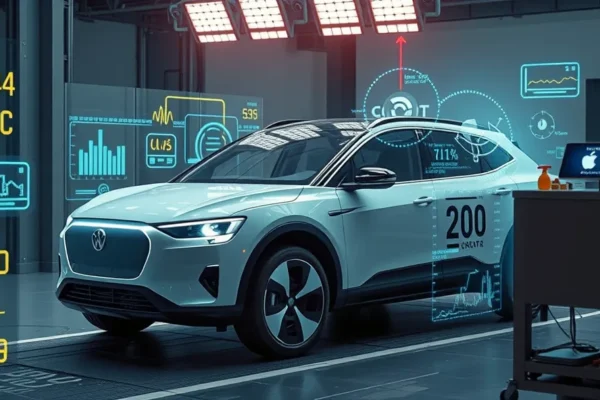
The road ahead for car safety is changing dramatically, and at the heart of this evolution are self-driving cars. These aren’t just fancy new vehicles; they’re forcing us to rethink how we ensure cars are safe for everyone. For years, crash testing has been the gold standard for automotive safety. We’ve all seen those dramatic videos of cars being slammed into barriers to see how they hold up. But what happens when the driver isn’t fully in control anymore? That’s where things get interesting, and it means a whole new ballgame for vehicle testing and setting new safety regulations.
Rethinking the Crash Test Dummy
For decades, our understanding of car safety has relied on a simple premise: how well does a car protect its human occupants during a crash? Traditional crash testing involves strapping sophisticated dummies into car seats and then smashing the vehicle into a solid wall, a moving barrier, or even another car at specific speeds. Sensors inside the dummies measure the forces acting on the human body – things like head, neck, and chest impacts. This data helps engineers understand potential injuries and guides the development of safety features like airbags and crumple zones. The NHTSA (National Highway Traffic Safety Administration) in the US, and similar organizations worldwide, use these results to assign safety ratings and set minimum safety standards for all new cars.
But autonomous vehicles, or self-driving cars, introduce a complex new variable: the AI driver. When a car can perceive its surroundings, make decisions, and steer itself, the nature of potential accidents can change. Instead of just a human driver making a mistake, an AI might react differently to a sudden obstacle, or a system failure could lead to an unexpected maneuver. This means we can’t just rely on testing how well a car protects a dummy when it hits a wall. We need to understand how the car’s AI would handle a myriad of unpredictable scenarios, how its sensors and software perform under extreme conditions, and how these systems interact with traditional safety features. It’s a shift from testing human-centric protection to testing the entire intelligent system’s ability to prevent or mitigate accidents.
How Self-Driving Cars Change the Safety Game
The introduction of AI in cars fundamentally alters how we approach automotive safety. Think about it: a self-driving car is constantly processing a flood of information from cameras, radar, and lidar. Its safety isn’t just about airbags and seatbelts anymore; it’s about the reliability and decision-making capabilities of its software. This means new types of testing are emerging.
Instead of just physical impact tests, we’re seeing more emphasis on simulation and real-world testing in controlled environments. Imagine a scenario where a child suddenly runs into the road. A human driver might slam on the brakes or swerve. How would the self-driving system react? Would it brake more effectively than a human? Would its swerve be more controlled? Engineers need to test these precise “edge cases” – those rare but critical situations that push the limits of the technology. This involves millions of miles of simulated driving and countless hours of real-world data collection, far beyond what a physical crash test can provide.
This shift also impacts what we, as consumers, need to consider. We’re not just buying a car; we’re investing in a complex piece of technology. Understanding how the car’s autonomous features are tested and validated becomes crucial. For instance, if you travel frequently for work, the idea of a car that can handle the highway driving for you is appealing. This means evaluating not just how safe it is in a crash, but how reliably it can navigate traffic, avoid hazards, and transition control back to you when needed. For families, the focus might be on how the autonomous features ensure a safer commute to school, reducing the chance of driver distraction-related incidents.
Who Needs to Pay Attention to This Shift?
Honestly, everyone who drives or rides in a car should care about this. The evolution of self-driving cars and their impact on crash testing directly influences the future of road safety for all of us, whether we own a self-driving vehicle or not. Safer cars, regardless of how they achieve that safety, benefit everyone on the road.
Best for: Early adopters and tech enthusiasts who are excited about the potential of autonomous vehicles and want to understand the advanced safety measures behind them. Also, crucial for regulators and automotive engineers who are shaping the next generation of car technology.
Good for: Commuters looking for ways to reduce driving fatigue, frequent travelers, and anyone interested in the cutting-edge of innovation in the automotive industry. As these technologies mature, they will influence the safety of all vehicles.
Skip if: You’re not interested in the technological advancements in cars and are perfectly content with traditional driving. However, even then, you’ll indirectly benefit from the improved overall safety standards that this evolution brings.
What Are the Alternatives to Traditional Crash Testing?
The automotive industry isn’t just abandoning traditional crash tests. They remain a vital part of the safety puzzle. However, they are no longer the only piece. The alternatives and complementary methods include:
- Advanced Simulations: Using powerful computers to model millions of crash scenarios, including those unique to self-driving systems, without destroying physical vehicles. This is incredibly cost-effective and allows for testing a wider range of conditions.
- Closed-Course Testing: Recreating specific accident scenarios on private test tracks. This allows for controlled experiments with real vehicles and autonomous systems under various conditions, such as sudden braking or obstacle avoidance.
- Data Logging and Analysis: Collecting vast amounts of data from real-world driving (both human-driven and autonomous) to identify potential safety risks and how autonomous systems perform in everyday situations.
- Hardware-in-the-Loop (HIL) Testing: Connecting the car’s actual computer and software systems to a simulated environment to test their responses in real-time. It’s like a virtual test drive for the car’s brain.
In terms of how these stack up, simulations and HIL testing are excellent for identifying software bugs and testing reactions to countless scenarios much faster than physical tests. Closed-course testing offers a bridge, allowing real-world system interaction before wider deployment. Traditional crash tests, however, are still indispensable for validating the physical integrity of the vehicle’s structure and the deployment of passive safety systems like airbags and seatbelts under extreme forces.
Getting Started with New Safety Standards
For the average consumer, understanding the intricacies of vehicle testing for self-driving cars isn’t something you’ll actively “set up.” Instead, it’s about what manufacturers and regulatory bodies like the NHTSA are doing behind the scenes. When buying a car that features advanced driver-assistance systems (ADAS) or promises a degree of autonomy, you’ll want to look for information on how the manufacturer has validated these systems.
This often translates to looking for certifications, specific safety ratings for ADAS features (which are starting to emerge), and transparent reporting from the manufacturer. There’s no “learning curve” for the consumer in terms of setting up these testing methodologies. The learning curve is for the car – its AI needs to learn how to handle complex driving situations safely. For the user, it means learning how to best interact with and understand the limitations of these systems. Reputable brands will provide clear guides on when and how to use these features, and importantly, when to take back manual control.
The Real-World Wins for Safer Roads
The push towards new crash testing methods driven by self-driving cars brings several tangible benefits for everyday drivers:
- Reduced Accidents: The ultimate goal is to significantly lower the number of accidents caused by human error, fatigue, or distraction. AI systems, when properly developed and tested, can react faster and more consistently than humans.
- Improved Mitigation: Even when accidents are unavoidable, advanced autonomous systems and improved safety features (developed through rigorous testing) are designed to minimize the impact and severity of injuries.
- More Predictable Responses: While unpredictable situations are the challenge, the goal is for autonomous systems to respond in a highly predictable and controlled manner, reducing the chaos often associated with accidents.
- Enhanced Driver Assistance: Features like adaptive cruise control and lane-keeping assist, which are precursors to full autonomy, are already making driving less stressful and safer by assisting drivers in maintaining safe speeds and positions.
- Data-Driven Improvements: The vast amounts of data collected during the testing of autonomous systems feed back into improving the safety of all vehicles, not just those that are fully self-driving.
User feedback on current ADAS features often highlights increased confidence on long drives and a reduction in minor fender-benders due to features that assist with braking and steering. The ongoing development means these systems are constantly getting smarter and more reliable.
The Roadblocks and Limitations Ahead
Despite the promise, there are significant hurdles and limitations to this evolution in automotive safety:
- Complexity of Real-World Scenarios: Simulating every possible road condition, weather event, and human behavior is incredibly difficult. The real world is far more chaotic than any computer model.
- Ethical Dilemmas: In unavoidable accident situations, how should an AI prioritize? Should it protect the occupants at all costs, or minimize harm to pedestrians, even if it means risking the occupants? These are complex ethical questions that testing alone can’t fully resolve.
- Software Glitches and Hacking: As with any complex software, there’s always a risk of bugs, system failures, or even malicious cyberattacks that could compromise the safety of autonomous systems. Rigorous cybersecurity testing is paramount.
- Cost of Development and Implementation: Developing and validating these advanced autonomous systems is incredibly expensive, which can translate to higher vehicle prices for consumers.
- Regulatory Lag: While testing methods are evolving, regulatory frameworks often struggle to keep pace with the rapid advancements in car technology, leading to a gap in standardized safety validation.
Some users have reported instances where ADAS features have been overly sensitive or have disengaged unexpectedly, requiring immediate manual intervention. This highlights that while these systems are improving, they are not yet infallible.
Price, Value, and the Road Ahead
The direct cost of this evolution isn’t something you pay at the point of sale for a new car, at least not explicitly for “crash testing.” Instead, the investment in advanced vehicle testing and development is baked into the price of new vehicles, particularly those equipped with sophisticated ADAS or aiming for higher levels of autonomy. Cars with these advanced features often carry a premium price tag compared to their more basic counterparts. For example, a car with Level 2 ADAS might cost a few thousand dollars more than a similar model without it.
Is it worth it? For consumers who prioritize the potential for reduced stress on long commutes or the added layer of assistance, the value proposition can be strong. However, if you enjoy the act of driving or are on a tight budget, the added cost may not be justified. There are no direct “budget alternatives” for advanced autonomous testing; rather, the budget alternative is choosing a vehicle with fewer advanced features and relying on traditional safety standards.
The long-term value comes from the potential for fewer accidents and improved safety for everyone. However, the rapid pace of technological change means that the systems in a new car today might be considered basic in five to ten years. For now, the value is in the enhanced driver assistance and the promise of future safety improvements derived from this new era of testing.
The Verdict: Is This the Future of Car Safety?
The transition in crash testing and safety standards driven by self-driving cars is not a fad; it’s a fundamental shift in how we ensure automotive safety. It’s about moving beyond static impact tests to dynamic, data-driven, and simulation-heavy validation of complex intelligent systems.
Who should buy into this: If you’re an early adopter, someone who wants the latest in driving assistance technology, or someone who prioritizes safety above all else and trusts in rigorous technological development, then vehicles incorporating these advanced testing methodologies are for you. They represent the cutting edge of car technology.
Who should wait or look elsewhere: If you’re a traditionalist who enjoys driving and is skeptical of automation, or if you’re on a strict budget, you might be better served by focusing on vehicles with excellent traditional safety ratings. The full benefits of advanced autonomy and its associated testing are still unfolding.
The honest take: This evolution is critical for making roads safer in the long run. While traditional crash tests will likely remain, the addition of sophisticated simulation and AI testing is a necessary step towards a future with fewer accidents. The best use case right now is for those who can leverage advanced driver-assistance systems for added comfort and safety on their daily commutes and longer journeys, understanding their capabilities and limitations.
Common Questions About Self-Driving Cars and Safety
What does this mean for my current car’s safety rating?
Your current car’s safety rating is based on traditional testing methods. This new evolution in testing primarily applies to newer vehicles being developed with advanced driver-assistance systems (ADAS) and autonomous capabilities. However, as these new standards mature, they will influence overall vehicle safety regulations for all cars.
Will traditional crash tests disappear entirely?
No, traditional crash testing is unlikely to disappear. It remains a crucial method for evaluating the physical integrity of a vehicle’s structure and passive safety features like airbags and seatbelts. Instead, it’s being augmented by new testing methods.
How can I tell if a car has been tested for self-driving safety?
Manufacturers are starting to provide more information about their ADAS features and how they are tested. Look for details on their websites, in owner’s manuals, and in independent reviews that specifically mention the testing and validation of these systems. Organizations like NHTSA are also developing new ways to rate these features.
Are self-driving cars truly safer than human drivers?
The goal of autonomous vehicles and advanced vehicle testing is to make them significantly safer than human drivers, by reducing accidents caused by distraction, fatigue, and impairment. However, the technology is still evolving, and widespread real-world data is still being collected to definitively prove this across all driving scenarios.
What is the biggest challenge in crash testing self-driving cars?
The biggest challenge is the sheer complexity and unpredictability of the real world. AI systems need to be tested against an almost infinite number of potential scenarios, including rare “edge cases” that are difficult to replicate and predict, making comprehensive testing a monumental task.
Will self-driving cars be more expensive due to these new tests?
The development and rigorous testing of advanced AI in cars and autonomous systems are indeed expensive. This increased cost of development is reflected in the purchase price of vehicles equipped with these sophisticated technologies, often making them a premium option.
Product prices and availability vary by region. Verify current pricing before purchase.











