

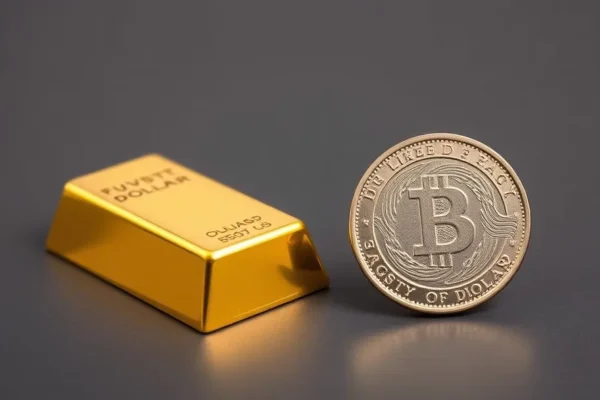
The Gold-Dollar Dance: Understanding an Inverse Relationship
The global financial stage often features intricate relationships between different assets and currencies. One of the most discussed is the inverse correlation between the price of gold and the value of the U.S. dollar. When the dollar weakens, gold prices tend to climb, and conversely, a stronger dollar often pushes gold prices down. This dynamic isn’t a coincidence; it’s driven by a complex interplay of investor sentiment, economic indicators, and the fundamental roles both gold and the dollar play in the international monetary system. As a business analyst, understanding this relationship is crucial for navigating global market trends, assessing investment strategies, and comprehending competitive positioning in sectors influenced by precious metals and currency fluctuations.
Why Gold and the U.S. Dollar Move in Opposite Directions
At its core, the inverse relationship between gold and the U.S. dollar stems from their perceived value and utility in the global economy. Gold, a precious metal, has historically been viewed as a store of value. For centuries, it has maintained its purchasing power, making it an attractive asset during times of economic uncertainty. When investors lose confidence in traditional currencies, like the U.S. dollar, they often turn to gold as a safe haven.
The U.S. dollar, on the other hand, is the world’s primary reserve currency. This means it’s widely used in international trade, foreign exchange markets, and held by central banks worldwide. Its value is influenced by a multitude of factors, including U.S. economic health, interest rates, and geopolitical stability.
The inverse relationship can be explained through several lenses:
- Investor Sentiment and Safe Haven Demand: When economic indicators suggest instability, such as rising inflation, geopolitical tensions, or concerns about the U.S. economy, investors seek to protect their wealth. Gold is a prime candidate for this “safe haven” status. As demand for gold increases, its price rises. Simultaneously, if the dollar is perceived as weakening due to these same economic concerns, its exchange rate falls relative to other currencies. This combination of increased gold buying and a declining dollar value creates the inverse correlation.
- Currency as a Pricing Mechanism: A significant portion of gold is priced in U.S. dollars. When the dollar weakens, it takes more dollars to buy the same amount of gold. This makes gold relatively cheaper for holders of other currencies, potentially increasing demand from non-dollar buyers and further pushing up the dollar-denominated price of gold. Conversely, a stronger dollar makes gold more expensive for international buyers, which can dampen demand and lead to lower dollar prices for gold.
- Interest Rates and Opportunity Cost: Interest rates play a critical role. When U.S. interest rates rise, holding dollar-denominated assets like U.S. Treasury bonds becomes more attractive, offering a yield. This higher yield increases the “opportunity cost” of holding non-yielding assets like gold. Investors may sell gold to invest in higher-yielding dollar assets, causing gold prices to fall. Concurrently, higher interest rates often strengthen the dollar, as it attracts foreign capital seeking better returns.
- Inflation Hedge: Gold is widely considered an inflation hedge. When inflation erodes the purchasing power of fiat currencies like the U.S. dollar, investors often buy gold to preserve their wealth. A significant increase in inflation can lead to a decrease in the dollar’s value and a corresponding increase in gold prices.
The Role of Investor Sentiment and Economic Indicators
Investor sentiment is a powerful driver in financial markets. During periods of high uncertainty, fear can drive investors towards assets perceived as safe and stable, such as gold. This sentiment is often amplified by, and reacts to, key economic indicators.
- Inflation Data: Reports on consumer price indices (CPI) and producer price indices (PPI) are closely watched. High inflation erodes the purchasing power of fiat currencies and typically bolsters demand for gold. If U.S. inflation is rising rapidly, it can weaken the dollar and boost gold prices.
- Employment Figures: Strong U.S. employment data can signal a robust economy, potentially leading the Federal Reserve to raise interest rates. Higher interest rates can strengthen the dollar and make gold less attractive, leading to a downward pressure on gold prices. Conversely, weak employment data might suggest an economic slowdown, potentially leading to lower interest rates, a weaker dollar, and a stronger gold price.
- Geopolitical Events: Major global events, such as wars, political instability, or trade disputes, can create widespread uncertainty. In such times, investors often flee to tangible assets like gold, increasing its demand and price, while simultaneously seeking refuge in perceived stable currencies like the U.S. dollar, but often the flight to safety for currencies is more complex and depends on specific circumstances. However, broad global instability can lead to a general decrease in currency values as investors move capital to more secure locations or assets.
- Central Bank Policies: Decisions by the U.S. Federal Reserve regarding interest rates and quantitative easing (the process of injecting money into the economy) have a direct impact. A tightening monetary policy (raising interest rates) typically strengthens the dollar and can pressure gold prices lower. A dovish policy (lowering interest rates or quantitative easing) can weaken the dollar and support gold prices.
Market Trends and Competitive Positioning
The interplay between gold and the U.S. dollar has significant implications for various industries and market participants.
- Precious Metals Market: For companies involved in mining and trading precious metals, understanding this dynamic is paramount. A sustained period of a weak dollar and rising gold prices can boost revenues and profitability for gold mining companies. Conversely, a strong dollar environment can pressure their margins.
- Currency Trading and Forex Markets: Forex traders heavily monitor the U.S. dollar’s strength against other currencies, as well as gold price movements, to inform their trading strategies. The inverse relationship presents opportunities for arbitrage and directional bets.
- Investment Funds and Portfolio Management: Investment managers and individual investors use gold as a diversifier in their portfolios. When managing a global portfolio, the U.S. dollar’s strength relative to other currencies affects the value of dollar-denominated assets when converted back to a local currency. Understanding the gold-dollar dynamic helps in balancing risk and return.
- Commodities and Global Trade: While gold is often treated as a monetary asset, it is also a commodity. Fluctuations in its price, influenced by currency movements, can impact the cost of raw materials for certain industries, though this impact is often secondary to its role as a safe haven.
Navigating the Future
The inverse relationship between gold and the U.S. dollar is a persistent feature of global financial markets, driven by fundamental economic principles and investor psychology. While this relationship can provide valuable insights, it is not always a perfect correlation. Other factors, such as supply and demand dynamics in the physical gold market, global economic growth, and shifts in investor preferences, can also influence prices.
As business analysts, recognizing this inverse correlation is a critical step in comprehending the broader economic landscape. It helps in forecasting potential market trends, assessing investment risks, and understanding the strategic decisions made by corporations operating in or influenced by the global currency and commodity markets. Staying informed about key economic indicators, central bank policies, and geopolitical developments will be essential for anticipating future movements in both the U.S. dollar and gold prices.
This analysis highlights the strategic importance of understanding macro-economic drivers. Businesses that can effectively anticipate or react to shifts in the gold-dollar dynamic, whether through hedging strategies, diversified investment portfolios, or adaptable operational plans, will be better positioned for success in the complex global marketplace.
This business outcome is subject to execution risk.











