

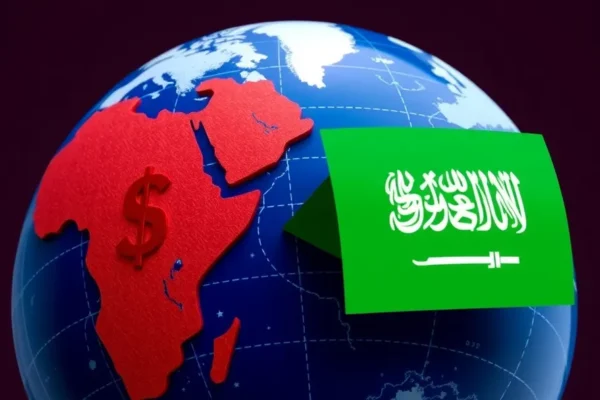
Understanding De-dollarization and the mBridge Project
To understand the current shifts in global finance, we first need to understand two major concepts: de-dollarization and the mBridge project. While these terms sound complex, they represent a fundamental change in how the world’s countries trade with one another.
De-dollarization is the process where countries try to reduce their reliance on the United States dollar for international trade and as part of their financial reserves. For decades, the U.S. dollar, often called the “greenback,” has been the world’s primary currency. If a company in Brazil wants to buy electronics from Japan, they often convert their Brazilian Real into U.S. dollars first, and then convert those dollars into Japanese Yen. This makes the U.S. dollar the “middleman” of global commerce.
mBridge is a new kind of digital tool designed to bypass that middleman. It is a platform that allows different countries to use their own digital currency—specifically a CBDC (Central Bank Digital Currency)—to trade directly with each other. Think of a CBDC as a digital version of the physical cash in your wallet, but instead of being issued by a private bank, it is issued and managed by a country’s central bank.
Think of it like a massive global playground. For years, the only way children could trade toys was by using a specific type of “Red Token” (the U.S. dollar). If a child had a “Blue Token” (another currency), they had to find someone to swap it for a Red Token before they could buy anything. The mBridge project is like building a new, high-speed digital bridge that allows children to trade their Blue Tokens, Green Tokens, and Yellow Tokens directly with each other, without ever needing to touch a Red Token.
Understanding these concepts is vital because the way countries trade determines the value of money, the cost of goods like oil and food, and the overall stability of the global economy. When the “middleman” currency changes, the entire economic landscape shifts.
How Digital Cross-Border Payments Work
To see why a project like mBridge is such a big deal, we have to look at how the current system works and why it is often slow and expensive. Currently, most cross-border payments rely on a messaging system called SWIFT and a network of “correspondent banks.”
The Traditional Way: A Step-by-Step Scenario
Imagine Person A in Thailand wants to pay Person B in Germany for a shipment of machinery. Here is what typically happens:
- Step 1: Person A tells their Thai bank to send money.
- Step 2: The Thai bank cannot talk directly to the German bank. It must send a message through the SWIFT network.
- Step 3: The Thai bank sends the money to a large “correspondent bank” in the United States, because most international trades are settled in U.S. dollars.
- Step 4: The U.S. bank processes the transaction and sends the funds to the German bank.
- Step 5: The German bank converts the dollars into Euros and gives the money to Person B.
This process can take several days and involves multiple fees for every bank involved in the chain. It is like having to drive through three different cities just to get to your neighbor’s house.
The mBridge Way: A Digital Direct Route
Now, imagine if Thailand and Germany were both part of the mBridge project. Instead of using the U.S. dollar as a bridge, they use a shared digital platform.
- Step 1: The Thai central bank issues a digital version of the Thai Baht (a CBDC).
- Step 2: Person A sends that digital Baht through the mBridge platform.
- Step 3: The mBridge platform instantly recognizes the value and swaps it for the German central bank’s digital Euro.
- Step 4: Person B receives the digital Euros immediately.
This is like having a teleportation device. The transaction is nearly instant, much cheaper, and removes the need for a third-party country to act as the middleman. This direct connection is the core goal of the China payment system and other similar digital initiatives.
Why the Saudi Move Matters to the World
The news that the Saudi central bank, known as SAMA, is showing caution or withdrawing from deep involvement in the mBridge project is a massive signal in global finance. This matters because of a concept called the petrodollar.
For decades, a major reason for the U.S. dollar’s dominance has been that oil—the most important commodity in the world—is priced and sold almost exclusively in U.S. dollars. Because every country needs oil, every country needs to hold large amounts of U.S. dollars. This creates a constant, global demand for the “greenback.”
The Economic Impact
If Saudi Arabia, the world’s largest oil exporter, were to fully embrace a system like mBridge and start selling oil in digital currencies other than the dollar, the greenback dominance would be significantly weakened. This could lead to several things:
- Changes in Interest Rates: If demand for dollars drops, the U.S. government might find it more expensive to borrow money, which can influence interest rates for everyone, including you.
- Inflation Shifts: A weaker dollar can make imported goods more expensive in the U.S., potentially driving up inflation.
- Market Volatility: Large shifts in how money moves can cause sudden changes in stock and bond markets.
Who Benefits and Who Loses?
Countries looking to increase their own influence, such as China, benefit from systems that bypass the U.S.-led financial architecture. Conversely, the United States and the current international banking system face the risk of losing their central role in managing global wealth. For the average person, these shifts don’t change how you buy groceries today, but they do change the long-term value of the currency in your savings account.
The History and Context of Global Currency Shifts
The dominance of the U.S. dollar did not happen by accident. It was built over decades through a series of economic agreements and the sheer size of the U.S. economy. The “petrodollar” era truly solidified in the 1970s when the U.S. and Saudi Arabia reached agreements that ensured oil would be traded in dollars in exchange for U.S. security and economic support.
However, the world is changing. In the last five to ten years, several factors have triggered interest in de-dollarization:
- Geopolitical Tensions: When the U.S. uses the dollar-based financial system to impose sanctions on countries (like Russia), other nations begin to worry that they could be next. They want “backup” systems that the U.S. cannot turn off.
- Technological Advancement: The rise of blockchain and digital currency technology has finally made it possible to create a real alternative to the old, slow banking networks.
- The Rise of the BRICS: Groups of emerging economies (Brazil, Russia, India, China, and South Africa) are actively looking for ways to trade without relying on Western systems.
The mBridge project is the most advanced attempt to date to turn these ideas into a working reality. Saudi Arabia’s recent hesitation shows that while the technology is ready, the political and strategic decisions are incredibly difficult. They must balance their growing relationship with China against their long-standing security ties with the United States.
Practical Implications: What to Watch For
While it is easy to get lost in the drama of “the end of the dollar,” it is important to look at this through a practical lens. De-dollarization is a slow, grinding process, not an overnight event. Most experts agree that the U.S. dollar will remain the world’s primary reserve currency for many years to come.
Common Misconceptions
A common mistake is thinking that if a country stops using the dollar for one type of trade, the dollar becomes worthless. In reality, the global economy is massive. Even if Saudi Arabia starts using a digital currency for some oil trades, the U.S. dollar will still be used for millions of other transactions every single day.
What to Watch For in the News
To stay informed about how these shifts might affect the broader economy, keep an eye on these indicators:
- Central Bank Reserves: Watch reports from the International Monetary Fund (IMF) to see if countries are increasing their holdings of gold or other currencies while decreasing their U.S. dollar reserves.
- New Trade Agreements: Look for news regarding “bilateral trade” (trade between two specific countries) being settled in local currencies rather than dollars.
- CBDC Implementation: Monitor which countries are successfully launching digital currency projects and whether those projects start connecting to one another.
Related Financial Concepts
To deepen your understanding of this topic, you may want to explore these related areas:
- The SWIFT System: Understanding the current standard for international messaging helps explain why mBridge is seen as a disruptor.
- Inflation and Purchasing Power: Learning how currency value affects the cost of living will help you see why de-dollarization matters to your wallet.
- Geopolitics and Economics: This is the study of how political decisions between nations drive economic changes.
- Monetary Policy: This explores how central banks, like the Federal Reserve or SAMA, control the supply of money to manage their economies.
Common Questions About De-dollarization and mBridge
What exactly is the mBridge project?
The mBridge project is a multi-country initiative designed to create a platform for cross-border payments using CBDC technology. It allows central banks to exchange digital currencies directly, making international trade faster and cheaper.
Is the U.S. dollar losing its dominance because of de-dollarization?
The trend of de-dollarization is real, as more countries look for ways to diversify their holdings. However, the “greenback” remains the dominant global currency due to the depth of U.S. markets and its central role in global finance.
Why is the Saudi central bank (SAMA) hesitant about mBridge?
The Saudi central bank must balance many interests. While the China payment system offers efficiency, Saudi Arabia also maintains deep, long-term strategic and security ties with the United States that are built on the dollar-based system.
How does a CBDC differ from Bitcoin?
A CBDC is a digital currency issued and regulated by a government’s central bank, meaning it is centralized and stable. Bitcoin is a decentralized digital asset that is not controlled by any government or central bank.
Will de-dollarization make things more expensive for me?
It could potentially impact inflation and interest rates if the demand for U.S. dollars drops significantly. While these are global shifts, they can eventually influence the cost of imported goods and the value of savings in the long term.
Can individuals control de-dollarization?
No, individuals cannot control these massive geopolitical shifts. However, understanding these trends can help you make more informed decisions about how you view global economic stability and long-term market trends.
This is educational content, not financial advice. Financial situations vary; consult a professional for personal advice. Financial outcomes are never guaranteed and depend on a wide range of individual and global circumstances.











