

This article analyzes a recent strategic decision by a major burger chain and its implications for customers, competitors, and the fast food industry. Business outcomes are subject to execution risk.
Burger Chain Pulls Breakfast Menu at Hundreds of Locations
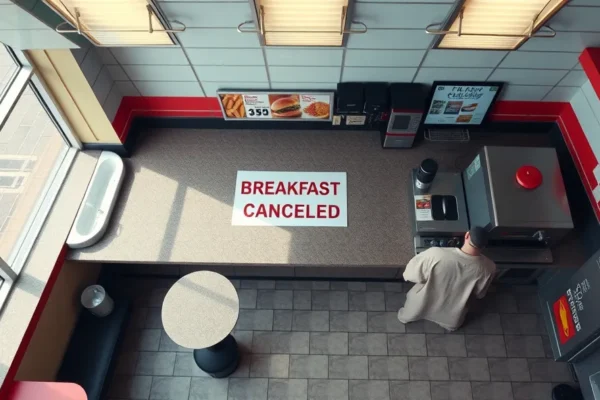
A significant shift has occurred in the fast food landscape as a major burger chain has announced the cancellation of its breakfast service at hundreds of its restaurants. While the exact number of affected locations and the precise timeline vary by region, credible reports from industry news outlets such as Restaurant Business Online indicate that this decision impacts a substantial portion of the chain’s footprint. This move, affecting the popular breakfast menu, marks a considerable change for both the company and its loyal morning customers. The trigger for this sweeping business decision appears to be a combination of evolving consumer habits and a strategic re-evaluation of operational efficiency.
Strategic Rationale Behind the Breakfast Cancellation
The strategic rationale behind this widespread breakfast cancellation by the burger chain is multi-faceted, aiming to address operational inefficiencies and sharpen its competitive focus. According to statements made by company executives in earnings calls and investor briefings, the breakfast daypart has historically presented unique operational challenges. These include managing a separate set of ingredients, specialized equipment, and often a different staffing model compared to lunch and dinner service. By eliminating breakfast at these locations, the company seeks to streamline kitchen operations, reduce food waste, and potentially improve the speed and quality of service for its core lunch and dinner menus. This decision aligns with a broader trend in the fast food industry where efficiency and profitability are paramount. Furthermore, this business decision may be an attempt to capture market share by focusing resources on dayparts where the brand has a stronger competitive advantage.
Competitive Context in the Fast Food Arena
This strategic move by the burger chain places it in a more defined competitive context within the fast food sector. For years, breakfast has been a fiercely contested territory, with rivals like McDonald’s, Burger King, and Dunkin’ heavily investing in their morning offerings. McDonald’s, in particular, has long been a dominant force in the fast food breakfast market. By stepping back from breakfast in certain locations, this burger chain may be acknowledging that it cannot effectively compete across all dayparts with such established players. This could be seen as a tactical retreat to reinforce its strength in lunch and dinner, where it holds a stronger market position. Competitors who maintain robust breakfast menus might gain an immediate advantage in attracting morning customers from the affected locations. However, this move could also free up resources for the burger chain to innovate and expand its lunch and dinner offerings, potentially posing a renewed threat to rivals in those dayparts.
Industry Implications and Future Trends
The breakfast cancellation by this prominent burger chain signals a potential inflection point for the broader fast food industry. It suggests a growing acknowledgment that not all dayparts are equally profitable or strategically advantageous for every brand. This move could encourage other fast food giants to re-evaluate their own breakfast operations. We might see more selective pruning of menus or a greater focus on specific dayparts where a company demonstrates a clear competitive edge. This trend could lead to a more polarized fast food market, with some chains doubling down on breakfast and others strategically withdrawing. It also highlights the ongoing pressure for operational efficiency and profitability in an increasingly competitive environment. Industry analysts are watching to see if this leads to a larger trend of menu simplification across the sector.
Financial and Operational Impact Analysis
The financial and operational impact of canceling breakfast at hundreds of restaurants will be significant. In the short term, the company may experience a reduction in overall revenue from the affected locations. However, this could be offset by cost savings related to reduced food inventory, less labor required for morning shifts, and optimized kitchen workflows. The primary goal is likely to improve profitability per restaurant by focusing on higher-margin dayparts. Over the long term, if the operational efficiencies gained translate into faster service and improved customer satisfaction during lunch and dinner, the financial impact could be positive. According to recent earnings reports from similar fast food giants, operational leverage and menu simplification have been key drivers of improved margins. The specific timeline for realizing these financial benefits will depend on how effectively the company reallocates its resources and capitalizes on the operational improvements. Without official financial projections, analysts are estimating a potential dip in overall sales followed by a gradual improvement in profitability metrics.
Execution Risks and Challenges Ahead
While the strategic rationale is clear, the execution of this breakfast cancellation strategy is not without its risks and challenges. The most immediate risk is alienating loyal breakfast customers who relied on the chain for their morning meals. This could lead to a loss of goodwill and a permanent shift in customer behavior, impacting overall traffic. Historically, this burger chain has faced challenges in diversifying its menu beyond its core burger offerings, suggesting that adapting to new operational models or focusing on different dayparts might not be seamless. Operational challenges could arise in retraining staff, reconfiguring kitchen spaces, and managing the transition smoothly across hundreds of diverse locations. Market risks include the possibility that competitors will intensify their breakfast promotions, further solidifying their morning market share. There’s also the regulatory risk associated with any large-scale operational change, though less pronounced in this specific decision.
Stakeholder Implications and Shifting Dynamics
This business decision will have a ripple effect across various stakeholders. For employees, it could mean changes in scheduling, potential job reassignments, or even reductions in hours at affected locations, requiring careful management and communication to maintain morale. Customers will experience the most direct impact, facing the inconvenience of losing a familiar breakfast option. This could lead to frustration and a search for alternatives. Franchisees, who often operate individual restaurants, may have mixed reactions depending on their specific market conditions and profitability of their breakfast service. Investors will be closely watching the financial impact, particularly the balance between lost breakfast revenue and gains in operational efficiency and profitability from other dayparts. The cultural shift within the organization will be towards a more focused operational model, potentially impacting employee roles and responsibilities.
Outlook and Next Steps for the Burger Chain
If this breakfast cancellation strategy is executed successfully, the outlook for the burger chain could involve enhanced operational efficiency, improved profitability per store, and a sharper competitive focus on lunch and dinner. Key milestones to watch will include customer feedback surveys, traffic counts during morning hours versus other dayparts, and the company’s reported financial metrics for the affected regions. Investors will be looking for evidence of margin improvement and sustained revenue growth in their core offerings. The timeline for measurable outcomes is likely to be between 6 to 18 months, with initial impacts on revenue and cost savings visible within the first two quarters, followed by more significant profitability trends. Success hinges on the chain’s ability to retain its existing customer base and attract new ones with optimized lunch and dinner experiences.
Key Questions and Answers on the Breakfast Menu Changes
Will this burger chain’s breakfast cancellation succeed?
Success will depend on how effectively the chain manages customer transition, reallocates resources, and leverages operational efficiencies to enhance its lunch and dinner service. While it aims to improve profitability, potential revenue loss from dedicated breakfast customers is a significant factor.
Why didn’t they try to improve their breakfast menu instead of canceling it?
The decision to cancel rather than reformulate suggests that the strategic analysis indicated that the cost and complexity of competing effectively in the breakfast daypart, especially against established giants, outweighed the potential returns. They may have prioritized existing strengths.
What are the risks of this business decision for the fast food giant?
The primary risks include alienating loyal customers, losing market share in the breakfast segment to competitors, and potential negative impacts on employee morale due to operational shifts. Brand perception could also be affected.
How long until we see the financial impact of this menu change?
Initial financial impacts, both positive (cost savings) and negative (revenue loss), might be observable within six months. Significant improvements in profitability are likely to take 12 to 18 months as operational adjustments are fully implemented and customer behavior stabilizes.
How does this fast food news compare to other menu changes in the industry?
This is a more drastic menu change than typical seasonal offerings or limited-time promotions. It signals a fundamental strategic shift in daypart focus, unlike smaller adjustments seen from other fast food companies.
What is the customer impact of this breakfast cancellation?
Customers who relied on this burger chain for breakfast will face inconvenience and will need to find alternative dining options. This could lead to a shift in their eating habits and loyalty, especially if competitors enhance their breakfast offerings.
Business outcomes are subject to execution risk.











