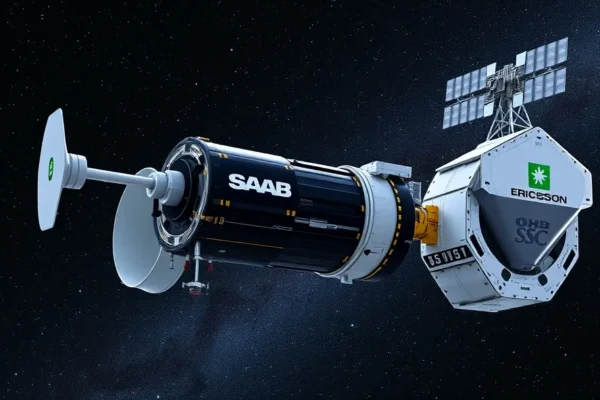
Saab Announces Strategic Space Sector Agreements
Swedish defense and aerospace company Saab AB (SAAB B.ST) has recently finalized a series of significant agreements within the rapidly expanding space sector. These new technology partnerships, involving global technology giant Ericsson, German aerospace firm OHB Sweden, and Swedish Space Corporation (SSC Space), underscore Saab’s commitment to bolstering its capabilities in satellite technology and related defense applications. While specific financial terms of these deals were not fully disclosed, the announcement has generated considerable interest among investors tracking the defense and aerospace industries, highlighting a growing strategic focus on space-based assets and services.
What’s Driving This Strategic Move?
The timing of these space deals aligns with a broader acceleration in global investment and interest in the space sector, driven by both commercial and governmental demand. For Saab, the immediate catalyst appears to be the increasing reliance on space-based intelligence, communication, and navigation systems within modern defense frameworks. These agreements are designed to foster innovation and enhance Saab’s offerings in areas critical to national security and advanced technological development. The partnerships aim to leverage complementary expertise: Ericsson’s prowess in telecommunications and connectivity, OHB Sweden’s established role in satellite systems, and SSC Space’s extensive experience in ground station networks and space operations. This synergistic approach is intended to accelerate the development and deployment of next-generation space solutions.
Understanding the Financial Landscape
Saab AB, a company with a long-standing reputation in the defense sector, has been actively diversifying and strengthening its technological portfolio. In its latest reported financial statements, Saab highlighted a steady revenue stream, with its order backlog remaining robust, indicating sustained demand for its defense systems. While exact figures for the space sector agreements are not publicly detailed, the strategic importance of space technology suggests these partnerships are geared towards long-term revenue generation and market share expansion in a high-growth area. The global space economy is projected to grow substantially in the coming decade. According to a report by the Bank of America Merrill Lynch, the space economy could reach $1.4 trillion by 2030, driven by advancements in satellite technology, launch services, and data analytics.
Analysis of the Space Deals
These Saab space deals represent a calculated move to integrate cutting-edge technology and expand its footprint in the lucrative and strategically vital space industry. From a fundamental perspective, the partnerships signal Saab’s intent to be a key player in the evolving space domain, moving beyond traditional defense platforms to encompass the entire space-based value chain. For investors, this diversification is a positive indicator, potentially reducing reliance on any single product line and tapping into new revenue streams. Key metrics to watch for Saab will include the successful integration of new technologies developed through these partnerships, the growth of its space-related order backlog, and its competitive positioning against other major aerospace and defense firms also investing heavily in space. Market sentiment towards Saab (SAAB B.ST) will likely be influenced by the perceived success of these alliances in driving tangible technological advancements and securing new contracts. The company’s P/E ratio and market capitalization will be subject to broader market trends as well as specific performance indicators related to its space initiatives.
Broader Industry and Competitive Implications
The implications of Saab’s new space deals extend beyond the company itself, impacting the broader aerospace and defense landscape. These technology partnerships are likely to spur further collaboration and competition among key players in the space industry. Competitors such as Lockheed Martin (LMT), Northrop Grumman (NOC), and Airbus (AIR.PA) are also actively expanding their space capabilities, making these strategic alliances crucial for Saab to maintain and enhance its competitive edge. The emphasis on integrated solutions, combining communication, sensing, and data processing from space, signals a trend towards more holistic defense systems. This development could also influence supply chains, potentially creating new opportunities for specialized technology providers and downstream service companies in the satellite technology ecosystem.
Looking Ahead: What to Watch Next
Investors and industry observers will be closely monitoring the progress and deliverables stemming from these Saab space deals. Key factors to watch include the announcement of specific joint projects, the unveiling of new products or services resulting from the collaborations, and Saab’s financial reports detailing revenue generated from its space division. Regulatory developments pertaining to space activities and international cooperation in space will also be important contextual elements. Furthermore, the overall growth trajectory of the global space economy and the demand for advanced satellite technology will shape the long-term outlook for these partnerships. The pace of technological innovation in areas like small satellites, satellite servicing, and space-based artificial intelligence will also play a critical role.
Risk Disclaimer: Past performance does not guarantee future results. Markets are volatile and investing involves risk. This article is for informational purposes only and does not constitute financial advice. Readers should consult with a qualified financial advisor before making any investment decisions.
Frequently Asked Questions
What are the main goals of Saab’s new space deals?
The primary goals of Saab’s new space deals with Ericsson, OHB Sweden, and SSC Space are to enhance its capabilities in satellite technology, foster innovation in space-based defense applications, and expand its presence in the growing space sector. These partnerships aim to leverage complementary expertise for developing advanced communication, navigation, and intelligence systems.
How do these space deals impact Saab’s stock?
While specific short-term stock price movements related to these announcements are subject to market dynamics, these strategic alliances are fundamentally positive for Saab (SAAB B.ST). They signal a commitment to a high-growth sector and a diversification strategy that could lead to future revenue streams and improved market positioning. Investors often view such forward-looking partnerships as indicators of long-term growth potential.
What is Saab’s historical involvement in the space industry?
Saab has a historical presence in the aerospace and defense sectors, contributing to various national and international space programs through its expertise in sensors, avionics, and defense systems. These new agreements represent an expansion and deepening of its commitment to the space sector, particularly in areas of advanced satellite technology and integrated space solutions.
How does Saab’s involvement in space compare to its competitors?
Major aerospace and defense companies like Lockheed Martin, Northrop Grumman, and Airbus are also making significant investments in the space sector. Saab’s approach, focusing on strategic technology partnerships with specialized firms like Ericsson, OHB Sweden, and SSC Space, indicates a strategy aimed at agility and leveraging external innovation to compete effectively in this evolving market.
What are the risks associated with Saab’s expansion into new space deals?
Risks associated with these new space deals include technological development challenges, potential integration issues between partners, and competition from established and emerging players in the space industry. Market demand for specific space technologies can also fluctuate, and regulatory changes in the space sector could impact business operations. Furthermore, the success of these partnerships relies on achieving anticipated commercial and defense contract wins.
What are the potential benefits of these technology partnerships for Ericsson, OHB Sweden, and SSC Space?
For Ericsson, these deals offer opportunities to apply its telecommunications expertise to the demanding environment of space, potentially opening new markets for its connectivity solutions. OHB Sweden can leverage Saab’s defense integration capabilities to enhance its satellite systems, while SSC Space benefits from collaboration on advanced space operations and ground infrastructure, strengthening its position in the space services market.