

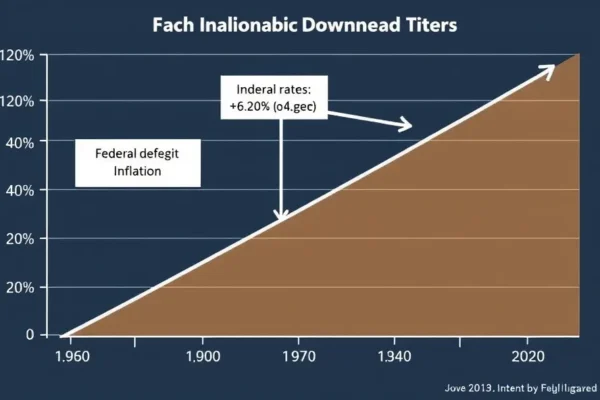
The Growing Debate Over Federal Spending
In recent months, a central pillar of economic discourse has shifted toward the sustainability of the national debt. The Committee for a Responsible Federal Budget (CRFB), a nonpartisan organization that monitors fiscal policy, has released several reports highlighting the long-term dangers of the current trajectory of government spending. These reports argue that the federal deficit is not just an abstract accounting figure but a primary driver of the broader economic challenges facing the United States today.
The core of this development is the mounting pressure on policymakers to transition away from high-deficit spending, which has characterized much of the post-pandemic era. By analyzing the federal deficit, the CRFB report underscores a fundamental economic principle: when a government consistently spends more than it collects in revenue, it must borrow the difference. This cycle of borrowing creates ripple effects that eventually reach the household level, impacting the cost of living and the accessibility of capital for businesses and consumers alike.
Strategic Rationale for Fiscal Restraint
The primary rationale for reducing the budget deficit is to stabilize the macroeconomic environment. From a strategic perspective, high government spending can act as a catalyst for inflation. When the government injects large amounts of money into the economy through deficit spending, it increases total demand for goods and services. If the supply of these goods cannot keep pace, prices rise. This is the classic definition of inflation, and it forces central banks to respond with specific monetary policy actions.
The CRFB report suggests that fiscal policy and monetary policy are deeply linked. When the federal deficit is high, the Federal Reserve is often forced to keep interest rates elevated to cool down an overheating economy. By reducing the deficit, the government could theoretically lower the pressure on the Federal Reserve to maintain these high rates. For businesses, this reduction in government spending is viewed as a necessary step to restore long-term purchasing power and economic stability, allowing for more predictable investment planning.
Competitive Dynamics and Market Positioning
Reducing the federal deficit changes the competitive landscape for both domestic and international entities. Currently, businesses operating in the United States face a high-cost environment where expensive credit restricts growth. If the deficit is brought under control, market analysts suggest that the cost of capital will naturally decrease. This would give companies with leaner balance sheets a distinct competitive advantage, as they would no longer be weighed down by high interest expenses on their corporate debt.
Conversely, industries that rely heavily on government contracts or subsidies may feel threatened by a shift toward fiscal austerity. A reduction in government spending often involves cutting specific programs or projects. Companies that have built their business models around government-funded initiatives may find themselves in a precarious position if the fiscal tap is turned down. The broader strategic shift here favors organizations that are diversified and not overly dependent on a steady flow of federal stimulus.
Broader Industry Implications and Trends
The trend toward deficit reduction signals a potential pivot in the wider economic climate. Industry peers across the financial, real estate, and retail sectors are watching these fiscal policy discussions closely. In the real estate sector, for example, high interest rates caused by persistent inflation have severely dampened housing activity. If the federal deficit is reduced and inflation eases, the housing market could see a resurgence in affordability as mortgage rates track closer to the lower yields on government bonds.
Furthermore, this shift pressures other sectors to demonstrate efficiency. When government policy moves away from massive spending, the burden of driving economic growth shifts back to the private sector. Companies are likely to respond by doubling down on operational productivity and technological innovation. Instead of relying on an economy boosted by government debt, firms will need to compete on value and internal efficiency to maintain their market positioning.
Financial and Operational Impacts
The financial implications of reducing the budget deficit are significant for both the public and private sectors. For businesses, lower interest rates—a direct outcome of controlled inflation and reduced government borrowing—would lower the cost of borrowing for capital expenditures. This would improve profit margins over the long term and encourage companies to invest in research and development, as the hurdle rate for new projects would be lower.
In terms of operations, companies might see a transition period where the economy undergoes a structural adjustment. While the long-term impact of a smaller deficit is generally seen as positive for economic growth, the short-term transition could involve reduced consumer demand in areas previously fueled by excess liquidity. Businesses must prepare for this adjustment by focusing on cash flow management and strengthening their balance sheets, ensuring they can weather a period of lower, more sustainable economic growth.
Execution Risks and Implementation Challenges
While the strategy of reducing the federal deficit sounds theoretically sound, the execution risks are immense. The primary challenge is political: cutting spending often leads to immediate backlash from stakeholders who benefit from current programs. Historically, governments have struggled to maintain fiscal discipline when faced with economic downturns or electoral pressure. If deficit reduction is handled too abruptly, it could trigger a recession rather than a “soft landing.”
Furthermore, there is the risk of conflicting signals. If fiscal policy moves toward austerity while monetary policy remains restrictive, the combined effect could be too harsh on the economy. Investors and analysts often point out that timing is everything. A poorly timed reduction in government support could stifle necessary infrastructure development or essential social investments, creating long-term productivity losses that outweigh the short-term benefits of a balanced budget.
Stakeholder Implications
The impacts of this strategy reach every corner of the economy. For employees, a reduction in inflation means that wage growth will once again outpace the rising cost of living, effectively increasing real household income. This is a positive outcome for the labor market, as households gain more predictability in their monthly budgeting.
For investors, the environment shifts toward valuing companies that demonstrate long-term growth potential rather than those that thrive on cheap debt. Institutional investors are likely to pivot their portfolios toward high-quality assets that perform well in a low-inflation, stable-rate environment. Meanwhile, partners and suppliers will need to adapt to a shift in contract values, as the government becomes a more disciplined spender, potentially leading to more competitive bidding processes and tighter margins for government contractors.
Outlook and Expected Milestones
If the U.S. successfully navigates a path toward a smaller federal deficit, the expected result is a more resilient economy with lower long-term interest rates. The first milestone to watch is the legislative action taken to curb entitlement or discretionary spending, as cited by the CRFB report as essential for meaningful change. Following that, market participants will monitor the bond markets to see if the yields on government debt begin to stabilize at lower levels.
Success will be measured by the moderation of the Consumer Price Index (CPI) and the subsequent stabilization of borrowing costs. If these indicators move in the right direction, it suggests that the strategy of fiscal discipline is working. However, this is a multi-year process. Observers should look for consistent year-over-year declines in the deficit as the primary indicator of progress.
Strategic Q&A
How exactly does the federal deficit lead to higher inflation?
When the government spends more than it earns, it often funds that spending by issuing debt, which can increase the overall money supply and total demand in the economy. This excess demand frequently outstrips the supply of goods and services, forcing businesses to raise prices, which translates into higher inflation for the average household.
Why is the CRFB report considered a benchmark for this analysis?
The CRFB report is highly regarded because of its focus on long-term fiscal sustainability and its nonpartisan approach to data. It provides the necessary context to understand how current government spending affects future interest rates and the overall economic impact on the average taxpayer.
Will reducing the federal deficit lead to lower interest rates for households?
In theory, yes. When the government reduces its borrowing, it reduces the overall demand for credit in the financial system. With less competition from the government for capital, lenders can offer loans to households—such as mortgages and personal loans—at lower interest rates, provided inflation is also under control.
What are the risks of moving too quickly to reduce the deficit?
The primary risk of rapid fiscal contraction is a potential slowdown in economic growth. If the government removes stimulus measures too quickly, it could cause consumer spending to drop and business investment to stall, potentially leading to a recession before the benefits of lower inflation can be fully realized.
Why should businesses care about the federal deficit?
Businesses are highly sensitive to the cost of capital. A high deficit keeps interest rates high, which makes borrowing for expansion expensive and reduces the profitability of new investments. A lower deficit creates a more favorable economic environment for long-term growth and stable operational planning.
Please note that business outcomes and economic projections are always subject to execution risk, global market volatility, and unforeseen regulatory or political changes. The effectiveness of any fiscal policy shift depends on both the intent of the strategy and the quality of its real-world implementation.











