

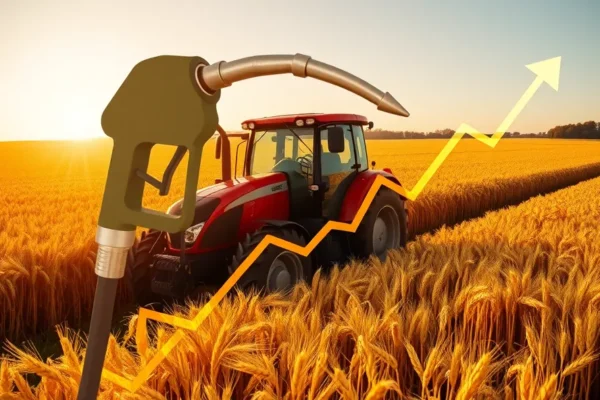
The global economy is facing a complex challenge as the cost of diesel fuel continues to climb, creating a ripple effect that is significantly impacting food prices. This interconnectedness, often described as a “vicious cycle,” was recently highlighted by Chris Abbott, the CEO of agricultural technology company Pivot Bio. His warning underscores the critical role of energy costs in the intricate web of food production and distribution.
The Vicious Cycle: Diesel Costs Fueling Food Price Surges
The immediate development is the sustained increase in diesel costs worldwide. Diesel is a fundamental energy source for a vast array of industries, but its impact on agriculture is particularly pronounced. Farmers rely heavily on diesel-powered machinery for virtually every stage of production, from tilling the soil and planting seeds to harvesting crops. Furthermore, diesel powers the trucks and other vehicles that transport these agricultural products from farms to processing plants, distribution centers, and ultimately, to consumers. As reported by various industry publications like Bloomberg and Reuters, global diesel prices have seen significant upward movement driven by a confluence of factors including geopolitical tensions, supply chain disruptions, and increased demand. This has directly translated into higher operating expenses for farmers.
Strategic Rationale Rising Fuel Costs and Farming’s Financial Squeeze
The strategic rationale behind Chris Abbott’s warning from Pivot Bio is rooted in the direct economic pressures faced by farmers. For farmers, rising diesel costs represent a significant increase in their cost of doing business. This is not merely a minor inconvenience; it directly impacts their profitability. When fuel expenses rise, farmers have fewer options to absorb these costs. While they may explore efficiencies, the scale of diesel usage in modern agriculture makes it difficult to offset substantial price hikes through operational tweaks alone. According to industry analyses from organizations like the American Farm Bureau Federation, fuel can represent a substantial portion of a farmer’s annual operating budget, especially during peak planting and harvesting seasons. Therefore, to maintain any semblance of profitability, farmers are compelled to pass these increased costs along the supply chain. This creates the initial upward pressure on commodity prices.
Competitive Context Farmers Caught Between Input Costs and Market Prices
The competitive landscape for farmers is defined by their ability to manage input costs while selling their produce at a price the market will bear. In this scenario, farmers are not in a strong competitive position to absorb the rising diesel costs. Unlike large corporations with diversified revenue streams or the ability to negotiate bulk discounts, individual farmers often operate on thinner margins. Competitors in the agricultural input sector, such as seed and fertilizer companies, might also face increased transportation costs, potentially passing some of those on. However, the direct and immediate impact of diesel costs falls squarely on the operational expenses of farming. The CEO warning from Pivot Bio, a company focused on nitrogen solutions for crops, suggests a strategic understanding of these farm-level financial dynamics. While Pivot Bio aims to reduce reliance on synthetic nitrogen fertilizers (which also have energy-intensive production processes), the fundamental need for diesel-powered equipment remains a significant challenge for its customer base.
Industry Implications The Broader Economic Cycle of Inflation
The implications of rising diesel costs extend far beyond individual farms, signaling a critical trend in the broader economic cycle. This phenomenon is a key driver of inflation, as increased costs at the production level inevitably move through the supply chain. When farmers must pay more for fuel to grow and transport their food, these added expenses translate into higher prices for consumers at the grocery store. This creates a “vicious cycle” because as food prices rise, consumers have less disposable income for other goods and services. This can lead to reduced demand for non-essential items, potentially impacting other sectors of the economy. Furthermore, higher energy costs can affect manufacturing, logistics, and retail operations, all of which contribute to the overall price of goods. The agricultural impact is particularly acute as food is a basic necessity, making price hikes on these items particularly sensitive for households. This dynamic is a significant concern for economic stability globally.
Financial & Operational Impact Squeezed Margins and Supply Chain Strain
The financial and operational impacts of rising diesel costs are multifaceted. For farmers, it directly translates to reduced profit margins if they cannot fully pass on the costs. This can lead to difficult decisions, such as delaying equipment maintenance or reducing investment in new technology, which can have long-term operational consequences. For the broader supply chain, transportation companies face increased operating expenses, leading to higher freight charges. This can strain the profitability of logistics firms and potentially lead to higher prices for all goods, not just food. In the short term, businesses will likely absorb some of these costs or pass them on incrementally. However, sustained high diesel costs can lead to significant financial pressure, potentially impacting business expansion, investment in new equipment, and even the viability of smaller operations. The timeline for these impacts is immediate for operational costs, but the long-term financial health of businesses throughout the supply chain could be significantly affected over months and years if diesel prices remain elevated.
Execution Risks & Challenges Navigating Volatile Energy Markets
The primary execution risk for strategies aiming to mitigate the impact of rising diesel costs lies in the inherent volatility of global energy markets. These markets are influenced by complex geopolitical, economic, and environmental factors that are often beyond the control of individual companies or even national governments. For farmers, the challenge is to adapt to a perpetually rising cost environment. While companies like Pivot Bio offer solutions to reduce reliance on energy-intensive inputs like synthetic fertilizers, the fundamental need for diesel-powered machinery remains a significant hurdle. Historical context shows that while agricultural technology has advanced, the sector remains heavily reliant on established infrastructure and energy sources. The organizational challenge for farmers is immense, requiring careful financial planning and potentially difficult operational adjustments. Market risks include continued price surges or supply shortages of diesel, while regulatory risks could involve changes in fuel taxes or emissions standards that further impact costs.
Stakeholder Implications Consumers Bear the Brunt of Rising Prices
The implications of rising diesel costs and the subsequent surge in food prices extend to various stakeholders. For consumers, the most direct impact is higher grocery bills, reducing their purchasing power and potentially affecting dietary choices. This can disproportionately affect lower-income households. For farmers, the increased operating costs create financial stress and uncertainty, potentially impacting their livelihoods and the future of their farms. Employees in the agricultural sector and related industries, such as transportation and processing, may face job insecurity if companies are forced to cut costs. Investors in agricultural and food companies may see fluctuating returns, depending on how well these businesses can navigate inflationary pressures and maintain profitability. For partners and suppliers within the supply chain, the increased costs can lead to renegotiations of contracts and altered business relationships. Culturally, sustained high food prices can lead to increased societal pressure and potential unrest. The market sentiment for consumer staples companies can become more cautious as margins come under pressure.
Outlook & Next Steps Towards Sustainable Agriculture
If strategies to combat the impact of rising diesel costs are successful, the outlook points towards a more resilient and potentially more sustainable agricultural sector. Key milestones to watch would include the adoption of alternative energy sources for farm machinery, increased investment in precision agriculture to optimize fuel usage, and the development of more localized food systems to reduce transportation distances. Indicators of success would be stabilized or declining food prices, improved profitability for farmers, and a reduced dependency on fossil fuels within the agricultural supply chain. Over the next 1-3 years, we could see measurable outcomes in the adoption of electric or alternative-fuel farm equipment, though widespread implementation will likely take longer. The long-term vision is an agricultural system that is less vulnerable to the price volatility of diesel and other fossil fuels, ensuring greater food security for a growing global population.
Key Questions & Answers on Diesel Costs and Food Prices
Will rising diesel costs continue to drive up food prices?
Yes, as long as diesel costs remain elevated and farmers cannot fully absorb these rising fuel costs, it is highly probable that these increased expenses will continue to be passed on through higher food prices. This creates a sustained pressure on commodity prices.
What are the most significant impacts on farmers from rising diesel costs?
The primary impacts on farmers include significantly increased operating expenses, which directly squeeze profit margins. This can lead to reduced investment in farm operations and potentially jeopardize the financial stability of their businesses.
How can Pivot Bio’s solutions help alleviate the impact of rising diesel costs?
Pivot Bio’s focus on biological nitrogen solutions aims to reduce farmers’ reliance on synthetic nitrogen fertilizers, which have energy-intensive production processes often tied to natural gas prices. While not directly addressing diesel for machinery, reducing reliance on other energy-dependent inputs can help offset some overall cost pressures.
What are the risks of this “vicious cycle” for the broader economy?
The risks include widespread inflation, reduced consumer purchasing power, and potential economic slowdowns as essential goods like food become more expensive. This can lead to social and political instability if not managed effectively.
How long might it take to see a reduction in food prices if diesel costs decrease?
If diesel costs were to significantly decrease, it could take several months for those savings to be fully reflected in food prices, as the benefits would need to work their way through the entire agricultural supply chain, from production to retail.
What other factors contribute to surging food prices besides diesel costs?
Other significant factors include global weather patterns affecting crop yields, geopolitical events impacting supply chains and commodity markets, government policies, and the cost of other key agricultural inputs like fertilizers and labor, all of which interact with rising fuel costs to influence overall food prices.
Business outcomes are subject to execution risk and market dynamics.











