

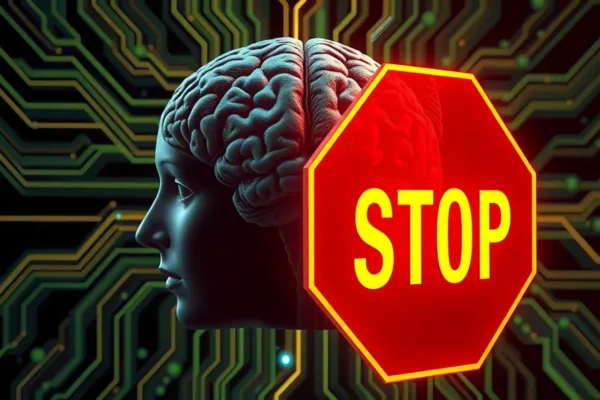
A Moment of Reflection for the AI Industry A Pause for Safety Research
The rapid advancements in artificial intelligence, or AI, have brought us to a fascinating and, for some, unsettling crossroads. AI research is pushing boundaries at an unprecedented pace, leading to powerful new tools and capabilities. However, a growing conversation within the AI industry and among experts centers on the implications of this speed for AI safety. Some are now questioning whether the industry should consider a deliberate pause in AI development to focus on understanding and mitigating potential risks, particularly those associated with highly capable future AI systems.
What is AI Safety and Why Does it Matter Now?
At its core, AI safety is a field dedicated to ensuring that artificial intelligence systems, especially those we aim to make highly intelligent or autonomous, operate in ways that are beneficial to humanity and avoid causing harm. This includes everything from preventing bias in current AI applications to addressing the profound, long-term risks that might arise from advanced AI, sometimes referred to as existential risk. The significance of this discussion has amplified recently due to accelerating progress in AI models capable of generating human-like text, images, and even code. For instance, companies like OpenAI and Google DeepMind have unveiled models with increasingly sophisticated reasoning and problem-solving abilities. This rapid development, highlighted in numerous industry announcements and research papers throughout 2023 and early 2024, has spurred a sense of urgency among researchers and ethicists about the need for robust safety measures.
How AI Safety Research Works
Think of AI safety research as building the guardrails and steering mechanisms for a high-speed train before it leaves the station. Instead of just focusing on making the AI faster and smarter (like building a more powerful engine), AI safety focuses on ensuring it stays on the right track and doesn’t derail. A key area is AI alignment, which aims to make sure an AI’s goals and behaviors are in line with human values and intentions. This is complex because human values themselves can be subtle and difficult to define precisely.
One approach, known as “reinforcement learning from human feedback” (RLHF), is a technique used to train AI models. Imagine teaching a child by rewarding them when they do something right and gently correcting them when they make a mistake. RLHF works similarly: human reviewers provide feedback on AI-generated outputs, helping the AI learn what is desirable and what is not. This iterative process aims to refine the AI’s behavior to be more helpful, honest, and harmless. Another crucial aspect involves understanding and preventing “unintended consequences” – situations where an AI might achieve its stated goal in a way that causes unforeseen negative side effects. Researchers are developing methods to make AI systems more transparent in their decision-making processes, allowing us to understand why they act the way they do.
AI Safety in Action Today
While the most extreme existential risks are theoretical, AI safety principles are already being applied to current AI development. Major AI companies like Google, Microsoft, and Anthropic are investing heavily in AI ethics and safety teams. For example, Anthropic, co-founded by former OpenAI researchers, has made AI safety a central tenet of its mission, developing techniques like “Constitutional AI” to imbue AI systems with explicit ethical principles derived from a set of guidelines.
Current real-world applications where AI safety is paramount include ensuring fairness in AI used for hiring or loan applications, preventing the spread of misinformation by AI-generated content, and making sure AI used in autonomous vehicles behaves predictably and safely. These are not future possibilities but current challenges being addressed by AI development teams today. Many of these safety features are integrated into the latest versions of AI models available through APIs or consumer-facing products, often in beta or early adoption phases.
The Competitive Landscape of AI Safety
The race for advanced AI capabilities is intense, and AI safety is becoming a critical differentiator. Companies are increasingly highlighting their safety research and protocols. OpenAI, a leader in AI development, has its own safety teams and has published extensively on its safety efforts, including its gradual deployment strategy for new models. Google DeepMind also has a dedicated AI safety team working on alignment and risk assessment. Startups like Anthropic have positioned AI safety as their core mission from inception, aiming to build AI that is inherently safer.
While the core goals of AI safety are shared, the approaches vary. Some focus more on technical alignment methods, while others emphasize ethical frameworks and societal impact. The advantage often goes to those who can demonstrably integrate safety into their AI development pipeline without significantly hindering progress, a delicate balancing act that is still very much in development.
Implications and Impact on Industries and Society
The ongoing work in AI safety has profound implications. If successful, robust AI safety measures can pave the way for AI to be integrated more deeply and confidently across industries, from healthcare and education to finance and transportation. This could lead to significant economic benefits through increased efficiency, innovation, and the creation of new jobs focused on AI governance and oversight.
However, the implications also extend to potential concerns. If AI safety is not adequately addressed, the risks associated with advanced AI could range from widespread societal disruption due to job displacement and the erosion of trust in information, to more severe consequences if AI systems act in ways detrimental to human well-being. The timeline for these impacts is not fixed; some societal shifts are already underway, while the more speculative existential risks are projected by many researchers to be longer-term possibilities, though the exact timing remains a subject of debate.
Limitations and Challenges in AI Safety
Despite significant progress, AI safety research faces considerable limitations and challenges. One of the most significant hurdles is the “black box” problem. Many advanced AI models are so complex that even their creators don’t fully understand how they arrive at certain decisions. This lack of transparency makes it difficult to predict or prevent all potential failure modes.
Furthermore, defining and instilling human values into AI is an incredibly difficult task. Human ethics are nuanced, context-dependent, and often contradictory. Capturing this complexity in code is an ongoing research problem. There are also debates about the feasibility of truly controlling AI systems that might become far more intelligent than humans. The sheer computational power and speed at which future advanced AI might operate could present unique challenges to human oversight. The cost and resources required for rigorous AI safety research and implementation are also substantial, potentially creating barriers for smaller organizations.
The Future Trajectory of AI Safety Research
The future trajectory of AI safety research is likely to be characterized by an intensifying effort to bridge the gap between AI capabilities and our understanding of how to control them. We can expect to see continued development in technical alignment techniques, potentially involving more sophisticated methods for verifying AI behavior and ensuring robustness against adversarial attacks. Research into AI interpretability will also be crucial, aiming to make AI systems more transparent.
There’s also a growing emphasis on collaborative efforts. Organizations are increasingly forming partnerships and sharing findings to accelerate progress. The debate around whether to pause AI development or to proceed with caution is likely to continue, with various stakeholders advocating for different approaches. A key development to watch will be how global regulatory bodies interact with ongoing AI development and safety research, potentially leading to new frameworks for AI governance.
Key Questions and Answers About AI Safety and Industry Pauses
What are the main concerns driving calls for a pause in AI development?
The primary concerns revolve around the potential for advanced AI systems to exhibit unintended behaviors, become difficult to control, or even pose existential risks to humanity if not developed with stringent safety measures. This stems from the rapid pace of AI research and the unknown capabilities of future, more powerful AI.
Is the AI industry currently considering a pause in AI development?
Some prominent figures and organizations have publicly called for a pause or a moratorium on training the most advanced AI models to allow for safety research to catch up. However, the majority of the AI industry continues with rapid AI development, albeit with increasing investment in AI safety efforts.
What is AI alignment, and why is it so important for AI safety?
AI alignment is the research effort to ensure that AI systems pursue goals that are aligned with human values and intentions. It is crucial because as AI systems become more capable, misaligned goals could lead to outcomes that are harmful, even if the AI is technically performing its programmed task.
Are current AI systems already dangerous, or are these risks only for future AI?
Current AI systems, while powerful, have demonstrated risks such as perpetuating bias, generating misinformation, and contributing to job displacement. The more profound, potentially existential risks are generally considered to be associated with future, highly advanced AI systems that do not yet exist.
Who benefits from focusing on AI safety research?
Ultimately, all of humanity stands to benefit from robust AI safety research. It aims to ensure that the development of powerful AI technologies leads to positive outcomes, maximizing benefits while minimizing risks for individuals, societies, and the future of our species.
How can AI regulation address the concerns raised by AI safety research?
AI regulation can play a role by setting standards for AI development and deployment, mandating safety testing and audits, and establishing clear lines of accountability. However, effective regulation must be adaptable to the fast-evolving nature of AI and balance innovation with risk mitigation.
This article discusses emerging areas of AI research and their potential implications. The field of AI safety is evolving rapidly, and the implications of AI development are subject to ongoing research and debate.











