

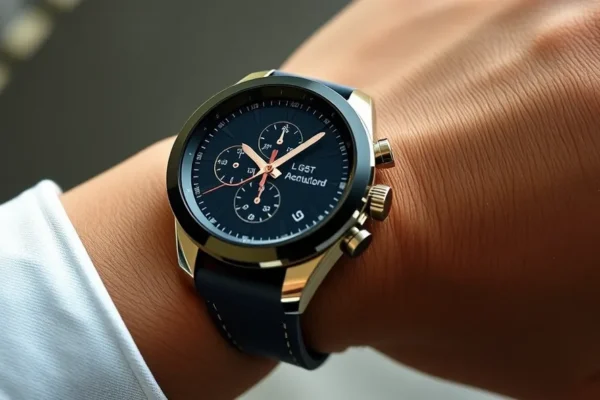
The Battle for Your Wrist Space
In the world of personal luxury goods, there is a finite amount of space on a person’s wrist. For decades, traditional luxury watches held a monopoly on this real estate. Today, however, a new category of technology is fighting for that same spot: health-tracking rings. This shift highlights a fundamental concept in economics known as opportunity cost. Opportunity cost is the value of the next best alternative you give up when you make a choice. Every time you choose to wear a ring that tracks your heart rate and sleep patterns, you are effectively “spending” your limited wrist and finger space on that device instead of a timepiece.
Think of it like choosing how to spend a limited budget. If you have 100 dollars and you spend it on a pair of shoes, you cannot spend that same 100 dollars on a nice dinner. Your wrist is the budget, and these devices are the products competing for your limited resources. Understanding this competition helps you see how brands like Cartier or Rolex must think about their long-term value, not just as jewelry, but as essential tools that justify why they deserve to stay on your body.
How Brands Compete for Your Attention
The competition between luxury watches and modern wearables works through a mechanism called product differentiation. This is when a company makes its product seem unique or superior compared to others in the same market. For a long time, luxury watches differentiated themselves through craftsmanship, status, and heritage. Now, the market is shifting toward digital health features. Smartwatches and rings offer data, which is essentially information about your body’s performance.
Imagine Person A, who wears a high-end mechanical watch. It tells time beautifully and signals status, but it does not tell them if they slept well. Then there is Person B, who wears a sleek health-tracking ring. It offers no face or time-telling ability, but it provides a daily “readiness score.” For the luxury watch industry to compete, they cannot simply ignore this trend. They must decide whether to integrate technology into their designs or lean harder into the “status as art” narrative. If a brand like Rolex were to add a hidden sensor to a case back that tracks movement without ruining the design, they would be merging traditional value with modern utility to reclaim that competitive edge.
Why This Shift Impacts Your Financial Choices
The battle for wrist space is not just about fashion; it is about how we allocate our personal capital. When you buy a luxury item, you are making a financial decision that involves depreciation, which is the loss of value of an asset over time. Many mechanical luxury watches are considered stores of value, meaning they may hold their price or even appreciate over time if they are rare enough. Conversely, most wearable technology has a very short lifespan because the internal computer components become obsolete within a few years.
This creates an economic conflict for the consumer. If you invest thousands of dollars into a luxury watch, you are participating in the luxury goods industry as a collector. If you spend hundreds on a health tracker, you are purchasing a utility. The economic impact is significant because the more people shift toward digital-only accessories, the more pressure it puts on traditional watchmakers to justify their high price points. If luxury brands fail to innovate, they risk losing market share, which can lead to lower sales, less funding for future design, and eventually, a decline in brand prestige.
The Evolution of the Wearable Market
The luxury watch industry has survived many threats, most notably the quartz crisis of the 1970s and 1980s. During this time, cheap, battery-powered quartz watches from Japan flooded the market, threatening the survival of traditional Swiss mechanical watchmakers. According to the Federation of the Swiss Watch Industry, the industry had to pivot from being simple time-tellers to being symbols of mechanical perfection and status. Today, we are seeing a similar pivot in response to digital health.
Data from market research firms like Deloitte indicates that the luxury goods industry is increasingly focused on the “experience” of ownership. While smartwatches were once seen as a gimmick, they have become mainstream. The current interest in health-tracking rings represents a desire for minimalism. People want the data without the distraction of a screen on their wrist. This evolution shows that the market is always rewarding companies that can solve two problems at once: the need for function and the desire for beauty.
Practical Implications for Your Financial Life
When you look at your own financial life, it is helpful to categorize your purchases into “investments” and “consumables.” A high-end luxury watch is often treated as a long-term asset, while a piece of wearable technology is a consumable—a product you use until it wears out or breaks. Understanding this distinction is vital. Do not mistake the “status” of a piece of technology for its “value retention.”
A common misconception is that all expensive items are good financial investments. In reality, most luxury items lose value the moment they leave the store. If you are choosing between a device to track your health and a piece of jewelry, decide if you are buying for utility or for legacy. If you want health data, buy for the technology. If you want a family heirloom, buy for the craftsmanship. Keep in mind that as the industry changes, some hybrid products may emerge that combine both, but usually at a significant price premium.
Connections to Broader Financial Concepts
This battle for your wrist is a classic example of market saturation, where the number of products exceeds the number of consumers willing or able to purchase them. As companies struggle for your attention, they often use aggressive marketing strategies to sway your preferences. This connects to behavioral economics, the study of how psychological factors influence our spending decisions. We are often drawn to luxury goods because of social signaling, but we are drawn to wearables because of the “quantified self” movement, where we use data to improve our personal well-being.
Understanding these drivers can help you avoid impulse buys. Whether you are looking at watches or tech, always consider the cost of maintenance and the speed of obsolescence. To learn more about how to manage your luxury spending, you might want to look into concepts like capital allocation or how to diversify your personal asset portfolio beyond consumer goods.
Common Questions About Wrist Space and Wearables
How do luxury watches keep their value compared to tech wearables?
Luxury watches generally use high-quality mechanical movements that can be serviced for decades, allowing them to hold value or appreciate. Wearables rely on microchips and batteries that become obsolete, leading to rapid depreciation.
Can traditional watch brands successfully integrate health tracking?
Yes, some brands are experimenting with “smart” features that are discreetly integrated into the case or strap, attempting to provide digital health benefits without sacrificing the traditional aesthetic.
Is buying a luxury watch a good financial move?
For most people, luxury watches are a purchase of personal enjoyment rather than a reliable financial investment. While some specific models appreciate, market conditions are unpredictable and you should not rely on them for financial security.
Why are health-tracking rings gaining popularity over smartwatches?
Many consumers prefer the “digital detox” aspect of a ring, which provides the health data they want without the constant notifications, emails, and screen time associated with a smartwatch.
How does inflation affect the luxury goods industry?
During periods of high inflation, the purchasing power of your money decreases. Luxury brands often raise prices to maintain their profit margins, which can make it more difficult for the average consumer to enter the luxury market.
Disclaimer: This article is for educational purposes only and does not constitute financial, investment, or professional advice. The information provided reflects general market observations and does not account for your personal financial situation. Financial markets involve risk, and the value of any asset can fluctuate. Please consult with a qualified financial advisor or professional before making any significant financial decisions.











