

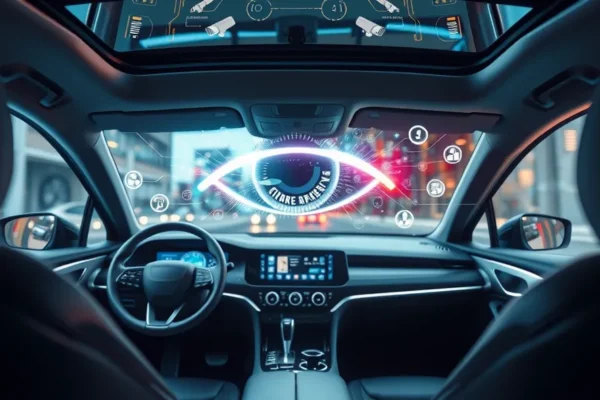
The future of transportation is arriving on our streets in the form of robotaxis, promising a new era of mobility. Companies like Waymo, Zoox, and Tesla are pioneering these driverless vehicles. But as these high-tech cars ferry us around, a crucial question arises: what about our privacy? These vehicles are packed with internal cameras and sensors, collecting vast amounts of data. Let’s dive into the privacy implications of this cutting-edge technology.
Your Ride in the Age of the Robotaxi Cameras
Imagine stepping into a car with no driver. Instead, you’re greeted by a sleek interior and a dashboard full of screens. This is the robotaxi experience. These vehicles use a complex array of internal cameras and sensors to understand their surroundings, navigate safely, and ensure a smooth ride for passengers. They are designed to be the ultimate convenience for anyone looking to get from point A to point B without the hassle of driving, parking, or even owning a car. Think of it as a personal chauffeur service that’s always available and constantly learning.
For everyday folks, this means a potentially safer, more efficient, and more accessible way to travel. Whether you’re a busy professional needing to catch up on work during your commute, a tourist exploring a new city, or someone who can no longer drive, robotaxis aim to solve transportation challenges. The technology is particularly exciting right now because it’s moving from testing phases into real-world deployment, meaning you might soon have the option to hail one yourself.
What’s Going On Inside That Driverless Car
When you hop into a Waymo, Zoox, or Tesla robotaxi, internal cameras and sensors are busy. These aren’t just for show; they’re the car’s eyes and ears inside the cabin. They monitor passenger behavior, check if you’ve reached your destination, and ensure everything is running smoothly. Think of it like your smart home devices, but for your journey. The system uses this data to improve its services, like understanding how passengers interact with the vehicle or identifying potential issues before they become problems. For instance, if a passenger accidentally leaves something behind, internal sensors might help flag it.
Scenario 1: The Business Traveler
Imagine you’re on a work trip and need to prepare for a big meeting. You hail a Waymo, and as you settle into the comfortable seats, the internal camera might be used to confirm your identity for security or to adjust the cabin temperature based on your preferences from previous rides. The sensors help ensure your privacy by only activating when necessary, like detecting your entry or exit.
Scenario 2: The Family Outing
Picture a family heading to the zoo. The kids are excited, maybe a bit boisterous. Internal cameras could be used by the system to monitor for unusual activity that might indicate a safety concern, or simply to ensure the ride is going as planned. Zoox, for instance, has emphasized a customer-first approach, suggesting their interior monitoring is focused on enhancing the passenger experience and safety.
Scenario 3: The Evening Commute
You’re tired after a long day and just want to get home. Your Tesla robotaxi picks you up. Internal sensors and cameras work together to confirm your trip’s end, perhaps letting you know when you’ve arrived at your destination with a gentle prompt. This passenger monitoring system aims to make the ride seamless and secure.
Who Should Be Riding (and Watching)
Best For: Early adopters and tech enthusiasts who are excited about the future of autonomous transport and are comfortable with the data collection inherent in such advanced systems. If you prioritize convenience and are willing to trade some privacy for potentially enhanced safety and a cutting-edge experience, robotaxis are for you.
Good For: People who frequently travel for business or leisure and want a more flexible and on-demand transportation option. Also, individuals who might have difficulty driving or owning a car could find robotaxis a game-changer for their independence.
Skip If: You are highly concerned about personal data privacy and prefer to limit the amount of information collected about your movements and activities. If the idea of internal cameras and AI surveillance in your personal space makes you uneasy, you might want to hold off on the robotaxi revolution for now.
Navigating the Robotaxi Landscape Alternatives
When considering robotaxi privacy, it’s helpful to look at how different companies approach it. Traditional ride-sharing services like Uber and Lyft offer a familiar alternative, but they still have human drivers. The primary difference is the absence of a driver in robotaxis, which necessitates internal monitoring for safety and operational reasons. Tesla’s approach often integrates its vehicle’s extensive sensor suite, including internal cameras, into its broader self-driving ecosystem, focusing on real-time data for improving its AI.
Waymo, a leader in autonomous driving, often emphasizes a robust safety framework. Their internal systems are designed to understand passenger actions and vehicle status. Zoox, acquired by Amazon, is building a unique autonomous vehicle from the ground up, with a strong focus on the rider experience and safety, which likely includes sophisticated internal monitoring for passenger well-being and operational efficiency. Price-wise, robotaxi rides are expected to become competitive with traditional ride-sharing and taxis, but the value proposition lies in the unique autonomous experience.
Getting Started with Your Smart Car
The setup for using a robotaxi is generally quite straightforward for the rider. It typically involves downloading a dedicated app from the company (Waymo, Zoox, or Tesla) and creating an account. You’ll link a payment method, much like you do with existing ride-sharing apps. When you need a ride, you simply open the app, enter your destination, and a nearby available robotaxi will be dispatched. There’s no complex installation or technical knowledge required on your part to operate the vehicle itself.
The learning curve is minimal for the passenger; it’s designed to feel as intuitive as ordering a traditional taxi. You get in, confirm your destination on a screen if prompted, and relax. The vehicle handles the driving. Common frustrations might arise from app glitches, availability in certain areas, or initial confusion about how to signal your ride’s end, but these are generally minor and are being ironed out as the services mature.
The Perks of a Driverless Journey
Enhanced Safety Features: Internal cameras and sensors can continuously monitor the cabin for potential safety issues, providing an extra layer of security for passengers. This AI surveillance aims to detect and respond to emergencies quickly.
Uninterrupted Productivity: With no driver to worry about, you can use your ride time to work, make calls, or relax without distraction. This is a significant pro for busy individuals.
Personalized Comfort: As the system learns your preferences, future rides can be automatically adjusted for temperature, music, and route suggestions, making each trip more comfortable and tailored to you.
Accessibility for All: Robotaxis offer newfound mobility for people who cannot drive due to age, disability, or other reasons, significantly improving independence and quality of life.
Always Available (Potentially): Unlike traditional taxis or ride-shares that depend on driver availability, robotaxis can theoretically operate 24/7, offering reliable transportation around the clock.
The Trade-offs: What to Watch Out For
Privacy Concerns: The most significant drawback is the collection of data from internal cameras and sensors. While companies state this is for safety and service improvement, the extent of passenger monitoring can feel intrusive to some. The Zoox privacy policy, like others, details data usage, but the underlying principle of constant observation can be unsettling.
Limited Service Areas: Currently, robotaxi services are restricted to specific operational zones. If you live or travel outside these areas, you won’t be able to use them. This can be a major limitation for broader adoption.
Potential for Glitches: Like any advanced technology, robotaxis can experience software glitches or sensor malfunctions. While rare, these can lead to unexpected stops or ride cancellations, causing inconvenience.
Data Security Risks: The large amounts of data collected by these vehicles could be a target for cyberattacks. Ensuring robust smart car security measures to protect rider privacy is paramount but not always guaranteed.
Cost of the Future and What You Get
The price of a robotaxi ride is still evolving. As of late 2023 and early 2024, ride costs are often comparable to or slightly higher than traditional ride-sharing services, especially during initial rollout phases. For instance, Waymo One and Cruise (when operational) often price their rides competitively with premium Uber or Lyft options. Tesla’s future robotaxi service pricing is yet to be fully detailed but is expected to be cost-effective.
The value proposition is high for those who prioritize the autonomous experience, convenience, and potential for increased safety. However, if your primary concern is the lowest possible fare, budget ride-sharing services with human drivers might still be a better option. There are no significant hidden costs like subscriptions required for a single ride, but companies might offer subscription models for frequent users. The long-term value hinges on reliability, continued service expansion, and how prices compare to evolving transportation costs.
The Final Verdict: Is a Robotaxi Right for You?
Robotaxis from Waymo, Zoox, and Tesla represent a significant leap forward in personal transportation. If you’re an early adopter eager to experience the future of mobility, prioritize convenience, and are relatively comfortable with the data collection involved in advanced AI systems, then a robotaxi is an exciting option to try. The ease of use, potential for enhanced safety, and unparalleled convenience make them a compelling choice for many.
However, if robust privacy protections and minimal data collection are your top priorities, or if you live outside their limited service areas, you might want to wait. The technology is still maturing, and concerns around internal cameras and AI surveillance need ongoing public discussion and transparent policies from the companies involved. For now, consider it a glimpse into the future that’s worth experiencing, but with your eyes wide open to its implications.
Frequently Asked Questions About Robotaxi Privacy
What is the main privacy concern with robotaxis?
The primary privacy concern revolves around the internal cameras and sensors that collect data on passengers, their conversations, and their behavior inside the vehicle. This AI surveillance raises questions about how this data is used, stored, and protected.
How do companies like Waymo protect my privacy?
Companies like Waymo state they have strict privacy policies and anonymize data where possible. They aim to use internal camera data primarily for safety, service improvement, and to confirm trip completion, not for general surveillance. However, the specifics of autonomous vehicle data handling are constantly evolving.
Will my conversations be recorded in a Tesla robotaxi?
While Tesla vehicles have extensive sensor suites, including internal cameras, the exact policy on recording passenger conversations in their future robotaxis is not fully detailed. Their focus tends to be on the car’s environment and passenger presence for safety and operational purposes.
Is Zoox privacy different from Waymo or Tesla?
Zoox, like Waymo, emphasizes passenger experience and safety. Their privacy policy would detail how their internal monitoring systems are used, likely focusing on ensuring a secure and comfortable ride, but you should always review the latest Zoox privacy policy for specifics.
Can I opt out of internal monitoring in a robotaxi?
Currently, opting out of internal monitoring in robotaxis is generally not an option, as these systems are integral to the vehicle’s safe operation and service delivery. The cameras and sensors are fundamental to the driverless experience, unlike traditional cars where you can simply choose not to use them.
Is robotaxi ride data secure?
Companies are investing heavily in smart car security to protect the vast amounts of data collected. However, no system is entirely impenetrable, and the potential for data breaches remains a concern that users should be aware of. It’s wise to check their security protocols and privacy statements.
Product prices and availability vary by region. Verify current pricing before purchase.











