

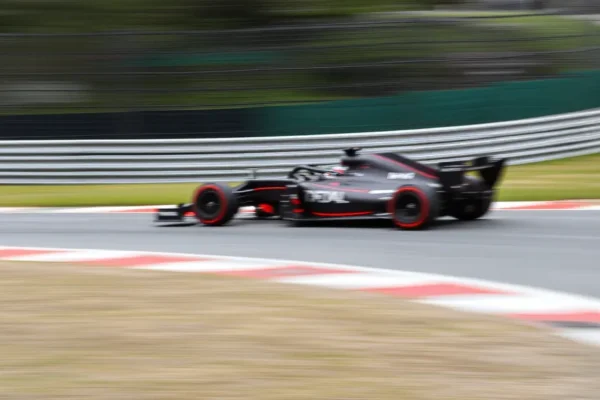
What Are High Speed Autonomous Racing Crashes Teaching Us?
When you hear about driverless cars, you probably imagine a calm commute to work or a robot taxi picking you up at the airport. However, some of the most important developments in self-driving technology are actually happening on high-speed racetracks. Autonomous racing, where high-performance vehicles push the limits of speed and agility, is acting as a “stress test” for the systems that will eventually live in your family sedan.
This isn’t just about fast cars. It is about gathering critical vehicle crash data. When an AI makes a mistake at 150 miles per hour, it produces a goldmine of information. Engineers use these high-stakes errors to improve AI safety and refine how cars react in dangerous, split-second situations. For the average consumer, this means the software in your future car is being “battle-tested” in extreme scenarios long before you ever turn the ignition.
How Racetrack Data Changes Your Daily Drive
You might wonder why a car going 150 mph on a track matters for your trip to the grocery store. It boils down to how the car perceives the world. In the real world, you encounter “edge cases”—rare, unpredictable events like a child running into the street or a sudden patch of ice. These are the equivalent of a sharp turn on a racetrack.
If you commute on a busy highway, these developments are a big deal. For example, if a car in front of you slams on its brakes unexpectedly, your vehicle needs to decide to stop or steer within milliseconds. By studying how sensors fail during high-speed racing crashes, companies learn exactly where their machine learning models struggle. They then fix these blind spots. It is the difference between a car that “panics” and one that handles an emergency with robotic precision.
Who Should Care About Autonomous Testing
This information is most relevant to tech enthusiasts who are considering vehicles with advanced driver-assistance systems. If you are a parent looking for the safest vehicle possible, or someone who travels long distances, understanding that these systems are being refined through extreme testing should provide some peace of mind. However, if you are a driver who prefers full control and doesn’t trust automated systems, this testing phase might still feel like a work in progress that doesn’t quite meet your needs for total reliability.
How Racing Compare to Traditional Road Testing
Most autonomous vehicles are tested on public roads, which are mostly boring and predictable. This is safe, but it is slow. It takes years to gather enough data to handle a one-in-a-million accident scenario. Autonomous racing, led by organizations like the Indy Autonomous Challenge, accelerates this process. While a road test might only encounter a light rain, a racing crash provides raw data on how sensors behave when blinded by speed, vibrations, and high-G maneuvers. It is the difference between learning to drive in a parking lot versus learning to drive in a professional racing school.
The Learning Curve for AI Safety
For the consumer, there is no “setup” involved here—these are backend improvements. However, there is a mental learning curve. You need to understand that even with this advanced data, self-driving technology is not perfect. You cannot just buy a car and assume it will handle everything. The “learning” for the user is recognizing the limitations of your vehicle’s current software. It works best when you view it as a helpful assistant rather than a fully autonomous chauffeur.
Real World Pros of Track Based Data
- Faster Innovation: Bugs and sensor failures are identified and patched in months rather than years.
- Better Emergency Handling: AI becomes more capable of making life-saving decisions in split-second scenarios.
- Sensor Reliability: Exposure to extreme conditions helps engineers make cameras and sensors more resistant to vibrations and glare.
- Validated Safety Standards: Data from crashes creates a baseline for what “safe” looks like, allowing for better industry regulations.
Real World Cons and Limitations
- Not Real World Conditions: Tracks are controlled environments. They lack the chaos of unpredictable pedestrians, pets, and cyclists found in cities.
- The “Human” Element: AI often struggles to predict human behavior, which is fundamentally different from another robot car on a track.
- Hardware Constraints: No amount of software data can fix a sensor that is physically blocked by heavy snow or mud.
- False Sense of Security: Consumers may overestimate their vehicle’s capabilities because they read about “advanced AI” without realizing the limits of the hardware.
Is This Tech Ready for Your Driveway
Autonomous vehicle technology is not a “product” you buy off the shelf like a laptop. It is a feature integrated into the car you purchase. While the data from racing makes these systems safer, the cost of entry is high—usually found in luxury or top-tier trim levels of modern vehicles. For most people, the value isn’t in full autonomy, but in the life-saving features like automatic emergency braking. If you are budget-conscious, look for vehicles that include these safety features as standard equipment rather than paying extra for “self-driving” marketing gimmicks.
Verdict and The Future of Driving
If you are waiting for a car that can safely drive you to sleep while you nap in the back, you will be waiting for a long time. However, if you want a car that is better at spotting hazards and reacting before you can, the data gathered from high-speed autonomous racing is a major win. It is worth the investment only if you prioritize safety and are willing to remain an engaged, attentive driver. For everyone else, stick to standard driver-assistance features until the tech matures further.
Common Questions and Answers
Are driverless cars actually safer because of this racing data? Yes, the data from extreme track scenarios allows developers to train their AI to recognize and react to rare, dangerous conditions much faster than they could on public roads alone.
Why do autonomous vehicles sometimes fail to see obstacles? Sensor failure often happens when sensors are overwhelmed by too much data, or when the machine learning model has not been trained on that specific object. High-speed testing helps developers build more robust, “smarter” sensor fusion that can handle these complex situations.
Do I need to update my car’s software to benefit from these advancements? Yes. Most modern cars with advanced safety tech receive “over-the-air” updates. As engineers learn from track data, they push these improvements directly to your car via your home Wi-Fi or cellular connection.
Can I buy a car that uses this racing technology today? Many companies, such as Tesla, Waymo, and various automotive manufacturers, use simulation and physical track testing to improve their production software. While no car is “racetrack-ready” for consumers, the underlying safety improvements often trickle down into daily consumer vehicles.
Should I trust my car to drive itself? No. Even with the best AI safety data, modern vehicles require you to keep your hands on the wheel and your eyes on the road. Always treat these features as a backup to your own focus.
Product prices and availability vary by region. Verify current pricing before purchase.











