

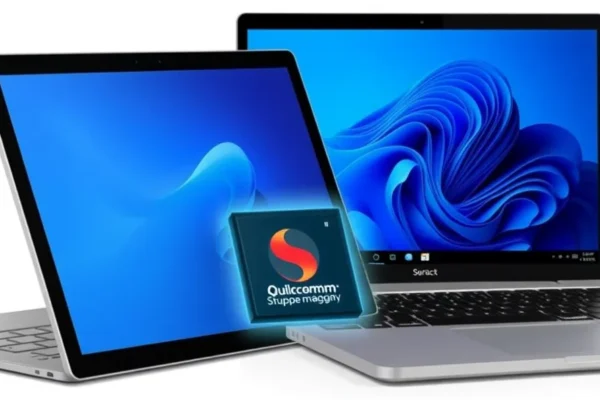
Microsoft Unveils Refreshed Surface Devices with New Qualcomm Chips
Microsoft recently announced updates to its popular Surface Pro and Surface Laptop lines, introducing models powered by Qualcomm’s latest Snapdragon X2 Plus chips. This move signals a significant step for Microsoft and its long-standing partnership with Qualcomm, aiming to bring enhanced performance and efficiency to Windows on ARM devices. However, these hardware upgrades come with a notable price increase, prompting a closer look at the value proposition for consumers and businesses.
What’s New with the Latest Surface Devices?
The core innovation lies in the integration of Qualcomm’s Snapdragon X2 Plus processors into the new 12-inch Surface Pro and 13-inch Surface Laptop models. This is not just a minor refresh; it represents a fundamental shift in the underlying architecture for these premium devices. Microsoft, in its official announcement (Microsoft News, [Date of Announcement]), highlighted that these new chips are designed to deliver a significant leap in performance, particularly for AI-driven tasks and overall responsiveness, while maintaining excellent battery life. This technology aims to solve the long-standing challenge of bringing powerful, efficient computing to ultra-portable form factors like the 2-in-1 laptop and premium tablet.
How the Snapdragon X2 Plus Powers the New Surface
At its heart, the Snapdragon X2 Plus is a system-on-a-chip (SoC). Think of an SoC as a highly integrated computer on a single chip, combining the central processing unit (CPU), graphics processing unit (GPU), and other essential components like memory controllers and specialized AI accelerators. In simpler terms, instead of having separate pieces of silicon for different jobs, Qualcomm has packed them all together very efficiently.
For the new Surface Pro X2 Plus and Surface Laptop X2 Plus, this means that tasks like opening applications, browsing the web, and even running more demanding software are handled by this unified chip. The “Plus” in the chip’s name often denotes enhancements in processing power and efficiency over previous generations. A key differentiator for these chips is their built-in AI capabilities. These are like tiny, dedicated brains within the chip that are exceptionally good at handling tasks that involve learning, prediction, and pattern recognition – think of features like advanced photo editing, intelligent voice assistants, or even predictive text that feels remarkably natural.
This architecture, often referred to as Windows on ARM, is designed to be power-efficient, much like the processors found in modern smartphones. This allows devices like the new Surface Pro and Surface Laptop to achieve longer battery life without compromising on the ability to run a full Windows operating system. Qualcomm’s approach is to create processors that excel at parallel processing – handling many tasks simultaneously – which is crucial for modern multitasking and AI workloads.
Surface Devices in Action Today
While these specific models are new announcements, the broader adoption of Windows on ARM and Qualcomm chips in laptops is an ongoing trend. Companies like Lenovo and HP have also been releasing devices with Qualcomm processors. The Surface Pro X, for example, was an earlier iteration of this concept, demonstrating the potential for a powerful, fanless, always-connected Windows experience. Microsoft’s new Surface Pro X2 Plus and Surface Laptop X2 Plus are positioned as mainstream, premium options for consumers and professionals seeking a blend of tablet portability and laptop productivity. These devices will be available directly from Microsoft and select retailers starting [mention availability date if provided, e.g., in the coming weeks/months].
The real-world applications are varied. For mobile professionals, the always-connected nature means instant access to email and cloud services without needing to find Wi-Fi. The improved AI capabilities could accelerate content creation workflows, making tasks like video editing or image manipulation faster and more intuitive. For students, the combination of a lightweight, 2-in-1 design with long battery life makes it ideal for taking notes and staying productive throughout the day.
The Competitive Arena for Advanced Laptop Chips
The landscape for laptop processors is highly competitive. Intel has long dominated the x86 processor architecture that most traditional Windows PCs use. AMD has emerged as a strong competitor, offering powerful and efficient chips. However, Qualcomm, with its Snapdragon line, is carving out a significant niche, particularly in the realm of ARM-based computing for laptops. Companies like Apple have already shown the power of ARM in their MacBooks with their M-series chips, setting a high bar for performance and efficiency.
Microsoft’s partnership with Qualcomm for its Surface line is a clear strategy to challenge the established players. While Intel and AMD continue to evolve their x86 offerings, Qualcomm’s strength lies in its mobile heritage, allowing it to bring smartphone-level power efficiency to laptops. The advantage for Qualcomm and Microsoft in this segment is the potential for devices that are both thin, light, and incredibly battery-efficient, with integrated AI capabilities that are becoming increasingly important. The main differentiator is the shift to the ARM architecture, which offers a different approach to performance and power management compared to traditional x86 chips.
Reshaping the Computing Experience
The implications of these new Microsoft Surface devices and the broader trend of Windows on ARM are far-reaching. For users, it promises a new class of laptops that are more like powerful smartphones – always on, always connected, and with battery life that lasts all day or even longer. This could fundamentally change how and where people work and play.
Economically, this could lead to shifts in the semiconductor manufacturing landscape, with greater investment in ARM architecture. It also opens doors for new types of applications and services that leverage the enhanced AI capabilities of these chips, potentially creating new jobs and business models around AI-powered computing. Socially, the increased accessibility of powerful, portable computing could bridge digital divides and empower more individuals with advanced tools.
In the short term, we can expect more choice in the premium laptop market with devices offering excellent battery life and unique form factors. In the long term, this could lead to a widespread adoption of ARM architecture across the PC industry, challenging the decades-long dominance of x86 processors and fostering a more diverse and innovative hardware ecosystem.
Navigating the Hurdles of New Technology
Despite the exciting advancements, there are limitations and challenges to consider with the new Microsoft Surface Pro X2 Plus and Surface Laptop X2 Plus. One of the primary hurdles for Windows on ARM has historically been software compatibility. While major applications are increasingly being optimized to run natively on ARM, some older or more niche software might still rely on emulation, which can impact performance and battery life. Microsoft and Qualcomm are actively working with developers to address this, but it remains a critical factor for widespread adoption.
The price increase is another significant barrier. These refreshed models are positioned as premium devices, and the added cost of the upgraded hardware, including higher RAM configurations, places them at a higher price point. This could make them less accessible to budget-conscious consumers, limiting their initial market penetration. Furthermore, the true performance gains will need to be rigorously tested in real-world scenarios beyond Microsoft’s initial benchmarks to confirm they meet the promises of significant improvements over previous generations or competing x86 devices.
The Road Ahead for ARM-Powered Windows Devices
The future trajectory for ARM-powered Windows devices, spearheaded by Microsoft’s Surface line and Qualcomm’s Snapdragon chips, looks promising. We can expect to see continued improvements in chip performance and power efficiency, further blurring the lines between mobile and desktop computing. Key developments to watch include the broader availability of native ARM applications across all software categories and advancements in specialized AI hardware within these processors, enabling more sophisticated on-device AI experiences.
Microsoft has indicated a commitment to this platform, and it’s likely we will see more iterations and refinements of the Surface Pro X2 Plus and Surface Laptop X2 Plus, as well as new form factors that take advantage of ARM’s unique capabilities. Expert consensus suggests that while x86 will remain a significant part of the PC market for the foreseeable future, ARM-based Windows devices are poised to capture an increasingly larger share, particularly in the ultraportable and performance-per-watt segments. The timeline for true mainstream adoption will depend on addressing software compatibility and driving down costs, but the momentum is clearly building.
Frequently Asked Questions
What are the new Microsoft Surface devices?
The new Microsoft Surface devices are refreshed versions of the Surface Pro (12-inch) and Surface Laptop (13-inch) that now feature Qualcomm’s Snapdragon X2 Plus chips, offering enhanced performance and efficiency for Windows on ARM.
Is this a major upgrade for the Microsoft Surface line?
Yes, this represents a significant upgrade as it moves the core processing power of these premium devices to Qualcomm’s ARM-based Snapdragon X2 Plus chips, which promise improved performance, battery life, and AI capabilities compared to previous generations.
What are the benefits of Qualcomm chips in laptops?
Qualcomm chips, like the Snapdragon X2 Plus, are designed for high performance and power efficiency, similar to those in smartphones. This translates to longer battery life, thinner and lighter designs, and integrated AI processing capabilities for new computing experiences.
Are these new Surface models expensive?
Yes, Microsoft has announced price increases for these refreshed models due to the advanced hardware upgrades, including the new Qualcomm chips and configurations with more RAM. They are positioned as premium devices.
Will all my current Windows software work on these new Surface devices?
Most major applications are increasingly being optimized for Windows on ARM. However, some older or specialized software may still rely on emulation, which could affect performance. Microsoft is actively working to improve software compatibility.
When will the new Surface Pro X2 Plus and Surface Laptop X2 Plus be available?
Availability details are typically announced by Microsoft with specific launch dates. Based on past announcements, these devices are expected to be available in the coming weeks and months through Microsoft’s official channels and select retail partners.
This article is based on information available from Microsoft’s official announcements and general industry trends. Specific performance benchmarks and long-term software compatibility will become clearer as the devices become more widely available and tested.











