

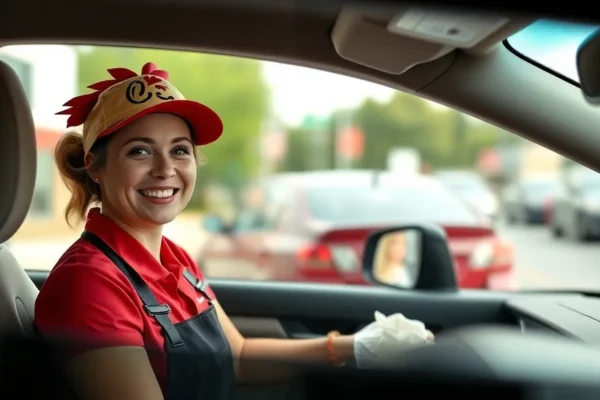
Chick-fil-A Chooses People Over AI for Drive-Thru Ordering
Chick-fil-A, a titan in the fast-food industry known for its signature chicken sandwiches and strong customer service, has recently clarified its stance on adopting artificial intelligence (AI) for drive-thru ordering. Instead of embracing the trend of AI-powered automation, the company’s CEO, Andrew Cathy, has emphasized a commitment to maintaining human interaction at the drive-thru. This decision, articulated by Cathy in recent statements and widely reported in business publications like Forbes, signals a deliberate strategic choice that differentiates Chick-fil-A from many of its fast-food rivals exploring technological solutions to streamline operations.
The Strategic Rationale Behind Prioritizing Human Interaction
The core of Chick-fil-A’s decision rests on its long-established brand identity and a deeply ingrained philosophy of customer service. For Chick-fil-A, the drive-thru is not merely a transactional point but a critical touchpoint for customer engagement. By eschewing AI for ordering, the company aims to preserve and enhance the personal connection that many customers value. This focus on human interaction is seen as a key differentiator in a crowded market, contributing to customer loyalty and a positive brand experience. While many competitors are investing heavily in automation, including AI-driven voice recognition for drive-thrus and self-order kiosks, Chick-fil-A’s strategy suggests that the perceived benefits of these technologies, such as speed and cost reduction, do not outweigh the value of a human-led customer service model. This approach is consistent with the company’s historical emphasis on its employees as brand ambassadors, fostering a more personalized and welcoming atmosphere.
Competitive Dynamics in the Fast Food Landscape
Chick-fil-A’s decision places it in an interesting position relative to its competitors. Major players in the fast-food sector, including McDonald’s, Starbucks, and Burger King, are actively exploring and implementing AI and automation technologies to improve efficiency and reduce labor costs. For instance, McDonald’s has been testing AI-powered drive-thru systems and expanding its digital order capabilities. This competitive pressure to adopt new restaurant technology is significant. By choosing a different path, Chick-fil-A is doubling down on a unique selling proposition. While competitors might gain advantages in speed and potentially lower operational costs through automation, Chick-fil-A aims to gain an advantage in customer loyalty and brand perception by offering a more human and personable experience. This strategic divergence allows Chick-fil-A to stand out, potentially attracting customers who are weary of impersonal automated interactions or who prioritize exceptional customer service. However, it also means potentially ceding some ground in terms of pure operational efficiency that AI-driven solutions promise.
Industry Implications and the Future of Fast Food Technology
Chick-fil-A’s approach to AI in the drive-thru provides a counterpoint to the prevailing trend of increasing automation in the fast-food industry. While many industry observers and competitors believe that AI is the inevitable future for optimizing drive-thru ordering and back-of-house operations, Chick-fil-A’s decision suggests that there is still a significant market for a high-touch customer service model. This could signal to other industry peers that a purely technology-driven approach might not resonate with all customer segments. It raises the question of whether a hybrid model, combining the efficiency of technology with the warmth of human interaction, might be the optimal strategy for the industry as a whole. Industry analysts are watching closely to see if Chick-fil-A’s strategy continues to yield superior customer satisfaction and loyalty metrics that justify foregoing immediate technological efficiencies. This could lead to a bifurcation in the market, with some brands leaning heavily into automation and others, like Chick-fil-A, emphasizing the human element.
Financial and Operational Impact Considerations
The financial and operational implications of Chick-fil-A’s decision are multifaceted. By not investing in AI drive-thru ordering systems, Chick-fil-A avoids the significant upfront capital expenditure and ongoing maintenance costs associated with such technologies. This could lead to a more stable cost structure in the short term. Operationally, maintaining human interaction at the drive-thru requires a robust staffing model and efficient training programs, which Chick-fil-A is already known for. This reliance on human capital, however, could present challenges in periods of high labor shortages or rising wage pressures. While competitors may see potential cost savings and increased throughput through automation, Chick-fil-A’s financial performance will likely continue to be driven by its ability to maintain high sales volumes and profitability through strong customer loyalty and operational excellence. The long-term financial impact will depend on whether the brand equity derived from human interaction continues to translate into market share and revenue growth that outpaces the efficiencies gained by competitors through technology. Chick-fil-A’s financial reports consistently show strong revenue growth, indicating that its current operational model is highly effective, though direct comparisons on the cost savings from AI are not publicly available for competitors.
Execution Risks and Challenges Ahead
Despite the strategic rationale, Chick-fil-A’s chosen path is not without its risks and challenges. A primary risk is that the fast-food landscape continues to evolve rapidly, and if automation significantly improves speed and convenience for competitors, customer preferences might shift towards those offering faster, albeit more automated, service. There’s also the operational challenge of scaling a human-centric model. As Chick-fil-A continues to expand its global footprint, maintaining consistent high-quality human interaction across all locations becomes increasingly complex. Labor availability and the cost of employing a larger staff for direct customer interaction could become significant headwinds. Furthermore, if customer expectations for technological integration in all aspects of life continue to rise, Chick-fil-A might eventually be perceived as lagging behind. Historically, Chick-fil-A has demonstrated a strong ability to execute its strategies, but the increasing pace of technological advancement in the quick-service restaurant sector presents a unique challenge to its people-first approach. The company’s ability to recruit, train, and retain a skilled workforce will be paramount to the success of this strategy.
Stakeholder Implications: Customers, Employees, and Investors
For customers, Chick-fil-A’s decision reinforces the brand’s commitment to a positive and personal dining experience. This is likely to be welcomed by many patrons who value friendly service and the human touch. For employees, it means continued emphasis on their role as front-line brand representatives, potentially leading to greater job satisfaction and a stronger sense of purpose within the organization. This focus on human interaction also aligns with Chick-fil-A’s strong corporate culture and its reputation as a good employer. Investors, while perhaps initially intrigued by the potential cost savings of AI seen at competitors, may find reassurance in Chick-fil-A’s proven track record of financial success driven by customer loyalty. The company’s consistent revenue growth and strong market position suggest that its strategy, even without extensive automation, is generating significant returns. However, investors will also be watching to see if this approach remains competitive in the long term as technology becomes more pervasive in consumer experiences.
Outlook and Next Steps for Chick-fil-A
If Chick-fil-A’s strategy of prioritizing human interaction in the drive-thru proves successful, we can expect the company to continue refining its customer service training and operational efficiency for its staff. Key milestones to watch will include continued strong customer satisfaction scores, sustained revenue growth that keeps pace with or exceeds industry averages, and the company’s ability to manage labor costs effectively amidst potential industry-wide wage inflation. Indicators of success will also include how well the brand maintains its unique market position against competitors who fully embrace AI. We might see Chick-fil-A further invest in technology that supports its human employees, such as better order management systems or communication tools, rather than systems that replace them. Over the next two to three years, measurable outcomes will likely include consistent profitability and market share gains, demonstrating that its chosen strategy remains a competitive advantage in the fast-food landscape.
Key Questions and Answers About Chick-fil-A’s AI Drive-Thru Strategy
Will Chick-fil-A’s decision to avoid AI for drive-thru ordering work in the long run?
It’s plausible that Chick-fil-A’s strategy will continue to work, leveraging its strong brand loyalty and customer service reputation. However, long-term success depends on evolving customer expectations and competitors’ advancements in AI-driven efficiency.
Why didn’t Chick-fil-A adopt AI drive-thru ordering like its competitors?
Chick-fil-A’s CEO stated that the company prioritizes human interaction at the drive-thru as a core part of its customer service philosophy, differentiating it from competitors who may be focused solely on automation for speed and cost reduction.
What are the primary risks of not using AI in the drive-thru?
The main risks include potential slower service times compared to highly automated competitors, increased labor costs, and the possibility of being perceived as technologically behind if customer preferences shift heavily towards automated convenience.
How does this strategy impact Chick-fil-A’s customer service?
This strategy aims to enhance customer service by preserving the personal connection with employees, fostering a more welcoming and less transactional experience, which is central to Chick-fil-A’s brand identity.
What is the competitive advantage of this approach?
The competitive advantage lies in differentiation. By offering a superior human interaction experience, Chick-fil-A aims to attract and retain customers who value personal service, thereby building stronger brand loyalty.
How will Chick-fil-A’s business strategy evolve if AI continues to advance rapidly?
Chick-fil-A may need to adapt by finding ways to integrate technology that supports its human staff rather than replacing them, ensuring its service remains efficient while maintaining its core values, or potentially adopting selective AI applications in other areas of operation.
Business outcomes are subject to execution risk and market dynamics.











