

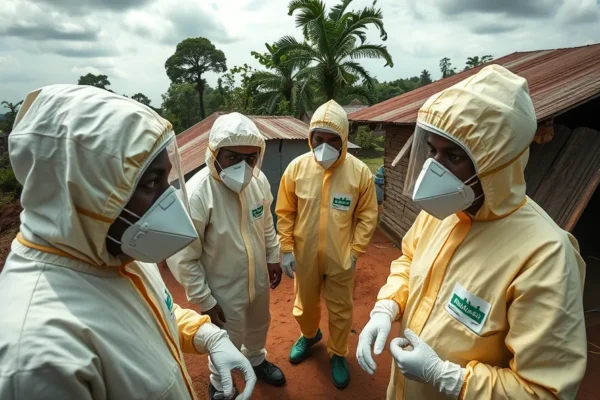
Shifting Priorities in Global Health Security
The Trump administration’s America First policy represented a foundational shift in how the United States engaged with the global community. Central to this strategy was a move toward bilateralism, which favored direct, one-on-one negotiations over multilateral agreements and international aid frameworks. This policy shift directly impacted the architecture of international health funding, particularly as it intersected with the 2018 outbreak of Ebola in the Democratic Republic of Congo (DRC).
While the administration advocated for fiscal prudence and a greater emphasis on domestic priorities, the withdrawal of funding and leadership from international health organizations created a complex environment for infectious disease control. By prioritizing the American taxpayer’s dollar, the administration sought to reduce long-term obligations to international institutions, an move that created a ripple effect in how the world managed the DRC Ebola outbreak and other medical humanitarian responses.
The Rationale Behind Funding Realignment
The strategic rationale for the America First policy regarding foreign aid was rooted in the concept of burden-sharing. The administration argued that international health funding—much of it funneled through the World Health Organization (WHO) and other global partners—lacked accountability and disproportionately relied on American taxpayers to carry the financial burden. By shifting away from open-ended commitments, the White House aimed to ensure that every dollar of international aid provided a clear, measurable return on investment for American interests.
From a business strategy perspective, this was an exercise in tightening fiscal oversight. The administration sought to move from a donor-heavy model toward one where recipient nations and other global powers increased their share of health security spending. However, this shift created a temporary funding vacuum that complicated the medical humanitarian response in the DRC, as aid organizations struggled to reconcile the sudden change in US financial commitment with the urgent, high-cost needs of containment.
Competitive Context and Geopolitical Positioning
The reduction in US funding for global health security changed the competitive landscape of humanitarian aid. As the United States pulled back from its traditional role as the primary underwriter of global health stability, other global actors, such as the European Union and emerging economies like China, faced pressure to fill the void. This created a power vacuum that shifted the influence over global health security protocols.
While the US maintained that its domestic health security was its highest priority, critics argued that this move harmed the collective ability to contain outbreaks at their source. By withdrawing resources, the US weakened its competitive position as a leader in international disease mitigation. Organizations that rely on predictable funding streams to deploy vaccines and medical supplies found themselves navigating a more fragmented and less reliable funding environment, allowing other players to assert influence in the DRC health crisis.
Industry Implications for Global Health Security
The broader implications for the global health industry are significant. The move away from centralized, multilateral funding models forces international non-governmental organizations and health agencies to adopt more agile, project-based financial models. In an era where global health security is increasingly recognized as a vital component of economic stability, the move away from consistent funding signals a move toward localized and specialized health interventions.
Industry peers and health organizations are now forced to diversify their funding sources. Reliance on the United States as a primary lender of last resort is no longer a viable business strategy for international health groups. This shift encourages health organizations to form new, direct partnerships with private donors and philanthropic foundations, moving away from a reliance on government-to-government funding that is subject to the volatility of election cycles and political administration changes.
Financial and Operational Impacts of Aid Cuts
Operationally, the America First policy introduced substantial volatility into the logistics of the DRC Ebola outbreak. Medical humanitarian response efforts are highly capital-intensive, requiring advanced supply chains, cold-chain storage for vaccines, and boots-on-the-ground staffing. When US funding commitments fluctuated, it created operational friction. According to reports from groups like the World Health Organization, the containment of the Ebola virus in the DRC was hindered not just by local security concerns, but by the difficulty of maintaining a consistent, long-term financial runway.
Short-term financial impact included a scramble for emergency liquidity among aid agencies. Long-term, the impact is structural; health organizations are now forced to hedge against funding risks by maintaining larger cash reserves or establishing multi-year, private-sector-backed financial instruments. This increases the cost of doing business in the humanitarian sector, as agencies must now spend more on fundraising and administrative overhead to compensate for the reduction in predictable federal aid.
Execution Risks and Real-World Challenges
The primary execution risk of an America First approach to global health is the danger of containment failure. Infectious disease control is a classic example of a system where the weakest link determines the outcome. If funding for the DRC Ebola outbreak is insufficient, the risk of the virus spreading beyond borders increases, creating a systemic risk that eventually lands back on the doorstep of the United States—negating the cost savings of the initial budget cuts.
Historical data suggests that pandemic response relies on immediate, front-loaded capital. By attempting to treat health security as a transactional business expense, the administration faced the risk of “false economy,” where the cost of a full-scale outbreak exceeds the cost of preventive funding many times over. The organizational challenge for the US agencies involved was balancing the directive to cut spending with the operational necessity of preventing a global health catastrophe.
Stakeholder Implications and Organizational Shifts
The shift in policy had a profound effect on stakeholders across the global health ecosystem. Employees at international aid organizations faced instability, while private sector partners—such as pharmaceutical companies developing vaccines—had to navigate a landscape where government contracts were less guaranteed. For investors in global healthcare technology, the instability underscored the importance of ensuring that health security solutions have diversified revenue streams beyond government grants.
For the public, the implication is a heightened awareness of how domestic foreign policy decisions directly correlate with global health outcomes. The cultural shift within the humanitarian sector has been one of increased skepticism toward long-term government stability, leading to an organizational pivot toward a more decentralized, entrepreneurial approach to securing resources for disease outbreaks.
Outlook and Key Milestones to Monitor
If the America First strategy succeeds in creating a more sustainable, burden-shared model for global health, we should see an increase in international financial contributions from other G7 nations. Future milestones include the formalization of burden-sharing agreements within the G20 and the development of new, independent international health funding vehicles that are less susceptible to the political shifts of a single nation.
Stakeholders should monitor the level of commitment from international donors at subsequent summits and evaluate the success of decentralized health networks in managing recent outbreaks. The long-term success of this model depends on whether it leads to more robust global systems or simply to a more fragmented, less efficient international response.
Strategic Questions and Answers
How did the America First policy change the approach to the Congo health crisis?
It moved the focus from broad multilateral support toward a more selective, transactional funding model, forcing agencies in the DRC Ebola outbreak to seek alternative financing and adapt to less predictable US aid disbursements.
Did the policy lead to better global health security?
While intended to increase accountability, critics and many health experts argue that it weakened the coordinated international response to the DRC Ebola outbreak, noting that infectious disease control requires consistent, preemptive funding rather than just-in-time responses.
What are the risks of reducing US investment in global health?
The primary risk is the “false economy” of underfunding, where the containment of an outbreak fails, leading to a much larger and more costly international health emergency that inevitably impacts the global economy and domestic US security.
How are international organizations reacting to these policy shifts?
Many are diversifying their revenue streams, moving away from total dependence on US government funding by forming new partnerships with the private sector, philanthropic foundations, and other global governments to ensure operational continuity.
How long until the impacts of these changes are fully measurable?
The impacts are already being measured in the funding gaps experienced during recent crises. The long-term efficacy of this strategy will be determined by whether other nations step up to fill the void or if global health security becomes structurally weakened over the coming decade.
Note: The outcomes of business and political strategies are subject to significant execution risk. The effectiveness of foreign policy shifts on global health outcomes involves complex variables, and real-world results may deviate significantly from strategic goals due to unforeseen operational, geopolitical, or market-based challenges.











