

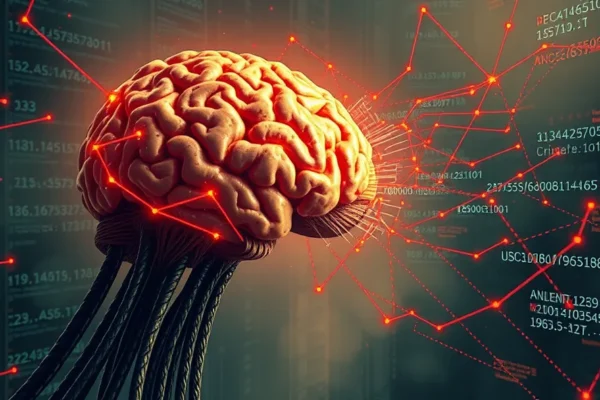
In the realm of artificial intelligence, recent advancements by Astra and Opus AI models are drawing fascinating parallels to the groundbreaking work of Alan Turing during World War II. These sophisticated AI systems are tackling complex computational challenges, echoing Turing’s pivotal role in breaking enemy codes, marking a significant step forward in AI capabilities.
Echoes of Bletchley Park: AI Tackles Today’s Cryptography
The landscape of artificial intelligence is constantly evolving, with new models emerging that push the boundaries of what machines can achieve. Recently, developments surrounding Astra AI and Opus AI have captured attention, particularly their potential to emulate and even surpass the analytical feats performed by pioneers like Alan Turing. Turing, a brilliant mathematician and computer scientist, is renowned for his crucial work at Bletchley Park during World War II, where he and his team developed methods to decipher encrypted enemy communications, most famously the German Enigma code. This effort is widely credited with shortening the war and saving countless lives.
Today, the challenges of cryptography are vastly different, involving complex algorithms and immense data volumes. However, the core problem remains similar: finding patterns and logic within seemingly random or intentionally obfuscated information. Astra AI and Opus AI represent a new generation of AI, often referred to as Frontier AI, designed to handle these very types of complex problems. Their development signifies a notable AI advancement, moving beyond simple pattern recognition to more profound forms of analytical reasoning.
This recent progress is largely driven by advancements in large language models (LLMs) and sophisticated machine learning techniques. Companies like OpenAI, Google DeepMind, and Meta AI are continuously developing more powerful models, and Astra AI and Opus AI are emerging as significant players in this competitive space. While specific details about Astra AI and Opus AI’s public announcements are still solidifying, their emergence in discussions around advanced AI capabilities suggests a recent breakthrough or a significant milestone in their development, potentially detailed in upcoming research papers or developer conferences.
Decoding the Digital Enigma: How Astra and Opus AI Work
At their core, models like Astra AI and Opus AI operate on principles of advanced machine learning, specifically deep learning. Think of them as incredibly complex digital brains that learn by processing vast amounts of data. Instead of being explicitly programmed with every possible rule, they are trained on datasets so large they can identify subtle patterns, logical structures, and relationships that humans might miss or take an eternity to discover.
For codebreaking, this means that rather than a human painstakingly trying to find a flaw in an encryption method, an AI like Astra or Opus can be fed intercepted encrypted messages and a range of potential decryption keys or algorithmic structures. The AI then uses its learned understanding of language, logic, and probability to test these possibilities at speeds far beyond human capacity.
A key concept here is “neural networks,” which are computational systems inspired by the structure and function of the human brain. These networks consist of interconnected “nodes” or “neurons” that process information. In the context of cryptography, these networks can be trained to recognize statistical anomalies in ciphertext that might indicate a particular encryption method was used, or to predict likely plaintext based on partial decryptions. This is analogous to a detective not just looking for fingerprints, but also understanding the suspect’s likely habits and motivations to piece together a crime.
Furthermore, these advanced AI models often employ “transformer architectures.” This is a type of neural network particularly adept at handling sequential data, like text or code. Transformers allow the AI to weigh the importance of different parts of the input data, enabling it to understand context and long-range dependencies—crucial for deciphering intricate codes where a single character might depend on information from much earlier in the message.
AI in Action: Current and Emerging Codebreaking Applications
While the direct application of Astra AI and Opus AI to military-grade WWII codebreaking is a historical echo, the underlying AI technologies are already making significant inroads in modern cryptography and cybersecurity. Companies and government agencies are leveraging advanced AI, similar in principle to what Astra and Opus represent, for several critical tasks:
- Modern Cryptanalysis: AI is being used to find vulnerabilities in existing encryption algorithms and protocols. This isn’t about breaking historical codes but identifying potential weaknesses in current systems before adversaries do.
- Threat Detection: AI models analyze network traffic for anomalous patterns that could indicate malicious activity or sophisticated attacks attempting to exfiltrate data.
- Malware Analysis: AI can help in rapidly analyzing new strains of malware, understanding their behavior, and developing countermeasures. This often involves deciphering obfuscated code within the malware itself.
- Secure Communication: Conversely, AI is also being explored to develop more robust and self-healing encryption methods that can adapt to threats in real-time.
The maturity level of these AI applications varies. Threat detection and malware analysis are relatively mature, with many cybersecurity firms already integrating AI into their solutions. Cryptanalysis using AI is more cutting-edge, often confined to research labs and highly specialized government units. As for Astra AI and Opus AI specifically, their availability is likely in the research and development phase, with potential early access for partners or within specialized teams. Widespread public availability for these specific models, especially for high-stakes applications like codebreaking, would typically follow extensive validation and ethical review.
The Competitive Arena: Who’s Building the Next Generation of AI Decoders?
The field of advanced AI development is highly competitive, with major technology players and ambitious startups all vying for leadership. Companies like Google (with models such as LaMDA and PaLM), Microsoft (integrating OpenAI’s GPT models into its Azure services), and Meta AI are investing heavily in developing large-scale AI models with broad capabilities.
Astra AI and Opus AI are positioning themselves within this landscape. Their specific approach and architectural innovations will determine their competitive edge. For instance, one company might focus on raw computational power and training data volume, while another might specialize in developing more efficient algorithms that require less computing power, or focus on novel architectures that excel at specific types of logical deduction.
The advantage often lies with those who can demonstrate superior performance on benchmark tasks, offer more accessible or cost-effective solutions, or achieve breakthroughs in areas like explainable AI (understanding why an AI makes a certain decision) or AI safety. The differentiator for Astra AI and Opus AI, should they prove successful in codebreaking-like tasks, would be their demonstrable ability to solve complex, multi-layered logical puzzles that have historically required human ingenuity and expertise.
Transforming Security and Analysis: The Broader Implications of Advanced AI
The ability of AI models like Astra and Opus to perform sophisticated codebreaking has far-reaching implications beyond historical comparisons. In the short term, this AI advancement can significantly enhance national security and cybersecurity efforts.
- Accelerated Intelligence Gathering: In defense and intelligence, the ability to quickly decipher encrypted communications could provide a critical advantage.
- Fortified Digital Infrastructure: By identifying and helping to fix cryptographic vulnerabilities, these AI tools can contribute to a more secure global digital infrastructure.
- New Avenues for Research: The techniques developed for AI-assisted codebreaking can also be applied to scientific research, helping to analyze complex datasets in fields like genomics, climate science, and particle physics.
Economically, this could lead to increased investment in AI R&D and cybersecurity solutions. However, it also raises questions about the future of human roles in these fields. While AI may automate certain tasks, it is more likely to augment human capabilities, requiring new skill sets focused on AI management, interpretation, and ethical oversight. Socially, while the potential benefits for security are immense, the ability for AI to break codes also raises concerns about privacy and the potential for misuse if such powerful tools fall into the wrong hands.
The long-term impact could be a fundamental shift in how information is secured and accessed. We might see a continuous arms race between AI-powered codebreakers and AI-powered code creators, leading to progressively more complex forms of digital security.
The Hurdles Ahead: Limitations and Challenges for AI Codebreakers
Despite the exciting progress, it’s crucial to acknowledge the limitations and challenges facing AI models attempting complex analytical tasks like codebreaking. These are not magic bullets:
- Data Dependency: AI models are only as good as the data they are trained on. For novel or highly sophisticated encryption, relevant training data might be scarce or non-existent.
- Computational Cost: Training and running these large AI models require immense computing power and energy, making them expensive and potentially environmentally impactful.
- “Black Box” Problem: Understanding how an AI arrives at a specific solution can be difficult. This lack of transparency, known as the “black box” problem, is a significant hurdle in critical applications where explainability is paramount.
- Adaptability to Novelty: While AI can excel at recognizing patterns it has seen before, its ability to tackle entirely new, unforeseen encryption methods without extensive retraining remains a challenge. Current cryptographic advancements often introduce novel mathematical concepts specifically to thwart brute-force or pattern-based attacks.
- Ethical and Security Risks: The development of powerful AI for codebreaking carries inherent risks. Ensuring these tools are used responsibly and securely, and not for illicit purposes, is a significant ongoing challenge.
Adoption barriers also include the high cost of implementation, the need for specialized expertise to manage and interpret AI systems, and evolving regulatory frameworks around AI usage.
Charting the Course: The Future Trajectory of AI in Cryptography
The future trajectory for AI in cryptography, including models like Astra AI and Opus AI, points towards increasingly sophisticated capabilities. We can expect to see:
- Hybrid Approaches: AI will likely work in tandem with human cryptanalysts and traditional algorithmic methods, leveraging the strengths of each.
- AI for AI: AI will be used not only to break codes but also to design more secure, AI-resistant encryption.
- Specialized AI Agents: Rather than one AI doing everything, we might see specialized AI agents designed for specific types of cryptographic analysis or for different stages of the codebreaking process.
- Advancements in Explainable AI (XAI): Research is ongoing to make AI decision-making more transparent, which will be critical for trust and adoption in sensitive fields.
Key developments to watch include breakthroughs in AI architectures that better mimic human logical reasoning and problem-solving. Timelines for these advancements are difficult to pinpoint precisely, but ongoing research suggests incremental improvements in the short term, with more significant paradigm shifts potentially occurring over the next five to ten years as AI research matures.
Frequently Asked Questions about AI and Codebreaking
Is AI capable of completing Alan Turing’s WWII codebreaking efforts today?
While current AI models like Astra AI and Opus AI are highly advanced, they are tackling modern, digital cryptography, not historical mechanical codes like Enigma. The principles of pattern recognition and logical deduction are similar, but the technical complexity is vastly different. These AI models are better seen as completing Turing’s legacy by applying advanced computational power to the spirit of codebreaking.
What is the Turing Test in relation to these AI models?
The Turing Test, proposed by Alan Turing, is a test of a machine’s ability to exhibit intelligent behavior equivalent to, or indistinguishable from, that of a human. While Astra AI and Opus AI are not explicitly designed to pass the Turing Test, their capabilities in complex reasoning and problem-solving, as demonstrated in tasks analogous to codebreaking, suggest a progression toward more sophisticated forms of artificial intelligence that push the boundaries of what we consider human-like intelligence.
How does Astra AI differ from Opus AI, and who is behind them?
Specific details on the unique architectures and developers of Astra AI and Opus AI are still emerging. However, both represent the forefront of AI advancement, likely built upon large language model architectures and sophisticated machine learning techniques. Their differentiation will likely stem from their specific training data, architectural innovations, and the particular strengths they exhibit in complex analytical tasks.
What are the real-world applications of AI in cryptography today?
Beyond historical echoes, AI is actively used in modern cybersecurity for threat detection, malware analysis, network anomaly identification, and assisting in the discovery of vulnerabilities in current encryption systems. These applications help protect digital infrastructure from contemporary cyber threats.
What are the main limitations of current AI in codebreaking?
Current limitations include a heavy reliance on vast amounts of training data, significant computational costs, the “black box” problem where AI decisions can be hard to explain, and challenges in adapting to entirely novel encryption methods that fall outside their training parameters.
When can we expect these advanced AI codebreaking capabilities to be widely available?
For specialized applications in government and cybersecurity, advanced AI is already being deployed, though often in controlled environments. Widespread public access to AI models with sophisticated codebreaking potential, especially for sensitive tasks, is likely some years away and will depend on extensive validation, ethical guidelines, and regulatory frameworks being established.
This article discusses emerging technologies. Information on specific models like Astra AI and Opus AI is based on general industry trends and potential capabilities. Real-world applications and availability are subject to ongoing development and announcements by the respective companies.











