

The Ambitious Vision of Tesla’s Optimus Robot
Tesla, a company known for revolutionizing the automotive industry, is venturing into a new frontier: humanoid robotics. Their project, dubbed Optimus, aims to develop an advanced robot capable of performing a wide range of tasks, potentially transforming manufacturing, logistics, and even daily life. This initiative, officially unveiled by CEO Elon Musk, represents a significant leap beyond the company’s established expertise in electric vehicles and battery technology. The core problem Optimus seeks to address is the shortage of human labor for repetitive, dangerous, or mundane tasks. By creating a versatile, intelligent robot, Tesla envisions a future where such jobs can be automated, freeing up human potential for more creative and complex endeavors. The significance of Optimus is amplified by Tesla’s existing manufacturing prowess; the company’s ability to scale production of complex products like the Model S and Model 3 gives them a unique position to potentially mass-produce advanced robots. This ambitious undertaking was first showcased in detail during Tesla’s AI Day events, with the latest iteration, Optimus V3, demonstrating increasingly sophisticated mobility and manipulation capabilities.
How the Optimus Robot Aims to Work
At its heart, the Optimus robot is designed to be an intelligent, autonomous machine capable of interacting with its environment and executing tasks. Think of it like a highly advanced, mobile computer with sophisticated arms and hands, guided by artificial intelligence. Tesla is leveraging its extensive experience in developing self-driving car technology, particularly in areas like sensor fusion, computer vision, and AI-driven decision-making, to power Optimus. The robot is equipped with cameras and sensors that allow it to perceive its surroundings, identify objects, and navigate its environment. Its articulated arms and hands are designed for fine motor control, enabling it to grasp, manipulate, and assemble various objects. The “brain” of Optimus runs on advanced AI algorithms that allow it to learn, adapt, and perform tasks that might be challenging for simpler industrial robots. For instance, the AI can interpret instructions, plan sequences of movements, and react to unexpected situations, much like a human worker. This is achieved through a combination of machine learning models trained on vast datasets of human activity and real-world interactions.
Current State and Early Applications of Optimus
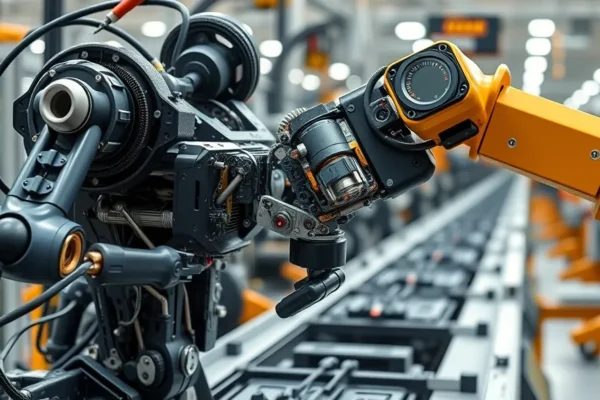
Currently, Optimus is in its early stages of development and testing. While Tesla has showcased impressive demonstrations of its capabilities, including walking, basic object manipulation, and performing simple tasks within a controlled environment, it is not yet available for widespread commercial use. The robots are primarily being used for internal testing and development within Tesla’s own facilities. Initial applications are envisioned within Tesla’s factories, assisting with tasks that are currently performed by human workers or more rigid industrial robots. This could include tasks like handling heavy components, performing quality checks, or assisting in assembly lines. For example, early demonstrations have shown Optimus performing tasks like picking up and sorting components, mirroring some of the repetitive actions found in car manufacturing. The company has indicated plans to incrementally deploy Optimus in its manufacturing plants, starting with simpler roles before progressing to more complex ones. However, widespread availability to external customers is still a distant prospect, with timelines likely extending several years out.
The Competitive Landscape in Humanoid Robotics
The pursuit of advanced humanoid robots is not unique to Tesla. Several other major technology companies and research institutions are actively developing their own versions. Companies like Boston Dynamics, known for its agile robots like Spot and Atlas, have been pioneers in robotic locomotion and dynamic balancing. Figure AI, with its Figure 01 robot, is another significant player, collaborating with companies like OpenAI to imbue its robots with advanced AI capabilities for general-purpose tasks. Agility Robotics’ Digit is another notable example, designed for logistics and warehouse environments. Tesla’s Optimus differentiates itself through its ambitious goal of mass production, aiming to leverage Tesla’s established manufacturing scale and supply chain expertise. While competitors may have impressive prototypes with advanced individual capabilities, Tesla’s potential advantage lies in its ability to bring down the cost and increase the production volume of humanoid robots, making them more accessible for broad adoption. The focus on AI integration, drawing directly from Tesla’s self-driving car development, also presents a strong differentiator.
Implications and Impact on Industries and Society
The successful development and widespread adoption of humanoid robots like Optimus could have profound implications across numerous sectors. In manufacturing and logistics, they could automate dangerous, repetitive, or physically demanding jobs, leading to increased efficiency and potentially lower production costs. This could reshape global supply chains and the economics of production. Beyond factories, Optimus could eventually find applications in healthcare, assisting with patient care, or even in domestic settings, helping with household chores. The economic impact is substantial, with potential for job displacement in some sectors but also the creation of new jobs in robot design, maintenance, and oversight. Socially, the integration of robots into everyday life raises questions about human-robot interaction, safety, and the ethical considerations of automation. The long-term impact could see a fundamental shift in the nature of work and how society operates, demanding careful planning and adaptation.
Navigating the Hurdles of Tesla Robot Production
Despite the grand vision, the production of the Tesla Optimus robot faces significant challenges. One of the primary hurdles is the intricate nature of scaling up production for a complex, multi-component robotic system. Unlike cars, which have a largely standardized form factor, robots require a high degree of customization and precision across their various parts. Tesla’s experience with repurposing Model S production lines for Optimus highlights this challenge. While car production lines are optimized for assembling vehicles, robots demand a different set of tooling, calibration processes, and assembly sequences. The precision required for smaller robot parts, such as the delicate actuators and sensors in its hands and joints, is orders of magnitude greater than that needed for car components. Achieving the level of accuracy and consistency needed for reliable robot assembly at mass production volumes is a formidable task. Furthermore, ensuring the durability and reliability of these complex systems for sustained operation in varied environments requires extensive testing and refinement, moving beyond the controlled settings of demonstrations.
The Future Trajectory of Optimus and Humanoid Robotics
The future trajectory for Tesla’s Optimus robot, and indeed the broader field of humanoid robotics, points towards increasing autonomy, dexterity, and versatility. Key developments to watch include improvements in AI that enable robots to learn more complex tasks with less explicit programming, enhanced manipulation capabilities allowing for finer motor control, and greater energy efficiency for longer operational times. Tesla has indicated a roadmap for Optimus that involves iterative improvements, with each new version (like Optimus V3) showcasing enhanced abilities. Expert consensus suggests that within the next five to ten years, we may see robots capable of performing a wider array of manufacturing and logistics tasks, gradually moving from controlled environments to more dynamic settings. However, the timeline for robots entering general consumer households for complex tasks remains further out, contingent on significant advancements in safety, cost reduction, and widespread societal acceptance.
Key Questions About Tesla’s Optimus Robot
What is the current capability of the Optimus robot?
The current capability of the Optimus robot, as demonstrated by Tesla, includes basic locomotion, object recognition, and simple manipulation tasks like picking up and sorting items. It is still in its early development phase and primarily used for internal testing.
When will the Optimus robot be available for purchase?
Tesla has not provided a definitive timeline for when the Optimus robot will be available for purchase by external customers. Initial deployments are expected within Tesla’s own manufacturing facilities first, with broader availability likely several years away.
What are the main production challenges for the Tesla robot production?
Key production challenges include adapting existing car manufacturing lines, achieving the high precision required for robot components, scaling up the assembly of complex electromechanical systems, and ensuring reliability and durability for mass production.
How does Optimus compare to other humanoid robots?
Optimus aims to differentiate itself through Tesla’s potential for mass production and cost reduction, leveraging its expertise in AI from the automotive sector. Competitors like Boston Dynamics and Figure AI often showcase advanced individual capabilities, but Tesla’s focus is on scalability.
What are the potential applications for the Optimus robot?
Initial applications are anticipated in Tesla’s factories for tasks like material handling and assembly. Long-term potential applications span across logistics, healthcare, and even domestic assistance, depending on future development and regulatory approval.
What are the risks associated with the Optimus robot?
Risks include potential job displacement due to automation, safety concerns regarding human-robot interaction, ethical considerations of advanced AI, and the significant technical and economic hurdles in achieving reliable mass production.
This article discusses the current state and future potential of Tesla’s Optimus robot. It is important to note that information regarding timelines and specific capabilities is based on public announcements and demonstrations, and actual development may vary. Ongoing research and development in humanoid robotics are subject to rapid change.











