

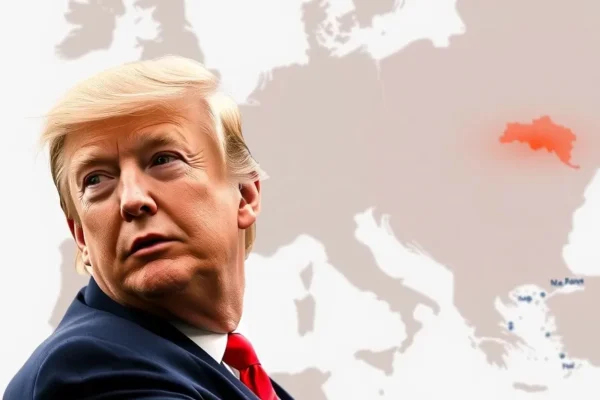
The Ripple Effect of Conflicts of Interest in Campaigns
In the world of finance and economics, transparency and trust are paramount. When we talk about financial decisions, whether for individuals or large organizations, understanding who is making those decisions and what their potential motivations are is crucial. This concept of potential conflicting interests is not just relevant to Wall Street; it’s a significant factor in political campaigns too, as seen in discussions surrounding the Trump campaign. Let’s break down what a conflict of interest is and why it matters, using the example of campaign advisers potentially having problematic ties.
A conflict of interest happens when a person or organization has multiple interests, and serving one interest could hurt the other. Think of it like this: Imagine you’re a baker. Your primary interest is to make delicious cakes for your customers. But what if you also own a company that sells a special ingredient that, while making cakes taste a bit bland, is much cheaper to buy? If you push your customers to use that cheaper ingredient because it benefits your ingredient company, even though it’s not the best for their cake, you have a conflict of interest. Your duty to your customers (making the best cake) clashes with your personal financial gain.
Understanding this is important because it affects trust. In finance, if a financial advisor pushes you into investments that benefit them more than you, that’s a conflict. In politics, if campaign advisers are making decisions that might benefit a foreign entity over the best interests of their country or the campaign’s stated goals, that raises serious questions. This is why news about potential conflicts of interest, like those involving Trump campaign advisers Chris LaCivita and James Blair after a Balkans trip, warrants careful consideration.
How Potential Conflicts Can Unfold
The situation involving Chris LaCivita and James Blair, reportedly linked to a pro-Russian government, illustrates a potential conflict of interest within the context of political campaign management. Imagine a political campaign as a complex business aiming to win an election. The campaign managers and advisers are like the executives, hired to steer the company towards its goal.
Here’s a simplified step-by-step look at how such a situation could play out:
1. The Assignment/Trip: Campaign advisers, in this case, were reportedly involved in a Balkans trip. This trip might have been for various reasons, perhaps related to understanding regional dynamics or exploring potential diplomatic avenues.
2. Alleged Connections: During or after this trip, these advisers were alleged to have involvement or connections with entities associated with a pro-Russian government. This is where the potential conflict arises.
3. The Conflict: If these advisers have financial, personal, or political ties to entities that might have interests contrary to their employer’s (the campaign), their judgment could be compromised. For example, if they are advising on foreign policy aspects of the campaign, and their personal interests align with a pro-Russian stance, they might steer campaign messaging in a way that benefits Russia, not necessarily the campaign’s core objectives or national interests.
4. Decision-Making Impact: This compromised judgment could influence crucial political strategy decisions. For instance, how the campaign addresses international relations, which candidates are highlighted, or what policies are emphasized could be subtly (or not so subtly) shaped by these external influences.
5. Potential Consequences: As seen in the reported consideration of staff termination, the ultimate consequence is that the individuals might be removed from their positions to prevent further potential damage to the campaign’s integrity and effectiveness. This is a move to resolve the conflict of interest, much like a company might fire an employee found to be embezzling funds or leaking trade secrets.
Think of it like hiring a chef for a restaurant. You hire them to create fantastic meals for your customers. But if that chef also secretly receives a kickback from a specific food supplier to use their less-than-ideal ingredients, they have a conflict of interest. The customers might get subpar food, and the restaurant’s reputation could suffer, all because the chef’s personal gain conflicted with their job’s responsibility. The restaurant owner might then have to decide to fire the chef.
Why This Matters to You and the Economy
At first glance, a discussion about political campaign staff and their alleged foreign ties might seem distant from your personal finances. However, the principles at play have broader implications.
Personal Impact:
- Trust and Stability: When political leaders and their teams are perceived as having conflicts of interest, it can erode public trust. This distrust can translate into uncertainty about future government policies, including economic regulations, trade agreements, and fiscal policies. For individuals, this uncertainty can make long-term financial planning more difficult, as they might worry about sudden policy shifts affecting their investments or job security.
- Economic Policy Direction: The decisions made by political leaders and their advisors shape the economy. If foreign influence is suspected in campaign strategy, it raises questions about whether economic policies (like trade deals, sanctions, or investment regulations) will truly serve the nation’s economic interests or those of other nations. This can impact everything from the cost of goods you buy (inflation) to the availability of jobs in certain sectors.
Economic Impact:
- Market Volatility: Perceptions of political instability or foreign interference can lead to market volatility. Investors might become hesitant to invest in a country where economic policies could be influenced by external agendas, leading to fluctuations in stock markets, currency values, and bond yields.
- International Relations and Trade: A government seen as potentially compromised might face challenges in international diplomacy and trade negotiations. This can lead to disrupted trade flows, tariffs, and reduced foreign investment, all of which can impact domestic industries and consumer prices.
- Resource Allocation: Economic resources, whether government spending or private investment, are often directed based on policy priorities. If those priorities are shaped by conflicts of interest, resources might be misallocated, leading to less efficient economic growth and development.
Who Benefits? Who is Affected Negatively?
In a scenario involving a conflict of interest linked to a pro-Russian government, entities or governments that benefit from closer ties with Russia or from policies that weaken adversaries might stand to gain. Conversely, the nation whose election is being influenced, its citizens, its businesses, and its allies are likely to be negatively affected. This can manifest as economic disadvantages, weakened national security, and a general erosion of democratic processes.
A Look at the Historical Context of Campaign Integrity
Concerns about foreign influence and conflicts of interest in political campaigns are not new. Throughout history, nations have grappled with ensuring that their leaders are making decisions free from undue external pressure. In the United States, for example, regulations surrounding campaign finance and foreign interference have evolved significantly. The creation of bodies like the Federal Election Commission (FEC) and laws like the Bipartisan Campaign Reform Act (BCRA) were partly responses to perceived vulnerabilities in the campaign process.
The current interest in this topic, particularly concerning the Balkans trip and alleged pro-Russian government ties, is triggered by the ongoing geopolitical landscape and the heightened awareness of foreign interference in democratic processes worldwide. Recent data from various intelligence agencies and cybersecurity firms have consistently highlighted efforts by foreign actors to influence elections in democratic nations. For instance, reports from the U.S. intelligence community have detailed past Russian attempts to interfere in U.S. elections. These ongoing concerns amplify the scrutiny of any potential conflicts of interest within political campaigns, especially when they involve regions with complex geopolitical relationships.
Navigating These Issues in Financial Thinking
While you can’t directly control the personnel decisions of political campaigns, understanding the implications of conflicts of interest can inform your broader financial perspective.
How to Think About This in Your Financial Life:
- Informed Investment Decisions: When you hear about political instability or potential foreign influence affecting a country’s policies, consider how that might impact the industries or markets you invest in. For example, if trade relations are strained due to geopolitical issues, companies heavily reliant on international trade might face challenges.
- Diversification: A core principle of personal finance is diversification – not putting all your eggs in one basket. This applies not just to your investment portfolio but also to your awareness of economic and political risks. A diversified approach helps cushion the impact of unexpected events, including those stemming from political conflicts of interest.
- Long-Term Perspective: While news cycles can be dramatic, maintaining a long-term perspective on your financial goals is crucial. Short-term market reactions to political events can be volatile, but understanding the underlying economic fundamentals and geopolitical trends helps in making more resilient long-term plans.
Common Misconceptions and Corrections:
- Misconception: “This political drama has no impact on my savings.”
- Correction: Geopolitical events and perceived conflicts of interest can influence economic stability, market confidence, and policy decisions, all of which have a tangible effect on investment values and economic growth.
- Misconception: “Foreign influence is only a problem for national security, not my wallet.”
- Correction: Foreign influence can shape trade policies, regulatory environments, and international investment flows, directly impacting job markets, consumer prices, and the overall economic health that affects everyone’s finances.
What to Watch For:
When this topic appears in the news, look beyond the headlines. Consider:
- What are the specific allegations of conflict?
- What are the potential financial or political interests involved?
- What is the reported impact on policy or strategy?
- Are there official investigations or statements from relevant bodies?
Connecting Conflicts of Interest to Broader Economic Concepts
Understanding conflicts of interest in campaigns is a window into larger economic and governance principles. It connects to:
- Good Governance: This is the foundation of stable economies. When governance is strong and transparent, businesses and individuals have more confidence to invest and plan.
- Economic Sanctions and Trade Policy: Decisions about who to trade with and who to sanction are often influenced by geopolitical relationships. Allegations of foreign influence can cast doubt on the integrity of these decisions. Understanding [trade policy](linktotradepolicyarticle) helps illustrate how geopolitical alignments affect economic outcomes.
- Market Confidence and Investor Sentiment: Investor confidence is a powerful force in financial markets. If investors believe that economic decisions are being made with compromised integrity, sentiment can sour, leading to reduced investment and economic slowdown.
- Regulatory Capture: This is a related concept where a regulatory agency, created to act in the public interest, instead advances the commercial or political concerns of special interest groups that dominate the industry or sector it is charged with regulating. Conflicts of interest in campaigns can sometimes pave the way for regulatory capture.
Frequently Asked Questions about Trump Campaign Advisers and Conflicts
Here are some common questions people might have regarding the situation involving Trump campaign advisers and potential conflicts of interest:
- What is the primary concern regarding Trump campaign advisers Chris LaCivita and James Blair’s involvement after the Balkans trip?
The main concern is the potential for a conflict of interest, where their alleged ties to a pro-Russian government could influence their advice and decisions within the Trump campaign, potentially compromising the campaign’s independent strategic direction.
- How does a conflict of interest in a political campaign potentially affect midterm elections?
A conflict of interest can affect midterm elections by potentially shaping campaign messaging and strategy in ways that serve external interests rather than the campaign’s stated goals, thereby influencing voter perception and election outcomes.
- Can individuals like Chris LaCivita and James Blair be held legally accountable for conflicts of interest?
Accountability depends on specific laws regarding campaign finance, lobbying, and foreign influence. While staff termination is a common response, legal consequences would depend on whether any laws were broken concerning disclosure or actions taken.
- What role does the Balkans trip play in this conflict of interest situation?
The Balkans trip is significant because it appears to be the context or occasion during which the alleged involvement with pro-Russian government entities occurred, making it a focal point for investigating the origins of the potential conflict.
- How does this situation relate to broader concerns about foreign influence in political campaigns?
This situation is a specific example that feeds into wider anxieties about foreign influence. When campaign advisers are linked to foreign governments, it raises red flags about the integrity of the democratic process and the potential for external manipulation.
- What are the risks associated with campaign management staff having external financial ties that could be a conflict of interest?
The primary risks include compromised decision-making, erosion of public trust, potential policy shifts that benefit external parties, and damage to the campaign’s credibility and its ability to effectively represent its constituents.
This educational content is for informational purposes only and does not constitute financial advice. Financial situations vary greatly, and it is essential to consult with a qualified financial professional for personalized advice tailored to your specific circumstances. Investing involves risk, including the potential loss of principal.











