

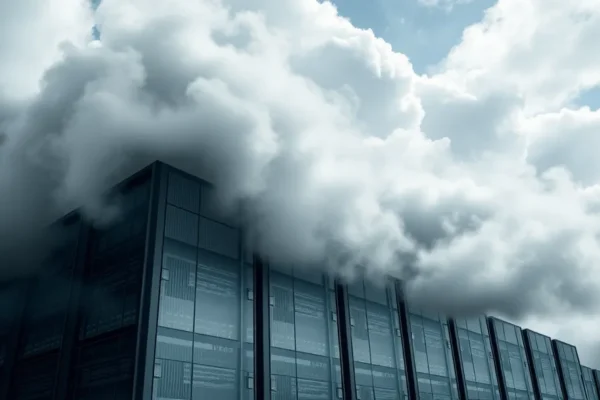
The Growing Backlash Against Data Centers: A Climate Reckoning in Sight?
In the digital age, invisible forces power our online lives. Behind every streamed movie, every instant message, and every cloud-based service lies a critical piece of infrastructure: the data center. These massive facilities, housing thousands of servers, are the engines of the internet. However, as their numbers and appetite for energy skyrocket, a growing chorus of opposition is raising concerns about their significant environmental impact. This burgeoning data center opposition, fueled by climate groups and concerned citizens, is beginning to question the tech industry‘s relentless expansion and its true cost to the atmosphere and our planet. The question is whether this pushback can translate into a meaningful climate change reckoning for an industry that has long operated with relative anonymity.
Understanding the Powerhouses of the Digital World
At their core, data centers are secure, climate-controlled buildings packed with computers, servers, and networking equipment. Think of them as the central nervous system of the internet and cloud computing. They store, process, and distribute vast amounts of digital information. The problem they solve is immense: enabling the seamless flow of data that underpins modern communication, entertainment, finance, and nearly every facet of our digital existence.
Why is this significant now? The demand for digital services, accelerated by remote work, artificial intelligence, and the burgeoning Internet of Things (IoT), is exploding. This surge is directly translating into an insatiable demand for more computing power, and therefore, more data centers. A recent report by Statista highlighted that the global data center market is projected to grow significantly in the coming years, underscoring the urgency of this issue. Companies like Amazon Web Services (AWS), Microsoft Azure, and Google Cloud are at the forefront of this expansion, constantly building new facilities to meet this demand.
How Data Centers Gobble Up Energy
The fundamental mechanism behind a data center’s environmental footprint is its immense energy consumption. These facilities require constant power to run the servers, which perform complex calculations and store data. Beyond the computing itself, a significant portion of the energy is used for cooling. Servers generate a lot of heat, and keeping them at optimal operating temperatures is crucial to prevent overheating and damage. This cooling process, often involving massive air conditioning units, is a major energy drain.
Imagine a bustling city of computers, all working at full tilt. Each computer generates heat, just like your laptop does, but on a much larger scale. To keep this “city” from overheating, you need a robust and energy-intensive cooling system. This is analogous to a super-sized air conditioner running 24/7 for a small town, but instead of keeping people comfortable, it’s keeping delicate electronics functional. While green tech advancements are being explored, the default approach has historically been energy-intensive.
Data Centers in Action Today
Data centers are ubiquitous, though often unseen by the end-user. Major tech giants operate vast networks of these facilities to power their cloud services. For instance, Amazon’s AWS data centers support everything from Netflix streaming to the operations of countless businesses. Microsoft Azure’s data centers underpin a wide range of enterprise solutions and consumer applications. Google Cloud’s infrastructure enables services like Gmail and Google Search.
Beyond the hyperscalers, smaller data centers serve regional businesses, telecommunications companies, and even government agencies. The adoption level is already mainstream for cloud computing, with many businesses relying entirely on third-party data centers. Availability is widespread, with major providers having locations across the globe to ensure low latency (the delay in data transfer) for users.
The Shifting Landscape of Data Center Opposition
The opposition to data centers is not monolithic. It encompasses local communities concerned about noise pollution, increased traffic, and strain on local power grids, as well as broader environmental and climate groups. These groups are increasingly scrutinizing the water usage for cooling, the reliance on fossil fuel-generated electricity, and the overall carbon footprint of these facilities.
For example, in the Netherlands, a proposed data center expansion faced significant local opposition due to concerns about its immense energy needs and potential impact on the local environment. Similar instances are cropping up globally, indicating a growing awareness and mobilization. While the tech industry often highlights its sustainability efforts, these are frequently challenged by critics who point to the net increase in energy demand and the continued reliance on non-renewable energy sources in many regions.
The Implications for Climate Change and Our Future
The implications of unchecked data center growth for climate change are substantial. The sheer volume of electricity required to power them contributes significantly to greenhouse gas emissions, especially when that electricity comes from fossil fuels. Furthermore, some cooling methods for data centers can consume vast amounts of water, putting a strain on local resources in water-scarce regions.
Economically, the data center industry is a significant job creator and driver of technological innovation. However, the environmental costs could lead to increased operational expenses through carbon taxes or stricter regulations. Socially, while data centers enable services that benefit society, their unchecked growth can exacerbate environmental injustices if they are disproportionately located in vulnerable communities or contribute to local environmental degradation. The short-term impact is already visible in increased energy demand; the long-term impact hinges on the industry’s ability to decarbonize effectively.
The Hurdles in the Path to Sustainability
Despite the growing pressure, significant limitations and challenges hinder a swift climate reckoning for data centers. The primary bottleneck is the massive energy consumption, which is inherently difficult to reduce without compromising performance. While many tech companies are investing in renewable energy sources like solar and wind, the intermittency of these sources means that data centers often still need to draw power from the grid, which may rely on fossil fuels.
Finding sufficient renewable energy to meet the exponentially growing demand is a monumental task. Water usage for cooling, particularly in arid regions, presents another significant challenge. While some companies are exploring advanced cooling techniques, such as liquid cooling, these can be expensive and complex to implement. Adoption barriers also include the high capital cost of building new, more efficient data centers and the regulatory hurdles in obtaining permits for such large infrastructure projects. The tech industry is also still in the early stages of developing truly circular economy models for data center hardware, with e-waste remaining a concern.
The Road Ahead: Towards Greener Digital Infrastructure
The future trajectory of data centers is one of intense focus on efficiency and renewable energy integration. We can expect to see continued advancements in cooling technologies, such as more widespread adoption of liquid cooling, which is far more efficient than traditional air cooling. Research into AI-driven optimization of energy usage within data centers is also ongoing, aiming to minimize waste.
The push for 100% renewable energy sourcing will intensify, with companies exploring direct power purchase agreements with renewable energy developers and investing in on-site generation. Some research is also exploring novel approaches to dissipate heat, potentially utilizing geothermal energy or waste heat recovery for local heating networks. The timeline for widespread adoption of these greener solutions is still unfolding, but many companies have set ambitious targets for the next decade. For instance, Microsoft has pledged to be carbon negative by 2030, a commitment that heavily relies on transforming its data center operations.
Frequently Asked Questions About Data Centers and Climate Change
What is a data center’s primary contribution to climate change?
The primary contribution is its massive energy consumption required to power servers and cooling systems, leading to significant greenhouse gas emissions, especially when sourced from fossil fuels.
How are data centers trying to become more sustainable?
The tech industry is investing in renewable energy, improving cooling efficiency, exploring water-saving techniques, and optimizing operations with AI to reduce their environmental impact.
Is data center opposition effective in influencing policy?
Growing data center opposition from climate groups and local communities is increasingly leading to public scrutiny and can influence local planning decisions and push for stricter environmental regulations.
Can data centers ever be truly “green”?
Achieving true “green” status is a complex challenge, but with a strong commitment to renewable energy, advanced efficiency, and responsible resource management, data centers can significantly reduce their carbon footprint and climate change impact.
When will we see a significant reduction in data center energy use?
Significant reductions will likely take time, with widespread adoption of the most advanced green tech and renewable energy solutions expected over the next five to ten years, driven by regulatory pressure and corporate commitments.
Who benefits from the growth of data centers, and who bears the cost?
The tech industry and its users benefit from the services enabled by data centers. However, the environmental costs related to energy consumption and resource use are borne by the planet and, in some cases, by local communities through environmental degradation.
This article is based on current industry trends, public reports, and ongoing research. The rapidly evolving nature of technology means that capabilities and timelines may change.











