

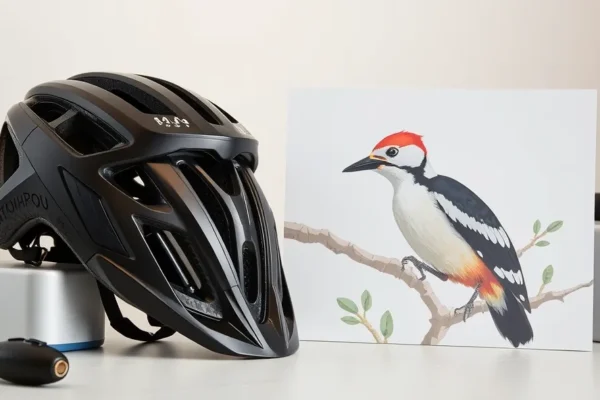
Vancouver’s Pikio Labs is aiming to make cycling safer with a new bike helmet inspired by nature’s own engineers: woodpeckers. They’ve developed what they claim is the safest bike helmet, leveraging biomechanics to offer a new level of head protection. Let’s dive into what this means for everyday cyclists.
A Helmet That Thinks Like a Woodpecker
Ever watched a woodpecker? They repeatedly hammer their heads into trees, seemingly without issue. Pikio Labs has studied this phenomenon and applied those principles to create a revolutionary bike helmet. Their goal is to significantly improve cycling safety by rethinking how helmets absorb impact. This isn’t just another foam-lined shell; it’s a complete redesign focused on preventing serious injury. For anyone who rides a bike, from your daily commute to weekend adventures, this is technology designed to protect your most vital asset: your head.
How This Bird-Inspired Tech Works in the Real World
Instead of just relying on traditional crushable foam, the Pikio helmet uses a multi-layer system that mimics how a woodpecker’s brain stays safe. Imagine a series of strategically placed, shock-absorbing elements that can move and flex independently during an impact. This design aims to dissipate impact forces more effectively, much like how a woodpecker’s skull and neck absorb the shock of pecking. For you, this means potentially better protection not just from direct hits, but also from rotational forces that can cause concussions.
Think about your typical bike ride. You might be navigating busy city streets with unexpected potholes, swerving to avoid pedestrians, or perhaps enjoying a trail with uneven terrain. In any of these scenarios, a fall can happen in an instant. The Pikio helmet is designed to react to these sudden forces, spreading the energy away from your skull. It works like a sophisticated suspension system for your head, offering an extra layer of security when you’re out on your bike.
Who Should Be Looking at the Pikio Helmet?
Best for: Serious cyclists who prioritize the absolute highest level of head protection and are willing to invest in cutting-edge safety technology. This includes road cyclists, mountain bikers, and daily commuters who face unpredictable traffic conditions. If you’re someone who constantly researches the safest bike helmet options, this is definitely one to consider.
Good for: Anyone looking for a significant upgrade in helmet safety and a more advanced approach to impact absorption. If you’ve ever worried about the effectiveness of standard helmets or experienced a minor fall and felt you were lucky, this offers a more robust solution.
Skip if: You’re on a very tight budget, or if you only do very casual, low-speed cycling where the extra safety features might feel like overkill. Also, if you prioritize extreme lightness and minimalist design above all else, you might want to weigh this against those factors.
Comparing Pikio to What’s Out There
The current market for bike helmets is dominated by traditional foam-based designs (EPS foam being the most common). Many brands offer excellent protection, often incorporating MIPS (Multi-directional Impact Protection System) or similar technologies to address rotational forces. These are your standard alternatives.
Pikio’s approach is different because it’s not just about a layer of foam. It’s about a fundamentally different internal structure inspired by biomechanics. While MIPS helps reduce rotational energy by allowing the outer shell to slip relative to the head, Pikio’s system aims to manage impact energy throughout the entire helmet structure more dynamically.
In terms of price, cutting-edge safety technology often comes with a premium. While specific pricing can vary, expect Pikio Labs’ innovative helmets to be positioned at the higher end of the market compared to standard, albeit very good, bike helmets. The value proposition lies in potentially superior protection for those who demand it.
Getting Started with Pikio: Ease of Use
From a user’s perspective, the goal is for it to feel just like any other high-quality bike helmet. The primary setup involves adjusting the straps and internal fit system to ensure a snug, comfortable fit. Pikio Labs emphasizes that their helmets are designed for intuitive use, meaning you shouldn’t need a manual to figure out how to wear it. The learning curve is minimal; it’s designed to be put on and go, just like any other piece of sports gear. The key is proper adjustment for optimal performance during a ride, which is standard for all helmets.
Real-World Advantages You’ll Notice
- Enhanced Impact Management: The core benefit is the advanced system designed to absorb and dissipate impact forces more effectively than traditional helmets. This is the promise of Pikio’s bike helmet innovation.
- Potential for Rotational Force Reduction: The biomimicry approach is specifically aimed at tackling rotational impacts, a common cause of concussions. Users could experience a greater sense of security knowing this is addressed.
- Comfort and Fit: Early reports and the company’s focus suggest that while prioritizing safety, comfort hasn’t been sacrificed. A well-fitting helmet is crucial for its effectiveness.
- Cutting-Edge Technology: For tech enthusiasts and safety-conscious individuals, owning a piece of innovative gear that pushes the boundaries of head protection is a significant draw.
- Designed in Vancouver: As a homegrown sports gear startup from Vancouver tech companies, there’s pride in supporting innovation from your region.
Where Pikio Could Be Better
- Higher Price Point: As mentioned, innovative tech often comes at a cost. The Pikio helmet is likely to be more expensive than many conventional helmets, making it a significant investment.
- Limited Model Variety (Initially): As a newer company, Pikio Labs might offer fewer styles or colors compared to established brands, which could be a drawback for some users.
- Newer Technology Perception: While the science is sound, it’s still a newer approach compared to decades of EPS foam helmet evolution. Some users might prefer the proven track record of more traditional designs until Pikio’s technology has more long-term real-world data.
- Weight Considerations: Advanced impact absorption systems can sometimes add weight. While efforts are made to keep helmets light, it’s something to consider if extreme lightness is your top priority.
Price, Value, and the Bottom Line
The exact pricing for Pikio helmets will vary, but given the advanced technology and research involved, expect them to be in the premium category. This means prices could range from $200-$350 or more, depending on the model.
Is it worth it? For the dedicated cyclist who faces higher risks or simply wants the best possible protection, the investment in a helmet like Pikio’s could be well worth it. It’s an investment in your health and safety. For casual riders, the price might be a barrier, and a high-quality helmet with MIPS from a well-known brand might offer sufficient protection at a lower cost.
Currently, Pikio Labs is focused on direct-to-consumer sales via their website, which can sometimes offer better value by cutting out retail markups. Keep an eye out for any potential bundled deals or accessories, though typically, helmets require minimal additional purchases.
The Final Verdict: Is the Safest Bike Helmet for You?
Pikio Labs’ approach to the safest bike helmet is genuinely exciting, offering a fresh perspective on cycling safety. By borrowing from nature’s ingenious solutions, they are pushing the boundaries of head protection and impact absorption.
Who should buy this: If you are a serious cyclist, a commuter in a high-traffic area, or simply someone who wants the most advanced safety technology available for their head, the Pikio helmet is a compelling option. The bike helmet innovation it represents is significant.
Who should wait or look elsewhere: If budget is a primary concern, or if you are a very casual rider who rarely encounters challenging conditions, there are excellent and more affordable alternatives available. Those who prioritize extreme lightness might also want to compare specs carefully.
Ultimately, Pikio Labs is offering a glimpse into the future of helmet technology. It’s a significant step forward in making cycling safer, and for those who can afford it and prioritize top-tier protection, it’s certainly worth considering.
Your Pikio Labs Helmet Questions Answered
Is the Pikio helmet truly the safest bike helmet?
Pikio Labs aims to make it the safest through its innovative design inspired by woodpecker biomechanics. While “safest” is hard to definitively prove without extensive comparative testing across all conditions, their technology offers a strong promise of advanced head protection.
How does Pikio’s technology differ from MIPS?
MIPS typically uses a low-friction layer to allow the helmet to slide relative to the head, reducing rotational forces. Pikio’s system is an internal structural design that aims to absorb and dissipate impact energy throughout the helmet’s layers, inspired by how a woodpecker’s head handles repeated impacts.
Is this helmet comfortable for long rides?
Pikio Labs emphasizes comfort as a key factor in their design. While comfort is subjective, the goal is for it to be as comfortable as any premium helmet, ensuring it’s worn properly for effective head protection.
Where can I buy a Pikio helmet?
Currently, Pikio helmets are primarily available through their official website, reflecting their status as a Vancouver-based sports gear startup. Check their site for availability and shipping information.
What is the expected lifespan of a Pikio helmet?
Like all bike helmets, it’s recommended to replace them after any significant impact, even if no visible damage is present. For helmets that haven’t experienced impacts, the general recommendation from safety organizations is to replace them every 3-5 years due to material degradation from environmental factors.
Does Pikio offer different models for different types of cycling?
As a newer company, the range of models might be limited initially. It’s best to check the Pikio Labs website for their current offerings, which should indicate whether they cater to specific cycling disciplines like road, mountain, or urban commuting.
Product prices and availability vary by region. Verify current pricing before purchase.











