

The Myth of the Money-First Startup Ecosystem
When we think of Silicon Valley today, the images that come to mind are high-stakes venture capital, massive initial public offerings, and the tight integration of the military-industrial complex. We often assume that the region was born from a singular drive for profit and government defense contracts. However, the true history of the tech startup ecosystem reveals a different, more idealistic beginning. Long before the era of multi-billion dollar valuations, the foundation of Silicon Valley was built on a spirit of collaboration, hobbyist tinkering, and a non-profit-centric ethos of sharing knowledge.
This early period of tech history was defined by the Homebrew Computer Club and researchers who believed that computing power should be accessible to the masses. Understanding this origin is significant now because as we navigate current debates about corporate power and data privacy, looking back helps us separate the original goal of technological empowerment from the profit-driven models that eventually took hold. The transition from an open, collaborative research culture to a competitive, proprietary market is a defining chapter in the history of innovation.
How the Early Computing Movement Worked
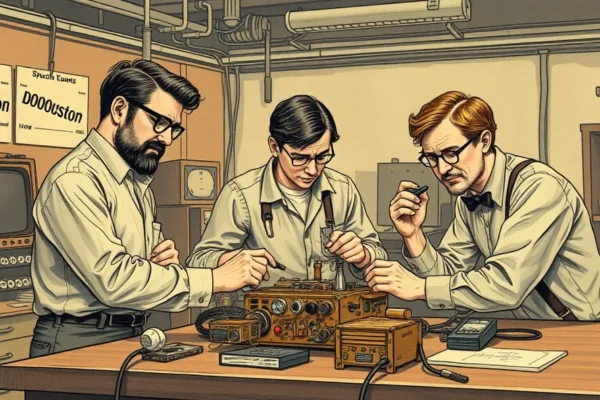
To understand early Silicon Valley, you must look at how technology was spread among peers. In the 1970s, computing was not something you bought in a store; it was something you built. Think of it like the early days of radio, where enthusiasts would trade diagrams and components to build their own receivers. The core mechanism was a culture of open exchange.
Early pioneers relied on community gatherings, such as the Homebrew Computer Club, where members brought circuit boards, schematics, and software they had written themselves. There were no proprietary operating systems locking users into a single company’s ecosystem. The goal was to solve the problem of information scarcity. By sharing code freely, these hobbyists accelerated the pace of innovation. They treated technology as a community resource rather than a product to be hoarded, which allowed for rapid iteration and creative problem-solving that would have been impossible if every participant was focused solely on securing a patent.
The Shift from Hobbyist Labs to Startup Culture
Today, the landscape of tech entrepreneurship has evolved into a highly professionalized machine. While the early days were defined by garage hobbyists, modern tech culture is defined by institutional venture capital and a search for rapid scale. Silicon Valley is now the global headquarters for companies that act as digital utilities for the entire planet.
Current applications of this tech legacy are everywhere. The open-source movement—where developers freely collaborate on software—is the direct descendant of those early collaborative clubs. Industries like cloud computing, artificial intelligence, and mobile technology all rely on this foundation. However, while the original innovators were focused on accessibility, today’s major players are focused on proprietary platforms. Major companies like Google, Meta, and Apple have moved the locus of innovation from the garage to the corporate research lab, turning the earlier spirit of shared progress into highly protected intellectual property.
Comparing Modern Innovation to Early Collaborative Models
The competitive landscape today is vastly different from the mid-20th century. In the early days, competition was about who could share the most useful information to advance the field. Now, competition is defined by moats, or strategies designed to prevent rivals from entering a specific market. Companies like Amazon or Microsoft build massive ecosystems that make it difficult for users to leave once they are in.
This contrasts sharply with the early days of innovation hubs where, if one group developed a better way to route data, they shared it so everyone could benefit. While modern tech giants claim to support open-source, their participation is often strategic, aimed at creating industry standards that they control. The advantage today lies with those who have the most capital and the largest user bases, whereas the advantage in the 1970s lay with those who had the most clever solutions and the most generous peers.
The Long-Term Impact on Industry and Society
The evolution of Silicon Valley has reshaped our global economy. By moving away from a non-profit, hobbyist-led model to a venture-backed system, the industry has managed to scale technology at a rate never seen before in human history. We now have smartphones in our pockets that have more computing power than the Apollo missions, a direct result of the financial resources that poured into the sector.
However, the social implications are complex. While we have gained unprecedented convenience, we have also seen the rise of algorithmic bias, the concentration of wealth, and concerns about how large companies handle user data. The transition from a culture of shared innovation to one of protected profit has created a friction between the public interest and the business models of the major players. In the short term, we see a focus on rapid growth and shareholder returns, but in the long term, society is beginning to demand a return to the values of transparency and user control that were central to the early era of computing.
Limitations and Challenges in the Current Ecosystem
Despite its successes, the modern startup ecosystem faces significant bottlenecks. The sheer cost of entering the market today is high. Unlike the early days where a few friends could build a revolutionary computer in a garage, modern innovation requires massive server infrastructure, expensive talent, and significant legal teams to navigate regulation.
Technical challenges, such as the energy consumption of large data centers and the growing complexity of cybersecurity, remain unsolved. Furthermore, there is a lack of diversity in the funding pipeline; venture capital often flows into predictable, low-risk business models rather than truly groundbreaking research. The adoption barrier for new startups is so high that many potential innovators are forced to sell their technologies to established incumbents rather than building independent companies. This process, often called acqui-hiring, stunts the potential for new, independent innovations to thrive.
The Future Trajectory of Tech History
Looking forward, we may see a resurgence of the collaborative spirit. The rise of decentralized technologies, such as blockchain and federated social media, suggests a move toward returning control to the users. Experts are increasingly discussing the need for “public interest technology”—tech that is built to solve societal problems without being beholden to the same growth-at-all-costs models that define the current startup ecosystem.
Key developments to watch include the growth of decentralized governance and the ongoing debate over how much power large tech firms should hold. We are likely to see a shift where innovation is driven not just by venture capital but by community-led organizations that mirror the ethos of the early tech pioneers. The trajectory is toward a more balanced model that retains the scale of modern engineering while recapturing the collaborative, open roots of early computing.
Key Questions and Answers
Was Silicon Valley always driven by venture capital and defense contracts?
No, its earliest roots were defined by hobbyists and researchers who operated in a non-profit, collaborative manner. The military-industrial complex and venture capital became dominant forces only after the foundational principles of open computing were already established.
Is the current tech culture fundamentally different from the early days?
Yes. While early tech culture was built on sharing knowledge and building for the sake of discovery, modern tech culture is driven by proprietary software, investor returns, and the creation of market moats.
Why is the early history of Silicon Valley relevant today?
It serves as a reminder that technological progress does not strictly require a profit-first model. As we face challenges like digital privacy and data ownership, early history offers a blueprint for more equitable ways of developing and distributing technology.
Who benefits from the current startup ecosystem?
The current system heavily favors venture capitalists and established, large-scale technology companies. While consumers benefit from the rapid deployment of new gadgets and services, the barrier to entry for independent innovators has become significantly higher than in the past.
What are the risks of our current innovation model?
The primary risks include the monopolization of digital spaces, the loss of individual data sovereignty, and a focus on short-term profits over long-term societal well-being. These issues highlight why some are calling for a return to open, community-based technology development.
Note: This article summarizes historical shifts in tech culture and business models. These observations are based on historical analysis of the development of Silicon Valley, and individual experiences within the tech industry may vary. Research into the history of the Homebrew Computer Club and the transition of the region from an agricultural hub to a technology hub is documented extensively in regional historical archives and academic studies on the history of computing.











