

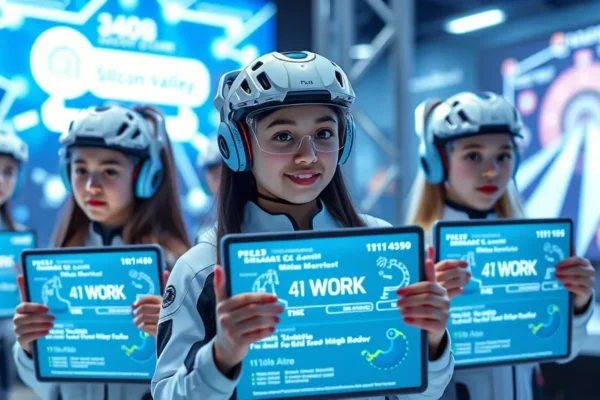
Silicon Valley’s AI Skills Gambit: Proof of Work Over Degrees
Silicon Valley, the epicenter of technological innovation, is making a significant bet on a new model for cultivating talent: valuing “proof of work skills” over traditional college degrees, particularly in the burgeoning field of Artificial Intelligence (AI). Venture capital firms like Andreessen Horowitz (a16z) are leading this charge, investing heavily in platforms and initiatives that allow individuals to demonstrate AI job proficiency through practical projects and verified contributions. This shift is not merely an educational reform; it’s a strategic recalibration of how the tech industry sources and values talent, aiming to accelerate the development and deployment of AI technologies. The impetus for this change stems from a recognized bottleneck in skilled AI professionals and a desire to tap into a broader, more diverse talent pool. As reported by The Information in late 2023, several prominent VCs, including a16z, have been actively exploring and backing alternative education models focused on demonstrable skills.
The Strategic Rationale: Bridging the Skills Gap and Accelerating AI Adoption
The strategic rationale behind Silicon Valley’s embrace of “proof of work” in AI jobs is multifaceted. Firstly, there’s a pressing need to address the widening skills gap. The rapid advancements in AI have outpaced the traditional educational system’s ability to produce graduates with the specific, cutting-edge expertise required. A traditional four-year college degree, while valuable, may not equip individuals with the practical, hands-on experience needed to immediately contribute to complex AI projects. This new approach aims to bypass years of theoretical learning and instead focus on applied knowledge, allowing individuals to acquire and demonstrate relevant AI skills training rapidly.
Secondly, this move represents an opportunity to democratize access to high-paying tech career paths. By shifting the focus from credentials to demonstrated abilities, Silicon Valley hopes to attract individuals from non-traditional education backgrounds, including those who may not have had the financial or academic means to pursue a four-year degree. This broader talent pool could foster greater diversity and innovation within the industry. The pressure to innovate faster in the AI race is immense. Companies need highly skilled individuals to develop, deploy, and maintain AI systems that provide a competitive edge. Relying solely on traditional university pipelines risks falling behind rivals who can quickly onboard and leverage talent proven through practical application. Andreessen Horowitz, a significant investor in this space, has publicly articulated its belief that traditional degrees are becoming less relevant for future-forward roles, as highlighted in their various blog posts and partner discussions throughout 2023 and early 2024.
Competitive Context: A New Front in the Talent War
This strategic pivot places Silicon Valley’s established tech giants and emerging AI startups in a new competitive arena for talent. Traditionally, the competition for AI jobs centered on recruiting from top-tier universities and acquiring talent through expensive acquisitions of smaller AI firms. Now, the focus is shifting towards identifying and nurturing individuals through alternative education and proof of work initiatives. This approach could lead to a more fluid and dynamic job market, where talent is recognized and rewarded based on tangible contributions rather than formal qualifications alone.
Companies that successfully implement and scale these “proof of work” skill-building programs stand to gain a significant advantage. They can cultivate a pipeline of highly skilled AI professionals faster and potentially at a lower cost than relying solely on traditional recruitment methods. This allows them to accelerate their AI development cycles and maintain a competitive edge in a rapidly evolving market. Conversely, companies that remain entrenched in traditional hiring practices might find themselves struggling to attract the most innovative and adaptable AI talent, potentially falling behind in the race for AI dominance. This strategic shift is, in essence, a new front in the ongoing war for talent, with significant implications for market positioning and future growth.
Industry Implications: Reshaping the Future of Work and Education
The emphasis on “proof of work skills” in AI jobs has broad implications for the tech industry and the broader future of work. It signals a potential long-term move away from the primacy of college degrees as the sole gateway to lucrative tech career paths. This could lead to a fragmentation of educational pathways, with specialized bootcamps, online courses, and project-based learning platforms gaining prominence. Industry peers are likely to respond by either developing their own internal skill-building programs or investing in and partnering with external providers of alternative education.
This trend also puts pressure on traditional higher education institutions to adapt. Universities may need to integrate more practical, project-based learning into their curricula and offer more flexible, industry-aligned programs to remain relevant. The market for AI skills training is expected to grow exponentially, creating new business opportunities for ed-tech companies and a more dynamic and potentially more meritocratic job market. This reshaping of the competitive landscape could redefine what it means to be qualified for a tech job, emphasizing continuous learning and demonstrable competence over formal academic achievements.
Financial and Operational Impact: Efficiency and Scalability
The financial and operational implications of this strategy are potentially significant. For venture capital firms like Andreessen Horowitz, backing these alternative education platforms represents a high-growth investment opportunity, anticipating substantial returns as these models mature and supply the industry with in-demand talent. For companies adopting this approach, the short-term financial impact could involve investment in new training infrastructure or partnerships. However, the long-term outlook suggests potential cost savings through more efficient talent acquisition and reduced onboarding times for AI jobs.
Operationally, this shift could lead to more agile development teams. Instead of lengthy recruitment processes for experienced candidates, companies can potentially identify and onboard individuals with proven AI skills training, fostering faster project execution. The operational structure might evolve to accommodate a workforce with diverse educational backgrounds but uniformly strong practical skill sets. While specific financial metrics from this nascent movement are still emerging, the underlying principle is to optimize the talent pipeline for speed, efficiency, and scalability in a market characterized by rapid technological change.
Execution Risks and Challenges: Navigating the Uncharted Waters
Despite the strategic appeal, Silicon Valley’s bet on “proof of work” in AI jobs faces significant execution risks and challenges. A primary concern is the standardization and credibility of “proof of work” assessments. Unlike accredited degrees, a portfolio of projects can be subjective and prone to embellishment. Ensuring that these demonstrations accurately reflect a candidate’s true capabilities, especially for complex AI roles, will be crucial. Establishing robust, universally recognized evaluation frameworks for AI skills training is an ongoing challenge.
Furthermore, the sheer pace of AI development means that skills acquired today might become obsolete tomorrow. Continuous upskilling and reskilling will be paramount, and alternative education models need to demonstrate their ability to adapt as rapidly as the technology itself. Historically, similar attempts to bypass traditional education have faced challenges in gaining widespread industry acceptance and maintaining rigor. Organizational resistance to change within established companies, where degree requirements might be deeply ingrained, could also hinder adoption. Market risks include potential oversaturation of certain AI skill areas or the emergence of new, unpredicted technological demands that current “proof of work” programs may not address. Regulatory scrutiny on credentialing and workforce development could also pose a challenge.
Stakeholder Implications: A New Deal for Talent
This strategic shift has profound implications for various stakeholders. For employees and aspiring tech professionals, it offers a more accessible and potentially equitable tech career path, particularly for those interested in AI jobs. It empowers individuals to take control of their learning and career trajectory based on merit. However, it also places the onus on individuals to actively pursue and demonstrate their skills, demanding a higher degree of self-motivation and continuous learning.
Customers and clients might benefit from faster innovation and more skilled AI applications as companies gain access to a broader talent pool. Partners in the education technology sector stand to gain significant market share if these alternative education models prove successful. For investors, this represents a potentially high-return area, aligned with the transformative potential of AI. Culturally, it could foster a more performance-driven and less credential-focused environment within Silicon Valley and the wider tech industry, potentially leading to shifts in organizational structures and hiring philosophies.
Outlook and Next Steps: Measuring the Impact
The success of Silicon Valley’s AI skills gamble hinges on several key milestones. We will need to see the widespread adoption of standardized “proof of work” assessment methodologies that are trusted by employers. Key indicators to monitor will include the number of individuals successfully transitioning into AI jobs through these alternative pathways, the retention rates of these employees, and the perceived productivity and innovation contributions they make. Early indicators from platforms already focusing on demonstrable skills, like coding bootcamps that emphasize project portfolios, suggest a growing acceptance, but the scale and complexity of AI job requirements present a new challenge.
Measurable outcomes will likely take 1-3 years to become clearly apparent. This includes tracking the number of successful placements by AI skills training providers, the salary ranges achieved by these individuals compared to traditionally educated peers, and the impact on innovation pipelines within companies that embrace this model. The ongoing evolution of AI itself will also dictate the long-term viability of specific skill sets, making adaptability a critical determinant of success for both individuals and the educational frameworks supporting them.
Key Questions and Answers
What is Silicon Valley’s main bet on AI jobs?
Silicon Valley is betting that “proof of work skills” can be a more effective and faster pathway to filling AI jobs than traditional college degrees. This involves valuing demonstrated abilities through practical projects over academic credentials for a tech career path.
Why is this alternative education approach gaining traction for AI skills training?
The rapid growth of AI has created a significant skills gap, and traditional education can be slow to adapt. This “proof of work” model allows for quicker acquisition of job market relevant skills, tapping into a wider talent pool and accelerating the pace of AI development.
How does this strategy compare to what competitors are doing in the job market trends for AI?
While many tech companies traditionally compete for talent by recruiting from top universities, this move signals a shift. Companies like those backed by Andreessen Horowitz are creating new competitive advantages by focusing on alternative education and verifiable skills, potentially disrupting established hiring norms.
What are the risks associated with this shift away from college degrees for AI jobs?
The primary risks include ensuring the credibility and standardization of “proof of work” assessments and the potential for skills to quickly become outdated in the fast-paced AI field. There’s also the challenge of gaining widespread acceptance from organizations accustomed to traditional credentials.
How long until we see measurable outcomes from this proof of work skills initiative?
Tangible results, such as significant placement rates in AI jobs and demonstrated impact on company innovation, are likely to emerge over the next 1-3 years as these alternative education models mature and gain wider industry acceptance.
Will traditional college degrees become irrelevant due to this focus on alternative education?
It’s unlikely that college degrees will become completely irrelevant. However, their primacy as the sole entry point to many tech career paths, especially in rapidly evolving fields like AI, is being challenged. This could lead to a more diversified landscape of recognized qualifications.
Business outcomes are subject to execution risk and market dynamics.











