Understanding Prediction Markets and Athlete Threats
Imagine you can bet on almost anything, not just the outcome of a game, but on future events. This is the basic idea behind prediction markets. A prediction market is a type of financial market where people buy and sell contracts based on the likelihood of future events happening. Think of it like a stock market, but instead of buying shares of a company, you’re buying shares of an event occurring. If you believe an event will happen, you buy a contract for it. If it happens, your contract becomes valuable. If it doesn’t, your contract might expire worthless. These markets can be used for political outcomes, economic indicators, and yes, even sports. The core concept is that the collective wisdom of traders can predict future events more accurately than traditional polls or forecasts. Understanding these markets is important because they can influence public perception and, as we’re seeing, create new avenues for concerning behavior.
How Prediction Markets Operate and Lead to Threats
Prediction markets function by allowing users to trade contracts that pay out a fixed amount if a specific event occurs. For instance, a contract might be for “Team A wins the championship.” If the price of that contract goes up, it suggests traders believe the probability of Team A winning is increasing. Conversely, if the price drops, confidence is waning. This trading activity reflects market sentiment and can sometimes influence behavior.
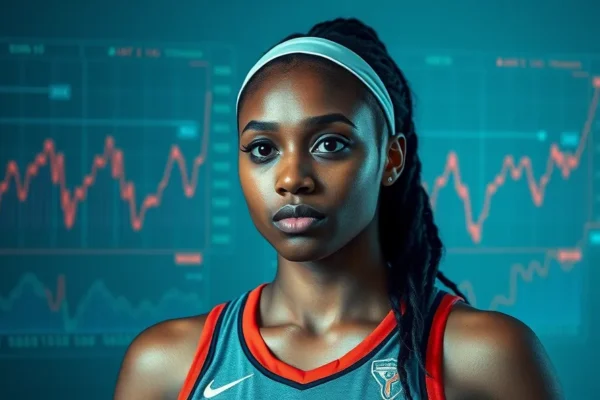
The danger arises when these prediction markets are focused on events involving individuals, especially public figures like athletes. In the case of WNBA player Nneka Ogwumike, a warning was issued about users of prediction markets creating threats against athletes. This happens when individuals use these markets not just to predict outcomes but to express animosity or to harass. For example, someone might buy a contract that pays out if a specific player has a bad game or faces a particular negative outcome. While this might seem like a simple bet to some, for the athlete involved, it can translate into direct online harassment, abuse, and even threats. Think of it like this: if a group of people were betting on when your car would break down, and then started calling you to tell you your car is about to fail, that’s a disturbingly similar dynamic. It turns a financial speculation into a personal attack. This toxic environment can be amplified through social media, where the actions of prediction market users can spill over into public scrutiny and online harassment for WNBA players.
Why This Matters to Financial Literacy and Athlete Safety
The connection between prediction markets and threats to athletes highlights a crucial aspect of financial literacy: understanding the broader impact of financial instruments. While prediction markets can be legitimate tools for forecasting, they can also become vectors for harmful behavior. For individuals participating in these markets, it raises ethical questions about profiting from negative outcomes for others. For the general public, it underscores the need to be aware of how financial speculation can intersect with real-world consequences, including the safety and well-being of individuals in the public eye.
This issue directly impacts athlete safety by creating a hostile online environment. Athletes, already under intense public scrutiny, are now facing potential harassment stemming from financial markets. This can affect their mental health, performance, and overall sense of security. From a broader economic perspective, while prediction markets themselves are a niche area, the principle applies to any financial activity that can be weaponized for harassment or to negatively impact individuals. It forces us to consider the ethical boundaries of financial participation and the responsibility of platforms that host such markets. Who benefits? Traders who might profit from predicting or even encouraging negative events for athletes. Who is affected negatively? The athletes themselves, and potentially their teams and the integrity of the sport.
The Evolution of Prediction Markets and Current Concerns
Prediction markets have a history that stretches back to the mid-20th century, evolving from academic experiments to more sophisticated online platforms. Early forms were used for political forecasting, with markets like the Iowa Electronic Markets demonstrating their predictive power. Over time, these markets have expanded to cover a wider range of events, including sports.
The current interest in this topic is largely fueled by recent warnings from athlete advocacy groups, like the WNBA Players Association, and high-profile athletes like Nneka Ogwumike. These warnings bring attention to a growing problem: the potential for prediction market users to engage in online harassment and threats. As sports betting becomes more mainstream and accessible, the lines between legitimate wagering and potentially harmful speculative behavior blur. This has led to a renewed focus on the ethical implications of these markets and the need for better regulation and oversight to protect individuals from becoming targets.
Navigating the Practical Implications of Prediction Markets and Athlete Safety
For individuals interested in prediction markets, it’s crucial to approach them with an understanding of the potential consequences. These markets are not just abstract financial instruments; they can have real-world impacts. A common misconception is that betting on an event is purely passive, but when that event directly involves an individual’s performance or well-being, the act of profiting from their misfortune can be perceived as malicious.
When engaging with news about prediction markets and athlete threats, it’s important to recognize the distinction between market speculation and direct harassment. While the market might reflect a belief in a certain outcome, directly threatening an individual based on that belief is unacceptable and often illegal. An actionable insight for anyone observing these markets is to report any instances of harassment or threats they encounter. Furthermore, understanding the regulatory landscape around prediction markets and sports betting is vital, as it’s an evolving area. Be wary of platforms that lack clear terms of service or robust mechanisms for addressing user misconduct.
Related Financial Concepts to Consider
Understanding prediction markets is linked to several other financial concepts. Derivatives, for example, are financial contracts whose value is derived from an underlying asset or group of assets. Contracts in prediction markets can be seen as a form of derivative. The concept of market sentiment also plays a key role; prediction markets are often seen as a direct reflection of collective sentiment about future events. Furthermore, discussions around prediction markets often touch upon regulatory oversight in financial markets and the ethical considerations of financial innovation. Understanding sports betting regulations is also crucial, as the lines between these activities can sometimes overlap.
Common Questions About WNBA Player Threats and Prediction Markets
Here are some common questions people have about WNBA player threats and prediction market users:
- What exactly are prediction markets in simple terms?
Prediction markets are like exchanges where people buy and sell contracts based on the likelihood of future events happening, essentially betting on the probability of those events occurring.
- How can prediction market users threaten WNBA players?
Users can create or trade contracts based on negative outcomes for players, and this speculation can spill over into direct online harassment, abuse, and threats communicated to the athletes.
- Is sports betting the same as using prediction markets for athlete threats?
While related, standard sports betting focuses on game outcomes. Prediction markets can be broader, and the threat arises when users target individuals with their predictions in a harmful way, which goes beyond typical sports betting.
- What is the role of the WNBA Players Association in this situation?
The WNBA Players Association advocates for the safety and well-being of its members and has raised concerns about the toxic environment created by such online behaviors, including those stemming from prediction market users.
- Can individuals control the behavior of prediction market users?
Direct individual control is difficult, but regulatory bodies, platform operators, and community reporting can help mitigate the negative impacts and address harmful online harassment.
- What are the risks involved with prediction market users targeting athletes?
The primary risks include severe online harassment, threats to personal safety, psychological distress for athletes, and a potentially toxic environment that can deter participation in sports.
This educational content is for informational purposes only and does not constitute financial advice. Financial situations vary, and it is recommended to consult with a qualified financial professional for personalized guidance. Investing in any financial market carries risks, and outcomes are not guaranteed.