China’s Proposed Solar Export Curbs: A Strategic Maneuver with Global Repercussions
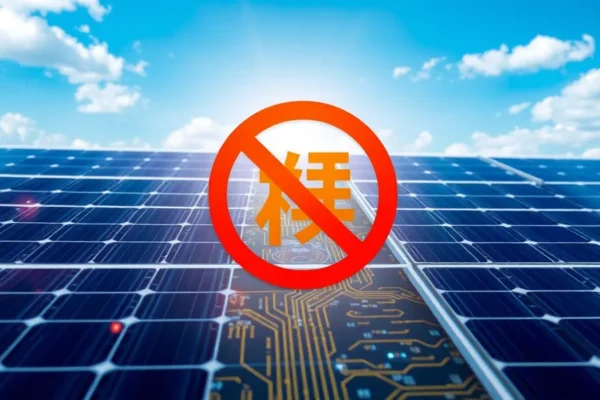
China is contemplating a significant policy shift that could send ripples across the global renewable energy sector. Recent proposals suggest that China may implement export restrictions on 12 critical solar manufacturing technologies. This move, if enacted, would represent a strategic pivot in how China manages its dominance in the global solar market, impacting everything from the cost of solar panels to the pace of clean energy adoption worldwide. Understanding the nuances of these potential China solar exports restrictions is crucial for navigating the evolving landscape of the solar industry.
The Business Move: Restricting Key Solar Manufacturing Technologies
The core development is China’s consideration of new export controls targeting a range of technologies essential for solar manufacturing. While specific details are still emerging, reports from sources like Reuters and industry publications point to a list encompassing 12 crucial technological areas. These technologies are not the finished solar panels themselves, but rather the foundational processes, equipment, and intellectual property that underpin their efficient and cost-effective production. This strategic intervention aims to retain greater control over a vital segment of the global clean energy supply chain.
Strategic Rationale: Securing Dominance and Advancing Domestic Goals
The underlying strategic rationale for these proposed export curbs is multi-faceted. Primarily, China seeks to solidify its long-standing leadership in the global solar market. By restricting the export of critical manufacturing technologies, Beijing can aim to:
- Prevent Technological Diffusion: Limit the ability of other nations to rapidly develop their own advanced solar manufacturing capabilities, thereby maintaining China’s competitive edge.
- Incentivize Domestic Innovation and Production: Encourage further investment and research within China to develop even more sophisticated and proprietary photovoltaic technology.
- Address Geopolitical Trade Tensions: Potentially use these controls as a bargaining chip in ongoing trade disputes or as a means to ensure fair market access for its own products abroad.
- Support National Security and Economic Resilience: Ensure that a critical component of the global energy transition remains under its strategic influence.
Industry analysts suggest this move also reflects a maturing of China’s own solar industry, which has moved from being an assembler of components to a developer of advanced manufacturing processes. The stated goal, as often communicated by Chinese government officials regarding strategic industries, is to achieve higher value-added production and greater self-sufficiency, aligning with broader national economic development objectives.
Competitive Context: A Shifting Power Dynamic
These potential export curbs place China’s competitors in a precarious position. For years, the global solar industry has relied heavily on China’s efficient and large-scale manufacturing, which has driven down the cost of solar panels and accelerated the adoption of renewable energy.
- Advantage for China: China gains a significant advantage by controlling the flow of advanced manufacturing know-how. This could force international solar companies to either invest heavily in developing their own nascent technologies, potentially at a higher cost, or remain dependent on Chinese suppliers for critical upstream components and processes.
- Disadvantage for Competitors: Countries and companies aiming to build robust domestic solar manufacturing industries, such as those in the United States, Europe, and India, could face substantial hurdles. Access to the latest manufacturing equipment and processes might become restricted, slowing down their ability to scale up production and compete on cost. This could also lead to higher prices for consumers and slower deployment of clean energy projects globally.
- Broader Competitive Positioning: The move signals China’s intent to move up the value chain in solar manufacturing, similar to its strategies in other high-tech sectors like electric vehicles and semiconductors. It underscores a shift from being a volume producer to a technology gatekeeper, fundamentally altering the global competitive positioning within the clean energy sector.
Industry Implications: Reshaping the Solar Supply Chain Impact
The implications of these technology restrictions for the global solar industry are profound and far-reaching.
- Supply Chain Diversification Pressures: The announcement will likely intensify efforts by other nations and companies to diversify their solar supply chains away from China. This could spur greater investment in solar manufacturing hubs outside of China, although the pace of this diversification will be heavily influenced by the availability and cost of alternative technologies.
- Increased Costs and Potential Shortages: If key technologies become inaccessible or significantly more expensive due to export controls, the cost of producing solar panels globally could rise. This might lead to increased prices for solar installations and potentially slow down the deployment of renewable energy projects, particularly in developing economies heavily reliant on cost-effective solar solutions.
- Accelerated R&D Elsewhere: The restrictions could act as a powerful catalyst for research and development in solar manufacturing technologies outside of China. Companies and governments may accelerate their efforts to innovate and develop proprietary solutions, potentially leading to new breakthroughs but also a period of greater technological fragmentation.
- Geopolitical Trade Dynamics: The move injects another layer of complexity into geopolitical trade relations, particularly between China and Western nations that are increasingly viewing supply chain security and technological independence as national priorities.
The global solar market, already navigating complex supply and demand dynamics, will need to adapt to this new reality. Industry peers are likely to reassess their sourcing strategies and explore partnerships that can mitigate the impact of these potential curbs.
Financial and Operational Impact: A Complex Cost-Benefit Analysis
The financial and operational impacts of these proposed export curbs will be significant, though the precise magnitude remains uncertain.
- For Chinese Manufacturers: Companies that hold the restricted technologies stand to benefit from increased demand for their upstream solutions within China or from countries willing to pay a premium. They may also see a stronger market position if international competitors struggle to acquire necessary technology.
- For Global Solar Installers and Developers: The primary financial impact will likely be an increase in the cost of acquiring essential components and technologies. This could reduce profit margins for installers and developers, or necessitate passing those costs onto consumers, thereby impacting the economics of solar projects.
- Operational Shifts: Companies may need to reconfigure their supply chains, invest in new manufacturing processes, or form new strategic alliances to secure access to the required technologies. This could involve substantial capital expenditure and operational restructuring.
- Timeline: In the short term, the impact may be felt through increased price volatility and uncertainty in the supply of critical components. In the long term, if the curbs are substantial, they could lead to a bifurcated market: one segment driven by Chinese technology and another by diversified, potentially more expensive, international solutions.
According to industry data from organizations like the International Energy Agency (IEA), China currently dominates global solar PV manufacturing across most segments, making any restrictions on critical technologies inherently impactful.
Execution Risks and Challenges: Navigating a Tightrope
While the strategic intent behind these proposed restrictions is clear, their successful execution faces considerable risks and challenges.
- Defining “Critical Technology”: The precise definition and scope of the 12 technologies will be crucial. Ambiguity could lead to widespread confusion and hinder legitimate trade, while overly broad restrictions could provoke strong international backlash.
- Enforcement Difficulties: Enforcing export controls on intellectual property and complex manufacturing processes can be challenging. Circumvention through licensing agreements, joint ventures, or reverse engineering remains a possibility, though likely at increased cost and time.
- Economic Repercussions for China: While aiming to bolster domestic industry, overly aggressive restrictions could also alienate key international customers for China’s finished solar products, potentially impacting its own export revenues. A delicate balance is required to avoid self-inflicted economic harm.
- Historical Precedents: Similar technological export controls in other sectors have met with mixed success. The effectiveness often depends on the breadth of alternative solutions available globally and the willingness of nations to invest in developing independent capabilities. China’s own rise in solar manufacturing was, in part, fueled by access to global technologies.
The Chinese government and its domestic companies will need to carefully manage the implementation to achieve their strategic goals without triggering unintended negative consequences.
Stakeholder Implications: A Global Ripple Effect
The proposed China solar exports restrictions will resonate across a wide spectrum of stakeholders.
- Employees: Workers in the solar manufacturing sector, both within China and globally, may face shifts in job opportunities. In China, there could be a push towards higher-skilled R&D and advanced manufacturing roles. Internationally, efforts to build domestic manufacturing could create new jobs, while reliance on potentially restricted technologies might lead to job preservation challenges.
- Customers: End-users of solar power, from large utilities to individual homeowners, could see higher prices for solar panels and systems if supply chain costs increase. The pace of renewable energy adoption might be tempered by these economic realities.
- Partners and Investors: International companies heavily reliant on Chinese solar technology and manufacturing will need to reassess their strategies and supply chain resilience. Investors in the solar sector will be watching closely for how these policy changes affect profitability and market growth.
- Governments: National governments worldwide will grapple with the implications for their climate targets, energy security, and domestic industrial policies. The move could spur greater collaboration among like-minded countries to counter perceived trade imbalances or secure vital supply chains.
Outlook and Next Steps: Monitoring the Policy’s Evolution
The future trajectory of these proposed export restrictions will be a critical indicator for the global solar industry.
- Key Milestones to Watch: The official announcement of the final list of restricted technologies, the specific nature of the restrictions (e.g., outright bans, licensing requirements), and the timeline for implementation will be paramount.
- Indicators of Success: For China, success would be measured by maintaining its technological lead, fostering domestic innovation, and achieving its strategic economic and security objectives without significant international backlash or damage to its own export markets.
- Indicators of Failure: Failure could manifest as widespread circumvention, significant international retaliatory measures, a sharp increase in global solar costs that hinders climate goals, or a fracturing of the global solar market into distinct technological blocs.
- Timeline: Given the strategic nature of the proposed policy, any official changes could take months to fully materialize and be implemented. The long-term financial and operational impacts will unfold over several years as the industry adapts.
Key Questions and Answers
Will China’s proposed export curbs significantly impact the global solar industry?
Yes, given China’s dominant position in solar manufacturing, any restrictions on critical solar manufacturing technologies will likely lead to supply chain adjustments, potentially higher costs for solar panels, and a renewed focus on diversifying renewable energy sources globally.
Why is China considering these technology restrictions now?
China is likely seeking to leverage its advanced technological position in the solar industry to maintain its competitive edge, encourage domestic innovation, and potentially address ongoing geopolitical trade concerns, moving up the value chain in clean energy.
What are the main risks for countries trying to build their own solar manufacturing?
The primary risks include difficulty in accessing cutting-edge photovoltaic technology, higher upfront costs for developing proprietary solutions, and a longer timeline to achieve cost-competitiveness with established Chinese producers.
How might these restrictions affect the price of solar installations?
If key manufacturing technologies become more expensive or less accessible, the cost of producing solar panels could increase, leading to higher prices for solar installations and potentially slowing down the widespread adoption of solar power.
What is the impact of these technology restrictions on the global solar market?
These technology restrictions could reshape the global solar market by forcing greater supply chain diversification, stimulating R&D outside of China, and potentially creating more fragmented markets for solar technology and equipment.
What should businesses in the solar industry watch for in the coming months?
Businesses should monitor the official confirmation of the restricted technologies, the specific details of the controls, and any policy responses from other major economies, as these will dictate the extent of the supply chain impact and future market dynamics.
It is important to note that all business outcomes are subject to execution risk and evolving market conditions.