So, Can That Tesla Roadster Actually Fly? Let’s Talk About the FAA
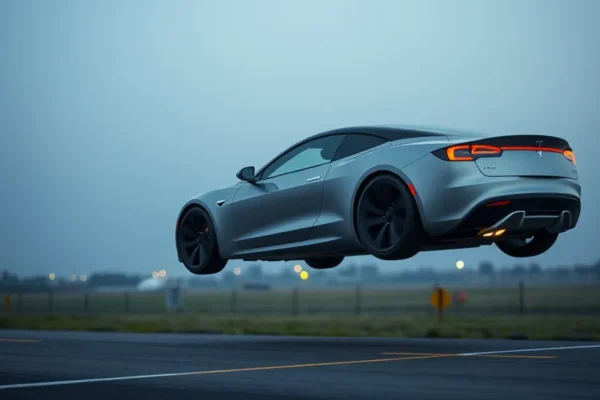
Remember the buzz around the second-generation Tesla Roadster 2? Beyond its insane acceleration and sleek electric car design, Elon Musk dropped a bombshell hint: a “SpaceX package” that could allow it to hover or even fly short distances. It sounds like something straight out of a sci-fi movie, right? But as fascinating as the idea of a Tesla flying car is, the reality of it is incredibly complex. The Federal Aviation Administration (FAA), the folks who keep our skies safe, has a lot of questions, and for good reason. This isn’t just about slapping wings on a car; it’s about a whole new category of transportation facing massive regulatory hurdles. For us everyday folks, this means the dream of flying to the grocery store is still a long, long way off.
What Could a Flying Tesla Actually Do for You?
Imagine this: you’re stuck in rush hour traffic, bumper to bumper. With a flying Tesla, you could, in theory, just lift off and soar over the gridlock, reaching your destination in minutes instead of hours. This isn’t about replacing your daily commute entirely, but think about those specific situations where time is critical. If you travel frequently for business, a short hop from a city center to a nearby airport could be a game-changer, bypassing ground transportation altogether. For emergency services, this could mean faster response times in difficult terrain. Even for recreational travel, imagine zipping over scenic landscapes without the hassle of roads. The core idea is overcoming the limitations of physical roads and traffic, offering a more direct and potentially faster way to get from point A to point B, at least for short distances. It’s about adding a vertical dimension to personal travel.
Who Should Be Excited About the Idea of a Flying Tesla?
Right now, this is primarily for the dreamers, the tech enthusiasts, and those who follow Elon Musk’s ambitious pronouncements with keen interest. If you’re fascinated by the future of transportation and enjoy speculating about what’s next, the Tesla flying car concept is captivating. It’s also for early adopters who are willing to embrace new technologies, even if they are in their infancy and face significant challenges.
Best for: Tech pioneers and futurists who love to explore cutting-edge concepts.
Good for: Individuals who are excited about the potential of VTOL (Vertical Take-Off and Landing) technology and are curious about how automotive innovation might merge with aerospace.
Skip if: You’re looking for a practical, readily available flying vehicle for your daily commute right now. The technology and regulations are nowhere near ready for widespread consumer use.
How Does This Compare to What’s Out There Now?
The idea of a “flying car” isn’t entirely new. We’ve seen various concepts and prototypes over the years, from roadable aircraft that can fly and drive to advanced VTOL electric aircraft being developed by companies like Joby Aviation and Archer Aviation. These are typically designed from the ground up as aircraft with some road capability, or as dedicated passenger drones for air taxi services.
The Tesla Roadster 2’s proposed “flying” capability is different because it’s envisioned as an add-on to an existing electric car. This presents a unique challenge: how do you make a heavy, road-optimized vehicle suddenly capable of safe and reliable flight? The FAA’s role here is crucial because it needs to certify not just the vehicle, but also the operational framework. Current VTOL aircraft are undergoing rigorous aviation certification processes. Applying this to a car that also needs to meet automotive safety standards is an unprecedented undertaking. The price point for a Tesla Roadster 2 is already high, and adding the complexity of flight systems would likely push it into an even more exclusive category than existing personal aircraft or air taxi services.
Getting Your Tesla Roadster to Take Flight: A Huge Learning Curve
This is where things get really speculative. If a “SpaceX package” for the Tesla Roadster 2 were to become a reality, it wouldn’t be a simple software update. We’re talking about complex propulsion systems, advanced control mechanisms, and potentially new wing or rotor designs. The learning curve for operating such a vehicle would be immense. Imagine needing a pilot’s license, not just a driver’s license. Training would likely involve extensive simulations and practical flight instruction, far beyond what’s required to drive even the most advanced electric car today. The “setup” would involve more than just plugging it in; it would likely involve specialized maintenance and adherence to strict aviation protocols. It’s less about ease of use and more about mastering a completely new skill set.
The Dreamy Upsides of a Flying Tesla
If, and it’s a huge “if,” Tesla were to crack the code on a flying Roadster 2, the theoretical pros are undeniably exciting:
- Unparalleled Freedom: The ability to bypass traffic and travel more directly is the ultimate dream for many commuters and travelers.
- Cutting-Edge Technology: For enthusiasts, owning a vehicle that blurs the lines between car and aircraft would be the pinnacle of automotive innovation.
- Potential for Speed: Short, direct flights could drastically reduce travel times for specific journeys.
- Environmental Friendliness (Electric Base): Building on Tesla’s electric car foundation means it would leverage clean energy for flight, at least in theory.
Real-World Hurdles: Why This Isn’t Happening Tomorrow
Despite the exciting vision, the practical cons and limitations are substantial and are precisely why the FAA is so cautious:
- Regulatory Nightmare: The FAA has strict rules for aviation. Making a car fly safely, quietly, and without endangering people on the ground or in the air is an enormous challenge. They need to figure out how to certify it as both a road vehicle and an aircraft.
- Safety Concerns: How do you ensure redundant safety systems for flight? What happens if an engine fails mid-air over a populated area? These are critical questions for the FAA.
- Noise Pollution: Even with electric propulsion, the noise generated by vertical flight systems can be significant, posing a problem for urban environments.
- Infrastructure Requirements: Where would these flying cars take off and land? Dedicated pads? Special runways? This requires massive infrastructure investment.
- Pilot Training and Licensing: As mentioned, operating a flying vehicle requires extensive training and certification, not something most people are prepared for.
- Cost and Complexity: The engineering required for a viable flying car would be astronomically expensive, likely making it inaccessible to all but the ultra-wealthy.
Price, Value, and the Reality of Ownership
The Tesla Roadster 2 itself is slated to be a high-performance, high-priced electric car, with estimates often placing it well north of $200,000. Adding the “SpaceX package” for flying capabilities would undoubtedly push that price significantly higher. We’re talking potentially hundreds of thousands, if not millions, of dollars more.
Is it worth the price? For the vast majority of consumers, absolutely not. The value proposition is incredibly niche. You’re paying for extreme performance and a groundbreaking (and currently theoretical) capability. You could buy multiple high-end electric cars and still have plenty of money left for plane tickets or even a small personal aircraft. The hidden costs would also be immense, including specialized insurance, maintenance by certified technicians, and potentially ongoing fees for air traffic control or landing rights.
The Verdict: A Visionary Concept, Not a Consumer Product (Yet)
So, can you buy a Tesla flying car today? No. Will the Tesla Roadster 2 have flying capabilities anytime soon? It’s highly unlikely, given the monumental regulatory and engineering challenges. The hints from Elon Musk are more a look into the distant future of transportation and a testament to Tesla’s ambition in automotive innovation, rather than a product announcement. The FAA’s questions are valid and reflect the immense difficulty of integrating personal flight into our daily lives.
Who should buy this: Nobody, at this point. This is a concept for visionaries and futurists, not a practical purchase for any consumer.
Who should wait or look elsewhere: Anyone looking for a new car, an electric car, or even a personal aircraft should look at existing, certified options. The Tesla flying car is a distant, theoretical dream.
Common Questions About the Tesla Flying Car
What exactly is the Tesla flying car concept?
The idea, stemming from Elon Musk’s comments about a “SpaceX package” for the Tesla Roadster 2, suggests the car could achieve VTOL (Vertical Take-Off and Landing) capabilities, allowing it to hover or fly short distances. It’s not a traditional airplane, but aims to use advanced electric propulsion for flight.
Has the FAA approved any Tesla flying car plans?
No. The FAA has not approved any plans for a Tesla flying car. Their involvement is currently in the questioning and exploratory phase, highlighting the significant regulatory hurdles any such vehicle would face.
How does a Tesla flying car differ from other VTOL aircraft or air taxis?
Unlike dedicated VTOL aircraft or air taxi services being developed by companies like Joby Aviation, the Tesla concept is proposed as an addition to an existing electric car, the Roadster 2. This integration of road and air capabilities presents unique certification and design challenges.
When can I buy a Tesla flying car?
There is no concrete timeline for purchasing a Tesla flying car. The technology is highly experimental, and the regulatory approval process is extremely complex and time-consuming. It is not expected to be available to consumers in the near future.
What are the biggest challenges for a Tesla flying car?
The primary challenges are regulatory approval from bodies like the FAA, ensuring passenger safety during flight, addressing noise pollution in urban areas, and developing the necessary infrastructure for takeoff and landing. The sheer engineering complexity and cost are also major obstacles.
Is the Tesla Roadster 2 already a flying car?
No, the Tesla Roadster 2 is currently designed and marketed as a high-performance electric car. Any potential flying capabilities are a speculative addition that has not been realized or certified.
Product prices and availability vary by region. Verify current pricing before purchase.