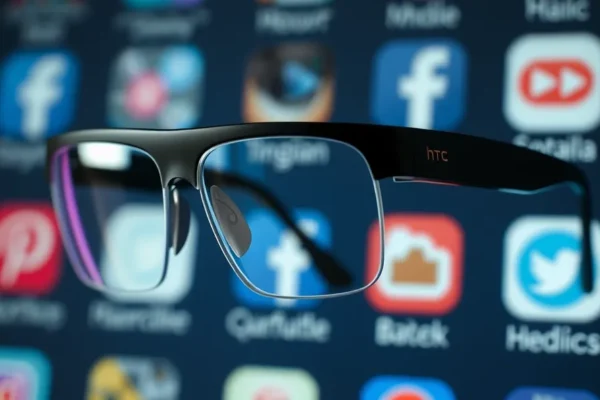
Meet the HTC Vive Eagle: Your Private Window to Augmented Reality
Ever felt like your smart devices are watching you a little too closely? In a world where so much of our digital lives are tied to big social media companies, HTC is offering a different path with its new Vive Eagle smart glasses. Think of them as a wearable screen that can layer digital information onto your real world, but with a big emphasis on keeping your data to yourself. This isn’t just about cool augmented reality tricks; it’s about giving you useful digital help without feeling like you’re constantly broadcasting your every move. If you’re curious about the future of wearable tech but wary of handing over your personal info to social media giants, the Vive Eagle might be worth a closer look.
Putting the HTC Vive Eagle to Work in Your Day
So, what can these HTC smart glasses actually do for you in your everyday life? Imagine this: you’re in the kitchen trying to follow a complex recipe. Instead of constantly looking down at your phone or a tablet, the recipe steps could appear right in your line of sight, floating above your workspace. Or, if you’re navigating a new city, directions can pop up discreetly as you walk, showing you which way to turn without you having to pull out your phone. For parents managing a busy household, imagine getting discreet notifications about the weather, a reminder to pick up milk, or even a quick glance at your calendar events without interrupting whatever you’re doing, like playing with the kids. The goal here is to make your digital life more accessible and less intrusive, bringing helpful information directly into your view when you need it most.
Who Needs These Private Smart Glasses?
Best for: Tech enthusiasts who are privacy-conscious and want to explore augmented reality without being tied to a specific social media ecosystem. If you value data security and want a personal, standalone augmented reality experience, the Vive Eagle is designed for you.
Good for: Professionals who need quick access to information while keeping their hands free, travelers who want easy navigation, or anyone who wants to reduce their screen time on phones while still staying connected. Anyone looking for a wearable tech option that prioritizes user privacy will find appeal here.
Skip if: You’re looking for a device primarily for immersive gaming or virtual reality experiences; while capable, its strengths lie elsewhere. If you’re on a tight budget, this is likely a premium purchase. Also, if you’re deeply integrated into a specific social media platform and its associated AR features are your main draw, you might find other options more compelling.
How the Vive Eagle Stacks Up Against Alternatives
The most obvious comparison is to Meta’s smart glasses, like the Meta Quest or their more consumer-focused eyewear. Meta’s approach often ties deeply into their social media platforms and services, offering a connected experience but raising privacy concerns for some users. The HTC Vive Eagle, on the other hand, pitches itself as a more private, standalone device. While Meta is pushing hard into the social metaverse, HTC is focusing on practical augmented reality applications and user data control. In terms of visual fidelity and processing power, HTC’s Vive line typically aims for higher-end experiences, and the Vive Eagle is no exception, though this often comes with a higher price tag than some of Meta’s more accessible offerings. The key difference is the philosophy: Meta is about connection and a shared digital world, while HTC Vive Eagle is about personal augmentation and data security.
Getting Started with Your HTC Smart Glasses
Setting up the Vive Eagle is designed to be straightforward, but like any new piece of advanced technology, there’s a bit of a learning curve. You’ll likely unbox it, charge it up, and then connect it to your Wi-Fi. There’s usually a companion app on your smartphone that helps with the initial pairing and allows you to manage settings and download applications. For basic functions like viewing notifications or simple AR overlays, it’s fairly intuitive. However, to unlock its full potential and customize advanced features, you might spend some time exploring menus and settings. It’s not quite as plug-and-play as a pair of headphones, but it’s also not as complex as setting up a high-end PC for VR. Expect to dedicate an hour or so for the initial setup and to get comfortable with the controls and interface.
Real-World Advantages You’ll Appreciate
- Enhanced Privacy Controls: This is a big one. The Vive Eagle is built with data security in mind, offering more control over what information is collected and shared compared to many social media-tied wearables.
- Hands-Free Information Access: Imagine getting turn-by-turn directions, viewing calendar alerts, or even seeing incoming messages without fumbling for your phone. It’s like having a personal assistant right in front of your eyes.
- Augmented Reality Without the Social Lock-in: You get the benefits of AR for productivity, navigation, and information display without being forced into a specific company’s social universe.
- Sleek and Functional Design: Reports suggest the Vive Eagle is designed to be relatively lightweight and comfortable for extended wear, blending technology with a practical aesthetic.
- Improved Focus and Productivity: By displaying relevant information directly in your field of view, it can help you stay focused on tasks without constant distractions from a handheld device.
The Downsides and Limitations to Consider
- Battery Life Can Be a Bottleneck: As with most wearable tech, the battery life is a significant consideration. For intensive use with the AR features running constantly, you might find yourself needing to recharge within a few hours, similar to what users report for the HTC Vive XR Elite.
- Limited App Ecosystem (Currently): While growing, the selection of dedicated apps for smart glasses can still be more limited than for smartphones. You might not find every single app you use on your phone available for the Vive Eagle right away.
- Potential for Eye Strain or Discomfort: Extended periods of looking at a digital display, even one integrated into your view, can lead to eye strain or fatigue for some users.
- Higher Price Point: As a premium piece of technology, the HTC Vive Eagle is likely to be a significant investment, potentially putting it out of reach for some consumers.
Price, Value, and Is It Worth It?
The HTC Vive Eagle is positioned as a premium device, and its price reflects that. Expect it to be in the higher range for consumer wearables, likely starting at several hundred dollars, and potentially exceeding $1,000 depending on the configuration. When considering value, it’s crucial to weigh this cost against your specific needs. If your top priority is robust privacy features and cutting-edge augmented reality without social media entanglements, the price might be justified. For users who don’t require that level of privacy or are already invested in other AR ecosystems, more affordable options might exist. As of now, there aren’t many direct competitors offering the same blend of advanced AR and strong privacy focus, making the Vive Eagle a unique proposition for those willing to pay for it.
The Final Word: Who Should Grab the HTC Vive Eagle?
The HTC Vive Eagle smart glasses are a compelling option for a specific kind of user. If you’re a privacy advocate who wants to dip their toes into the world of augmented reality, or if you’re a professional seeking a discreet way to stay informed while working, this is likely a device you’ll want to explore. It offers a refreshing alternative to the data-hungry ecosystems of major social media companies, providing a more personal and secure wearable tech experience. However, if you’re on a budget, primarily interested in immersive gaming, or don’t have a strong need for advanced AR with a privacy focus, it might be wise to wait or look at other options. For its target audience, the Vive Eagle offers a glimpse into a more private and practical future for smart eyewear.
Your Top Questions Answered About These HTC Smart Glasses
What is the main selling point of the HTC Vive Eagle?
The primary advantage of the HTC Vive Eagle is its strong emphasis on user privacy and data security, offering an alternative to social media-tied smart glasses.
Is this better than Meta glasses for privacy?
Based on HTC’s stated goals, the Vive Eagle is designed to offer enhanced privacy features and more user control over data compared to Meta’s ecosystem, which is more deeply integrated with social media.
Can I use this for augmented reality?
Yes, augmented reality is a core function of the Vive Eagle, allowing it to overlay digital information onto your real-world view for practical applications.
How long does the battery typically last?
Battery life for smart glasses can vary greatly with use, but for intensive AR applications, expect it to last a few hours before needing a recharge, similar to other high-performance wearable tech.
Where can I buy the HTC Vive Eagle?
Availability will likely be through HTC’s official website and select electronics retailers, both online and in-store. Check HTC’s official channels for the most up-to-date purchase information.
Do I need a powerful computer to use these smart glasses?
The Vive Eagle is designed to be a standalone device, meaning it has its own processing power and doesn’t necessarily require a connection to a high-end computer for its core functions, unlike some PC-tethered VR headsets.
Product prices and availability vary by region. Verify current pricing before purchase.