The Shift Toward Visual Advertising in AI
For the past two years, ChatGPT has operated primarily as a clean, text-based interface. Users interact with the system by typing prompts and receiving answers, a model reminiscent of a streamlined search engine or a high-end personal assistant. However, recent developments indicate that OpenAI is moving toward a new monetization strategy: integrating ChatGPT visual ads into the platform. This transition marks a significant pivot from a subscription-first model toward a hybrid approach that leverages the massive scale of free users.
The core problem this development solves is the high cost of running generative AI models. Processing complex queries requires significant computational power and expensive hardware, such as graphics processing units. To keep services like ChatGPT free for millions of users, companies must find sustainable revenue streams. Integrating AI advertising into the user experience allows OpenAI to generate income beyond the monthly fees collected from ChatGPT Plus subscribers. This shift is not merely a feature update; it is an evolution of the digital advertising landscape, moving from static banner ads to dynamic, context-aware suggestions generated by artificial intelligence.
How Generative AI Advertising Works
To understand ChatGPT visual ads, think of the technology as a highly sophisticated recommendation engine that has been integrated into a conversation. Traditional digital advertising relies on tracking your past behavior across the web. In contrast, generative AI ads use the context of your current inquiry to suggest products or services that are relevant to what you are doing in the moment.
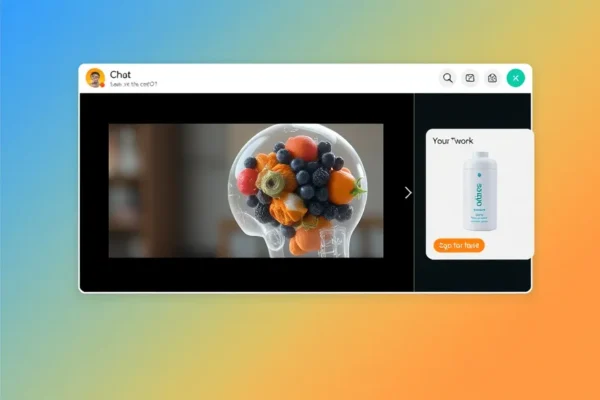
When a user asks the AI for help with a specific task, the model identifies opportunities where a commercial product could serve as a solution. If you ask for a recipe for dinner, the system might not just provide the instructions but also display a sponsored visual advertisement for a specific brand of kitchen appliance or a grocery delivery service. This is not a static picture injected into the sidebar. Instead, it is an image generation ads format, where the AI creates or fetches a visual asset tailored to the conversation’s tone and intent. The mechanism relies on “intent inference,” where the model maps the user’s needs to a database of sponsored products, ensuring that the suggestion feels like a natural part of the answer rather than an intrusive interruption.
Current State and Real-World Applications
Currently, the integration of ads into ChatGPT remains in the experimental phase. While OpenAI has not rolled out a widespread, intrusive ad network, they have begun testing ways to surface commercial content through integrations with other platforms and potential new interface elements. These tests are primarily focused on “sponsored products” that appear as part of a user’s research flow.
In the travel industry, for example, early iterations of this technology suggest that if a user plans a trip, the AI might present visual options for hotels or airlines that have paid for inclusion. This is a move toward a “conversational commerce” model, where the barrier between asking for information and making a purchase is removed. As of mid-2024, these features are largely limited to selected test groups, and the company has been cautious about how these advertisements affect the quality of responses. The maturity level remains early-adoption, with developers monitoring user sentiment closely to ensure that the primary utility of the tool is not compromised by commercial pressure.
The Competitive Landscape of AI Advertising
OpenAI is not the only player looking to monetize conversational interfaces. The digital advertising space is currently undergoing a massive transformation as tech giants scramble to define how ads will function in a world where AI answers questions instead of providing a list of blue links. Google, for instance, has long relied on search-based advertising and is currently integrating its Gemini AI into search results to maintain its dominance.
Compared to Google, which has a massive infrastructure for tracking user data, OpenAI has an advantage in the nuance of its conversational model. However, competitors like Microsoft with its Copilot integration, and Perplexity AI with its sponsored question suggestions, are moving quickly. The key differentiator for OpenAI is the “trust” factor. Because users turn to ChatGPT for high-quality, summarized information, the company must balance its need for revenue against the risk of alienating its user base with irrelevant or low-quality sponsored content. Whoever balances this the best—delivering ads that provide actual utility rather than noise—will likely win the long-term competition for user loyalty.
Economic and Social Implications
The introduction of visual ads into ChatGPT will fundamentally reshape digital marketing. If generative AI becomes the primary way people access information, the traditional SEO (Search Engine Optimization) industry will need to pivot toward AIO (AI Optimization). Brands will no longer just compete for the top spot on a search result page; they will compete to be the “recommended solution” provided by an AI during a conversation.
Economically, this creates a new market for AI advertising spend, shifting dollars away from traditional display ads toward conversational AI slots. For society, this brings both benefits and concerns. On the positive side, it could provide users with more relevant recommendations that save time and effort. On the negative side, there is the risk of “algorithmic bias” or “pay-to-play” scenarios, where the best advice is suppressed in favor of the highest bidder. If the AI becomes a billboard rather than a research tool, it will lose the trust that currently makes it a revolutionary technology.
Limitations and Challenges
The primary challenge for OpenAI is maintaining the neutrality of their model. If users perceive that ChatGPT is biased toward paying advertisers, the credibility of the entire platform could be damaged. Research into human-computer interaction suggests that users are highly sensitive to “perceived manipulation” in AI outputs. If a user asks for an unbiased comparison of two products and the AI heavily favors a sponsored product, that trust is broken immediately.
Technical hurdles also exist. Real-time, context-aware visual rendering requires significant latency management. If generating an advertisement slows down the AI’s response time, it creates a poor user experience. Furthermore, the regulatory environment is still catching up. Laws in the European Union and the United States regarding digital transparency require that sponsored content be clearly labeled. Ensuring that these disclosures are effective within a fluid, conversational interface is a non-trivial challenge for engineers and product designers alike.
The Future Trajectory of AI Ad Models
Looking ahead, the trajectory of ChatGPT visual ads will likely move toward personalization. We are heading toward a future where advertisements are hyper-personalized based on the user’s history and their immediate goals. Within the next 12 to 24 months, expect to see more refined “integrated suggestions” where the line between a recommendation and an ad becomes increasingly thin. Industry experts anticipate that major breakthroughs will focus on “attribution,” or the ability for brands to measure exactly how a ChatGPT recommendation leads to a sale, which is the “holy grail” for digital marketers.
While the company has not released a public roadmap for ad integration, the economic necessity of supporting free users suggests that these features will continue to evolve from experimental tests to standard, albeit subtle, parts of the interface. The goal is likely to reach a state where users do not view these suggestions as “ads” at all, but as helpful additions to their queries.
Key Questions and Answers
Is ChatGPT monetization through ads inevitable?
Yes, given the massive computational costs of large language models, a hybrid model of subscriptions and advertising is a logical path to sustainability. This allows the company to continue offering a free tier while offsetting operational expenses.
How will ChatGPT visual ads affect user experience?
The impact depends on the execution. If OpenAI prioritizes relevance and transparency, the ads could actually provide helpful, intent-based product discovery. If they are overused, they risk cluttering the interface and undermining the user’s trust in the AI’s objective accuracy.
Are these ads available to everyone today?
Currently, the integration of commercial content is limited to testing environments. Most users do not see full-scale visual ads, and OpenAI has not provided a definitive timeline for a global rollout of a standardized ad format.
Who benefits most from this new model?
The primary beneficiaries are businesses that can effectively optimize for AI-driven recommendations. If a company can prove its product solves a user’s query, they can bypass traditional search ads and get placed directly into a helpful, conversational response.
What are the main risks associated with AI advertising?
The primary risk is the loss of objectivity. If the AI model is influenced by financial incentives rather than the quality of the information, users may find themselves being “sold to” rather than “helped,” leading to a potential decline in usage and trust.
Disclaimer: This article is based on current industry developments and reported testing of OpenAI features. As AI technology and business models are highly volatile, specific implementations of advertising in ChatGPT are subject to change based on company policy and user feedback.