

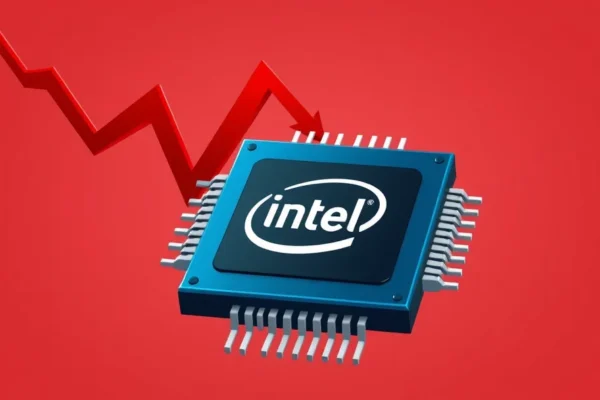
Understanding Stock Market Volatility and Corporate Value
At its simplest level, a stock represents a piece of ownership in a company. When you buy shares, you are buying a tiny slice of that business. The price of those shares fluctuates based on what investors believe that company will earn in the future. Think of it like buying a share in a lemonade stand. If the neighborhood predicts a heatwave, they expect more sales, and the value of your share goes up. If it starts raining and sales plummet, the value of your share goes down. This is the essence of market valuation.
When you see headlines about a massive stock price drop, it is essentially the market re-evaluating its expectations for that company’s future. Investors care about this because their retirement accounts, mutual funds, and personal portfolios are often tied to the performance of these large companies. Understanding why prices move helps you separate emotional reactions from the actual financial health of a business.
The Mechanics of Profit Margins and Sales Forecasts
To understand the recent news regarding Intel shares, you must first understand two concepts: the sales forecast and profit margins. A sales forecast is a company’s public estimate of how much revenue they expect to bring in over a certain period. Profit margins represent the percentage of that revenue a company keeps as actual profit after paying for the costs of manufacturing and operations.
Imagine a baker who sells cakes. If the baker expects to sell 100 cakes next month, that is their sales forecast. If the cost of flour and electricity rises, or if they have to lower their prices to compete with a nearby shop, their profit margin shrinks. Even if they still sell the 100 cakes, they take home less money.
In the semiconductor market, which involves the companies that build the tiny chips powering our computers and phones, these numbers are everything. When Intel reported a lower-than-expected sales forecast for PC chip sales, it signaled to investors that the demand for their core product is weaker than they previously hoped. Combine that with shrinking profit margins—caused by heavy spending on new factories and research—and you have a recipe for investor concern. When those two metrics look shaky, the market often reacts by selling off the stock, leading to the sharp decline in INTC stock value we have recently observed.
Why Intel Matters to the Broader Economy
Why should the average person care if a tech giant’s stock price tumbles? First, consider the ripple effect. Intel is a central player in the global tech sector. When a company of that size struggles, it impacts its suppliers, its employees, and the overall stability of the stock market. Because many pension funds and 401(k) plans invest in large, stable technology companies, a significant drop in market capitalization—the total value of a company’s shares—can impact the long-term growth of your personal savings.
From an economic standpoint, the semiconductor market is a pillar of modern life. These chips are in everything from cars to dishwashers. If a major chipmaker faces financial distress, it can lead to increased costs for other businesses, potentially slowing down innovation and contributing to economic uncertainty. While investors who held the stock were directly affected by the 22 percent drop, the rest of the world feels the impact through changes in supply chains and the pricing of electronic goods.
The Context of the Intel Turnaround
Intel is currently in the middle of a massive corporate turnaround strategy. Historically, Intel dominated the world of computing. However, the tech sector has become increasingly competitive, with rivals finding more efficient ways to design and manufacture chips. In recent years, Intel has attempted to regain its footing by investing billions of dollars into new manufacturing facilities, often referred to as foundries, aiming to build chips not just for themselves but for other companies as well.
This strategy is capital-intensive, meaning it requires a tremendous amount of cash upfront. According to reports from the company, this shift has put significant pressure on their short-term financial performance. The recent market reaction reflects a growing skepticism among investors about how long this turnaround will take and whether the company can successfully compete against leaner, faster-moving rivals. The 22 percent drop in Intel shares is essentially the market expressing impatience with the pace of this transformation.
Practical Implications for Your Financial Life
When you see tech sector volatility in the news, it is natural to feel anxious about your own investments. However, the most important lesson is to avoid reacting to headlines with short-term panic. Markets are designed to process information quickly, and sometimes they overreact to specific bits of news. If you hold shares through an index fund or a diversified portfolio, you are protected from the “all-in” risk of betting on just one company.
One common misconception is that a falling stock price means the company is failing. In reality, a price drop often reflects the difference between what investors expected and the new reality of the company’s financial outlook. When watching these stories, ask yourself: Is this a temporary setback for the company, or is the underlying business model fundamentally broken? Actionable steps include checking your portfolio’s diversification and ensuring you are not overly exposed to any single industry or company. Focus on your long-term goals rather than the daily swings of the stock market.
Related Financial Concepts
To deepen your understanding of these market movements, you may want to research these related topics:
- Diversification: The practice of spreading your investments across various assets to reduce risk.
- Capital Expenditure (CapEx): The funds a company uses to acquire or upgrade physical assets, such as the factories Intel is building.
- Market Volatility: A measure of how much a stock price moves up or down over time.
- Compound Annual Growth Rate (CAGR): A useful tool for measuring the actual growth of an investment over several years.
Common Questions About Intel Stock and Market Shifts
How does the drop in Intel shares affect the broader stock market?
Because Intel is a large-cap company, its performance influences major stock indices like the S&P 500. When a large component of an index loses significant market capitalization, it can drag down the total value of the index, which affects anyone invested in funds that track those market averages.
What does a declining PC chip sales forecast tell us about the economy?
Weakness in PC chip sales can indicate that consumers and businesses are spending less on new technology. This may suggest a broader cooling in consumer demand, which economists often watch as a sign of slowing economic growth.
Is the current Intel turnaround strategy a guaranteed success?
No investment or corporate strategy is guaranteed. The semiconductor market is highly complex, and Intel faces intense competition from global rivals. Investors weigh the potential for long-term growth against the risks of high spending and market competition.
Can individuals control the risks associated with tech sector volatility?
While you cannot control the stock market, you can control your strategy. By maintaining a well-diversified portfolio and focusing on long-term financial goals rather than day-to-day news, you can mitigate the impact of volatility in any one sector.
What should I look for when reading about semiconductor market news?
Look for data on long-term demand for chips in sectors like Artificial Intelligence and automotive technology. These areas of growth may offset short-term weaknesses in consumer PC chip sales, providing a more balanced view of a company’s prospects.
This article is for educational purposes only and does not constitute financial, investment, or legal advice. Financial situations are unique to every individual; therefore, you should consult with a qualified financial advisor before making any significant investment decisions. All investments involve risk, including the potential loss of principal, and historical market performance does not guarantee future results.



