

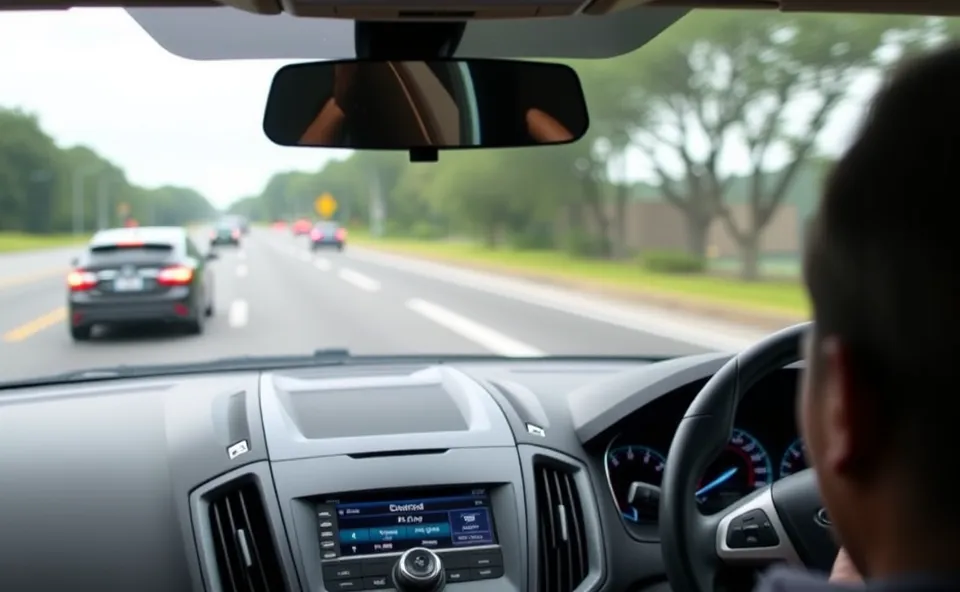
When BlueCruise Met Stationary Objects: The NTSB’s Sobering Findings
Imagine cruising down the highway, hands off the wheel, enjoying the scenery while your car handles the basics of driving. That’s the promise of advanced driver-assistance systems (ADAS) like Ford’s BlueCruise. It’s a taste of the future, a convenience that many drivers have come to appreciate. But a recent investigation by the National Transportation Safety Board (NTSB) has delivered a stark reminder that even the smartest tech can’t replace an engaged human driver, especially when it comes to preventing fatal collisions.
The NTSB has been looking into several Ford BlueCruise crashes where vehicles, using the hands-free system, collided with stationary cars or emergency vehicles on highways. The findings? A deeply troubling pattern of driver distraction. It appears that in these tragic incidents, drivers weren’t paying attention to the road, essentially treating a semi-autonomous system as fully autonomous. This isn’t just a technical glitch; it’s a critical human factor that’s casting a shadow on the progress of vehicle autonomy safety.
Why These Ford BlueCruise Crashes Are Sparking Fresh Conversations
You might be wondering why this particular set of findings is making headlines now. It’s because the NTSB’s detailed automotive accident investigation report isn’t just about what happened; it’s about why it happened. It cuts to the core of an ongoing debate: how do we integrate cutting-edge ADAS safety features into our daily lives without creating new risks?
The release of these findings comes at a time when more and more vehicles are equipped with sophisticated driver monitoring systems and semi-autonomous driving capabilities. People are naturally curious about the safety implications of this technology, and these investigations provide crucial, albeit sobering, insights. It’s a wake-up call, urging us to reassess our understanding and usage of these powerful tools, reminding everyone that while Ford technology and similar systems are impressive, they are not yet a substitute for human vigilance. The questions surrounding distracted driving in an age of automated assistance are more relevant than ever.
Beyond Hands-Free: Understanding Ford BlueCruise and Its Limits
To truly grasp the significance of these NTSB findings, it’s important to understand what Ford BlueCruise is and, critically, what it isn’t. BlueCruise is Ford’s Level 2 ADAS, meaning it offers hands-free driving assistance on pre-mapped sections of highways, primarily for steering, braking, and acceleration. It’s designed to make long drives less fatiguing and improve overall comfort.
A key component of Ford BlueCruise is its driver monitoring system. This system uses an infrared camera pointed at the driver’s face to ensure their eyes remain on the road, even when their hands are off the wheel. If the system detects that the driver isn’t paying attention, it will issue warnings, first visual and then audible. If the driver still doesn’t respond, the system will eventually slow the vehicle down.
The crucial distinction here is that BlueCruise, like all current Level 2 systems, requires the driver to be ready to take control at any moment. It’s an assistive technology, not a fully autonomous one. Yet, in the cases investigated by the NTSB, drivers were reportedly engaged in non-driving related tasks, such as looking at phones or engaging in other activities that pulled their attention away from the road. This highlights a persistent challenge in the evolution of semi-autonomous driving: the gap between technological capability and human expectation or behavior. Even with sophisticated Ford technology, the human element remains paramount.
The Ripple Effect: What These Findings Mean for Everyone
The NTSB’s analysis of these fatal collisions isn’t just a technical report; it has profound implications across the board, touching users, businesses, and the very future of vehicle autonomy safety.
- For Drivers: The Responsibility is Still Yours
The most immediate takeaway for anyone using ADAS is simple: hands-free does not mean mind-free. These investigations underscore that even with systems like BlueCruise, the driver is the ultimate safety net. Distracted driving remains incredibly dangerous, perhaps even more so when a driver might falsely believe the car has everything under control. It’s a call for greater awareness and a clearer understanding of your car’s limitations. Don’t let the convenience of technology lead to complacency.
- For Automakers: Sharpening the Tech and the Message
For companies like Ford, these findings put pressure on them to re-evaluate how their systems interact with drivers and how they communicate those capabilities. This could lead to:
- Enhanced Driver Monitoring Systems: A push for even more robust and perhaps proactive driver monitoring systems that are harder to fool or override.
- Clearer User Education: A renewed focus on explaining the boundaries of ADAS, potentially through more intuitive in-car warnings, updated manuals, and even training programs.
- Addressing Stationary Object Detection: While ADAS is great for dynamic traffic, detecting stationary objects at highway speeds can be uniquely challenging for these systems. This could spur further development in that area for improved ADAS safety.
- For the Tech Industry: Advancing ADAS Safety
These incidents serve as a critical learning experience for the entire automotive technology sector. They highlight the complex interplay between human behavior and machine intelligence. The focus will likely intensify on:
- Improving the “handoff” experience between the system and the driver.
- Developing more sophisticated ways to ensure driver engagement beyond just eye-tracking.
- Exploring how vehicle-to-everything (V2X) communication could potentially warn drivers and systems about roadside emergencies or stationary hazards.
Peering Ahead: The Road for Semi-Autonomous Driving
So, what does the future hold for semi-autonomous driving and vehicle autonomy safety after these revelations about Ford BlueCruise crashes? It’s highly unlikely that these incidents will halt the development of ADAS technology. Instead, they will refine it.
We can expect to see a greater emphasis on “human-centric design” in future ADAS. This means systems that are not only technologically advanced but also intuitively understood and safely integrated with human behavior. The NTSB’s findings will likely fuel discussions around potential regulatory changes or industry best practices, pushing for standardized ways to measure driver engagement and ensuring that driver monitoring systems are truly effective at preventing distracted driving.
The journey towards fully autonomous vehicles is long and complex, and these Ford BlueCruise crashes are a stark reminder of the critical steps needed to ensure safety at every stage. The evolution of semi-autonomous driving will undoubtedly feature smarter, more proactive systems, but for the foreseeable future, the alert and engaged human driver will remain the most vital safety feature in any car.
Your Questions Answered: Navigating BlueCruise and ADAS Safety
What did the NTSB find regarding Ford BlueCruise crashes?
The National Transportation Safety Board (NTSB) found that several fatal Ford BlueCruise crashes into stationary vehicles were linked to severe driver distraction. Despite the vehicle’s semi-autonomous capabilities and driver monitoring systems, drivers were not paying attention to the road, indicating a critical human behavior factor.
How does driver distraction play a role in semi-autonomous driving fatal collisions?
Even with advanced semi-autonomous driving systems, the driver is expected to remain vigilant and ready to take control. When drivers become distracted, they fail to respond to critical situations that the ADAS might not be designed to handle, such as detecting stationary objects or reacting to unexpected roadside hazards, leading to fatal collisions.
Are driver monitoring systems effective enough in ADAS safety?
While driver monitoring systems (DMS) in Ford technology like BlueCruise are designed to encourage driver attention, the NTSB findings suggest they might not always be sufficient to overcome determined driver distraction. These incidents highlight a need for potentially more robust DMS, clearer system limitations, and better driver education to enhance overall ADAS safety.
What should users know about Ford technology like BlueCruise?
Users of Ford technology such as BlueCruise must understand that it is an assistive system, not fully autonomous. While it allows for hands-free driving on compatible roads, drivers are still responsible for monitoring the road and being prepared to take immediate control. Hands-free does not mean mind-free, and distracted driving remains extremely dangerous.
What’s the future for vehicle autonomy safety after these investigations?
These investigations into Ford BlueCruise crashes are likely to spur advancements in driver monitoring systems, enhance user education about ADAS limitations, and potentially influence future regulations for semi-autonomous driving. The focus will be on creating systems that better integrate with human behavior and ensure higher levels of vehicle autonomy safety through clearer communication and more robust safeguards.











