

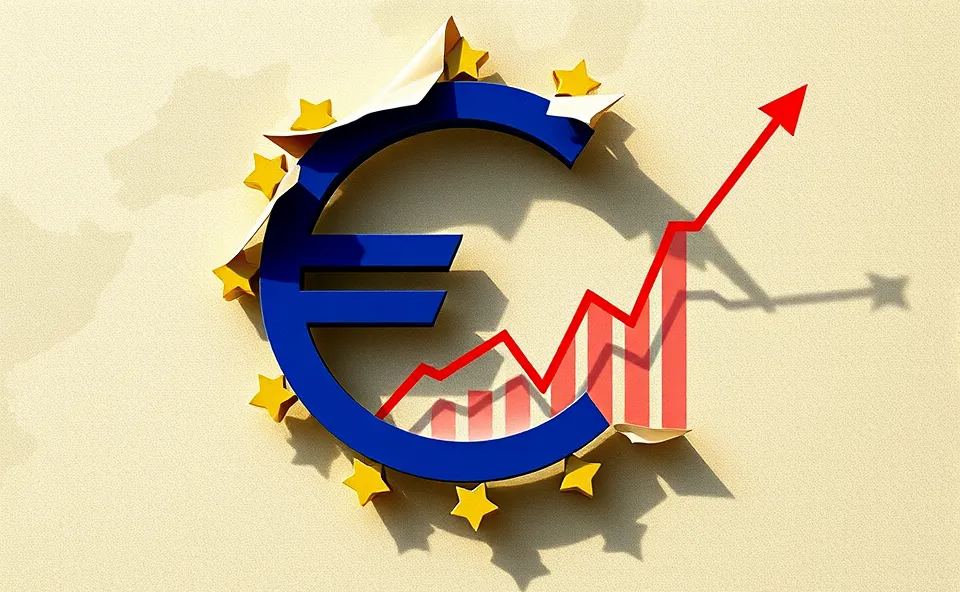
Understanding the Ripple Effect on Eurozone Borrowing
You might have seen headlines about rising tensions involving Iran and wondered, “What does that have to do with my wallet or the economy here in Europe?” It’s a fair question, and the answer is more connected than you might think. When global stability gets shaky, financial markets feel it, and right now, we’re seeing a clear impact on Eurozone borrowing costs. Think of it like this: when the world feels less predictable, lenders get a bit more cautious. This caution translates into them asking for a higher price to lend money, especially to governments.
Recently, events linked to the Iran situation have created what experts call an “Iran shock” in the financial world. This isn’t just a political tremor; it’s a financial one. What happens in one part of the globe can send ripples across another, particularly in our interconnected economic system. For the Eurozone, this means the cost for governments to borrow money—to fund schools, hospitals, roads, or even pay their existing bills—is increasing. It’s a direct consequence of heightened geopolitical risk, and it poses a new challenge for public finances across the bloc.
Why Everyone’s Talking About Higher Eurozone Costs Right Now
The reason this topic is front and center on financial news sites and in economic discussions isn’t just about the immediate events; it’s about the very real and immediate consequences for the EU economy. People are searching for answers because this isn’t just an abstract financial concept. Higher Eurozone borrowing costs mean that countries like Germany, France, Italy, and Spain have to dedicate more of their budgets to simply service their debt. This is a significant “fiscal hit” that has caught the attention of investors, policymakers, and ordinary citizens alike.
The “Iran shock” has added a fresh layer of uncertainty to an already complex economic landscape. Just as the global economy was trying to find its footing after various challenges, new geopolitical risk factors emerge. This forces a re-evaluation of everything from investment strategies to government budgets. Investor sentiment becomes more volatile, and this naturally pushes up interest rates for government bonds. Everyone is trying to understand what this means for future economic stability and how long this period of elevated borrowing costs might last.
A Look Back at the Eurozone’s Financial Landscape
To really grasp why this current situation is such a concern, it helps to remember where the Eurozone started from. For many years, especially after the 2008 financial crisis and the subsequent sovereign debt crisis, the European Central Bank kept interest rates incredibly low. This made it very cheap for Eurozone governments to borrow money and fund their activities, often through issuing government bonds. It allowed countries to manage their public finances without too much strain, even those with higher levels of sovereign debt.
However, the economic climate has changed significantly. Inflation pressures have led central banks to hike interest rates, ending an era of cheap money. Many Eurozone countries still carry substantial debt burdens from past crises and recent events like the pandemic. So, when an external factor like the “Iran shock” suddenly introduces new geopolitical risk, it hits an environment that’s already sensitive to rising interest rates. The bond market, which is where governments get their loans, reacts quickly. Investors demand higher returns for taking on what they perceive as increased risk, making Eurozone borrowing costs jump. This context of existing debt and a shift to higher rates makes the current “fiscal hit” particularly impactful.
The Direct Impact on Public Finances and the EU Economy
So, what does it all mean on the ground? The rising Eurozone borrowing costs driven by the “Iran shock” have a clear and direct impact on public finances. Here’s how:
- Higher Debt Servicing Costs: For every Eurozone country, a significant portion of their national budget goes towards paying interest on existing government bonds. When interest rates rise, this portion grows, meaning less money is available for other essential services. This is a primary aspect of the “fiscal hit.”
- Reduced Spending Power: Governments might have to cut back on planned investments in infrastructure, education, healthcare, or green initiatives. Or, they might face pressure to raise taxes, which could affect citizens and businesses.
- Strain on Public Finances: Countries with already high levels of sovereign debt are particularly vulnerable. The higher interest rates can make their debt paths unsustainable, putting pressure on their ability to manage their budgets effectively and ensure long-term stability for the EU economy.
- Impact on Businesses and Consumers: While not a direct hit, higher government borrowing costs can indirectly influence the broader economy. It can contribute to a general environment of higher interest rates, potentially making it more expensive for businesses to borrow for investment and for consumers to take out loans for mortgages or other purchases. This can slow down economic activity and dampen growth.
- Investor Sentiment and Confidence: The perception of increased geopolitical risk and deteriorating public finances can lead to further declines in investor sentiment. This creates a vicious cycle where investors demand even higher returns, further pushing up Eurozone borrowing costs.
The “Iran shock” acts as an accelerator, exacerbating existing financial vulnerabilities and demanding tough decisions from policymakers across the Eurozone.
What Lies Ahead for Eurozone Borrowing Costs
Looking to the future, the path for Eurozone borrowing costs largely depends on a few key factors. It’s not about making wild predictions, but rather understanding the logical implications of current trends.
Firstly, the trajectory of geopolitical risk, especially concerning the “Iran shock,” will be critical. If tensions remain high or escalate, investor sentiment is likely to stay cautious, maintaining pressure on government bonds and keeping interest rates elevated. This would mean a sustained “fiscal hit” for Eurozone countries, forcing them to continue prioritizing debt servicing.
Secondly, how Eurozone governments respond to this challenge is crucial. Will they implement austerity measures, find new revenue streams, or seek collective solutions? The choices made regarding public finances will determine their ability to absorb these higher costs without severely impacting their economies or public services. The EU economy’s resilience will be tested, and coordinated action, or lack thereof, could significantly shape outcomes.
Thirdly, the European Central Bank’s stance on interest rates will remain a major influence. While geopolitical events are outside their direct control, their monetary policy decisions will play a role in the overall interest rate environment. However, with inflation still a concern, any significant easing to offset rising Eurozone borrowing costs might be unlikely in the short term.
Ultimately, the coming months will be a period of careful navigation for the Eurozone. Managing the fallout from the “Iran shock” and its impact on the bond market will require agility, fiscal discipline, and a close watch on global developments. The emphasis will be on maintaining stability and fostering confidence despite the challenging backdrop of elevated geopolitical risk and a difficult environment for sovereign debt.
Common Questions About the Iran Shock and Eurozone Finances
How does the Iran shock directly affect Eurozone borrowing costs?
The “Iran shock” increases global uncertainty and geopolitical risk. When investors perceive higher risk, they demand a greater return to lend money. For Eurozone governments, this means they have to offer higher interest rates on their government bonds to attract buyers, thereby increasing Eurozone borrowing costs.
What are government bonds, and why are they important for public finances?
Government bonds are essentially loans made by investors to a government. They are critical for public finances because they allow governments to raise money to fund public services, infrastructure projects, and manage existing sovereign debt. The interest rate on these bonds directly impacts how expensive it is for a country to operate.
What does a “fiscal hit” mean for Eurozone countries?
A “fiscal hit” refers to a negative impact on a government’s budget or financial health. In this context, it means that higher Eurozone borrowing costs due to the “Iran shock” will force governments to spend more on interest payments for their debt, leaving less money for other priorities and potentially straining the EU economy.
How does investor sentiment relate to sovereign debt in times of geopolitical risk?
Investor sentiment is how confident investors feel about economic and political stability. During periods of geopolitical risk, like the “Iran shock,” investor sentiment often turns cautious or negative. This leads them to demand higher returns on sovereign debt (government bonds), as they see it as riskier, thereby increasing the borrowing costs for governments.
What could be the longer-term economic impact of sustained higher interest rates in the Eurozone?
Sustained higher interest rates could lead to slower economic growth across the EU economy. Governments might have less fiscal space for stimulus or investment, businesses could face higher costs for borrowing, and consumer spending might decrease. This prolonged period of higher Eurozone borrowing costs could challenge the overall economic impact and competitiveness of the region.











