

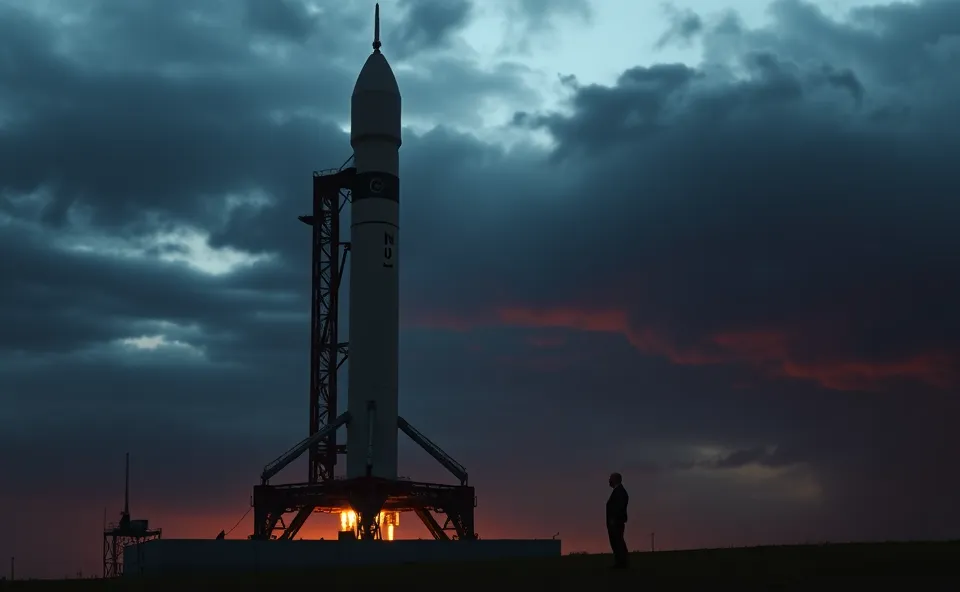
The Big Rocket That’s Facing Big Questions
You know that giant rocket Boeing is building for NASA, the one meant to send humans back to the Moon? Well, it’s a pretty amazing piece of engineering, but it’s also been facing a rough journey. We’re talking about the Space Launch System, or SLS for short. It’s designed to be the backbone of NASA’s Artemis missions, our big push to explore the lunar surface again. But lately, the conversation around the Boeing moon rocket has shifted. With potential changes in Washington, specifically the possibility of a Trump NASA administration, people are wondering what the future holds for this incredibly expensive and complex project. The cost overruns and mission delays have always been a concern, but they’re coming into sharper focus as the political landscape potentially shifts.
Why Everyone’s Talking About It Now
The buzz around the Boeing moon rocket and a potential Trump NASA administration isn’t just idle chatter. It’s rooted in the very real financial and logistical challenges the Space Launch System has faced since its inception. The SLS is, without a doubt, a technological marvel. However, its price tag has ballooned significantly over the years, and the timeline for its missions has stretched out far beyond initial projections. This has naturally led to scrutiny, especially from those who believe NASA’s budget could be better allocated. When you add the potential for a new presidential administration with a different vision for space exploration, these existing concerns about rocket cost and mission delays get amplified. People are searching for insights into how political winds might affect one of America’s most ambitious space endeavors. It’s a story of cutting edge technology bumping up against the realities of budgets and politics.
A Look Back at the Sky-High Ambitions
To understand why the future of the Boeing moon rocket is so uncertain, we need to go back a bit. The Space Launch System was born out of a desire to give NASA a heavy lift capability that could take us beyond Earth orbit, specifically to the Moon and eventually Mars. It’s intended to be the most powerful rocket ever built, a true workhorse for deep space exploration. However, from the get go, the SLS has been a program plagued by challenges. Think of it like building a custom supercar; it’s incredibly complex and takes a lot of time and money. The aerospace industry has seen its share of ambitious projects, but the SLS stands out for its sheer scale and the continuous stream of budget increases and schedule slips. These aren’t minor hiccups; they’re significant hurdles that have impacted the overall progress of NASA’s Artemis missions. The sheer rocket cost associated with developing and building the SLS has been a constant point of discussion among policymakers and the public alike. It represents a massive investment, and any perceived inefficiency or delay naturally sparks debate about its ongoing viability.
What This Means for the Future of Space Exploration
The implications of the current situation surrounding the Boeing moon rocket are pretty significant, not just for NASA, but for the entire aerospace industry and the broader landscape of space exploration. If the SLS faces major budget cuts or a complete reevaluation under a new administration, it could have a ripple effect. For starters, the Artemis missions, which rely heavily on the SLS to carry astronauts and crucial equipment to the Moon, would likely face further delays or even a fundamental change in strategy. This is where companies like SpaceX and Blue Origin, who are developing their own powerful rockets, come into the picture. They offer alternative approaches and often at a lower cost. A shift in NASA’s focus could potentially benefit these commercial space ventures, accelerating their development and increasing their role in the space exploration ecosystem. The political impact of such a decision is also substantial. It sends a message about national priorities in space. For the aerospace industry, it means uncertainty for the thousands of people employed on the SLS program and potentially a shift in government contracts. It forces a hard look at how we fund and manage these massive, long term technological undertakings. Ultimately, the decisions made regarding the Boeing moon rocket will shape the pace and direction of humanity’s return to the Moon and beyond.
Charting the Course Ahead: What’s Next?
Looking ahead, the future of the Boeing moon rocket and its role in NASA’s ambitions is decidedly complex. A lot will depend on the political climate and the priorities set by a potential Trump NASA administration. One scenario is that the new leadership might decide to double down on existing programs like the SLS, seeing it as a crucial national asset that’s too far along to abandon. They might push for faster development and more aggressive mission timelines, trying to capitalize on the existing investment. Another possibility is a more significant pivot. A new administration could choose to reevaluate the entire approach to lunar exploration, perhaps prioritizing cost effectiveness and speed. This could lead to increased reliance on commercial partners like SpaceX or Blue Origin, potentially scaling back or even canceling future SLS production runs. We might also see a hybrid approach, where the SLS is used for specific, high priority missions, but other, more commercially driven vehicles handle the bulk of the transportation. The mission delays and rocket cost associated with the SLS will undoubtedly be major factors in any decision. Ultimately, the path forward will involve difficult choices about where to invest limited resources in the pursuit of space exploration. It’s a balancing act between technological capability, financial realities, and strategic vision.
Frequently Asked Questions About the Boeing Moon Rocket
What is the Boeing moon rocket and what is its purpose?
The Boeing moon rocket is officially known as the Space Launch System SLS. It’s NASA’s super heavy lift expendable rocket designed to carry astronauts and payloads beyond Earth orbit. Its primary purpose is to enable NASA’s Artemis missions, which aim to return humans to the Moon and establish a sustainable lunar presence as a stepping stone for future Mars exploration.
Why is the future of the Boeing moon rocket uncertain, especially with a potential Trump NASA administration?
The future of the Boeing moon rocket, the SLS, faces uncertainty due to a combination of factors. Historically, the program has experienced significant cost overruns and mission delays. These issues make it a target for budget scrutiny. With a potential Trump NASA administration, there’s the possibility of a shift in priorities and a reevaluation of large scale, expensive projects like the SLS, especially when compared to the cost effectiveness offered by some commercial competitors.
How do the cost overruns and mission delays affect the SLS program?
The substantial cost overruns and recurring mission delays have made the Space Launch System a point of contention. They impact NASA’s overall budget, potentially diverting funds from other scientific or exploration initiatives. Delays also mean slower progress on ambitious goals like the Artemis missions, pushing back the timeline for human exploration. This financial and scheduling pressure is a key reason for the ongoing debate about the rocket’s future.
What role might SpaceX and Blue Origin play if the SLS faces challenges?
Companies like SpaceX and Blue Origin are developing their own powerful launch vehicles, such as SpaceX’s Starship and Blue Origin’s New Glenn. These commercial rockets are often seen as potentially more cost effective and faster to develop. If the SLS program faces significant setbacks or reduced funding, NASA might increase its reliance on these private companies for launching astronauts and cargo for future space exploration, including the Artemis missions.
What is the broader impact on the aerospace industry and space exploration if the Boeing moon rocket’s role changes?
A significant change in the role or future of the Boeing moon rocket would have a major impact on the aerospace industry. Thousands of jobs are tied to the SLS program. A shift could lead to reallocation of resources and potentially more government contracts for companies offering alternative launch solutions. For space exploration itself, it could mean a change in the pace and approach to lunar and Martian missions, potentially accelerating or altering the trajectory of humanity’s outward push into the cosmos.











