

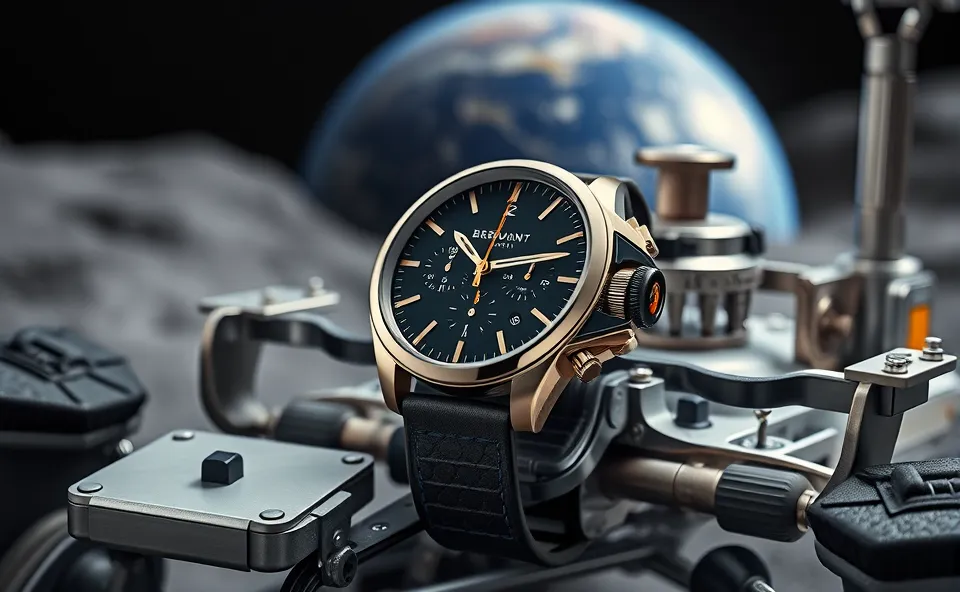
A Bremont Watch Just Took a Trip to the Moon
Okay, so imagine this: a super cool Bremont watch, a fancy chronograph watch, made its way all the way to the surface of the moon. Not just orbiting, but actually on the moon. This isn’t science fiction; it just happened! Bremont teamed up with a company called Astrolab, and they sent their watch aboard a special vehicle called the Astrolab FLIP rover. This rover made a lunar landing, and with it went this very special timepiece. It’s pretty mind blowing when you think about it, a piece of intricate watchmaking sitting there, miles and miles away on another celestial body.
Why All the Buzz About This Lunar Mission Now?
You’re probably hearing about this Bremont watch and its moon adventure because it’s a fresh, exciting story in the world of space exploration and high-end consumer tech. We’re in a time when private companies are really pushing the boundaries of what’s possible in space, and this mission is a perfect example. It’s also a testament to how far we’ve come in both watchmaking and our ability to reach deep space. The idea of sending something as personal and precisely engineered as a chronograph watch on such a monumental journey captures the imagination. It’s not just news; it’s a milestone that blends human ambition with incredible technology, and that’s why it’s trending.
From Earthly Craftsmanship to Cosmic Dust
To really appreciate this feat, it helps to know a bit about Bremont. They’re a British watchmaker known for creating incredibly robust and beautifully engineered timepieces. They have a history of making watches that can withstand tough environments, often inspired by aviation. Think about pilots using their watches in challenging conditions; Bremont has always been about precision and durability. Now, extending that to the extreme environment of the moon’s surface is a huge leap. This isn’t their first venture into space related projects, but sending a watch directly to the lunar surface aboard its own dedicated rover is a significant step. It’s about pushing the limits of what a watch can do and where it can go. This lunar mission by Astrolab is part of a larger resurgence in interest in space exploration, with many nations and private entities aiming for lunar missions and beyond.
What This Moon Landing Means for Us
So, what’s the big deal when a Bremont watch lands on the moon? For starters, it’s a powerful statement about modern watchmaking and its place in advanced technology. It shows that even in an era of digital everything, there’s still a profound appreciation for mechanical precision and craftsmanship. This lunar mission, featuring the chronograph watch, is a marketing and technological triumph for Bremont, proving their watches can handle the ultimate test environment. For space exploration enthusiasts, it’s another exciting development, showcasing how private innovation is accelerating our reach into space. Think about the Astrolab FLIP rover itself; its success is bolstered by carrying such a high-profile passenger. It also sparks ideas about what else can be sent and tested in space. Could this pave the way for more specialized tools or even luxury items to be part of future lunar landing endeavors? It certainly makes the idea of space exploration feel a little more tangible and perhaps even aspirational for everyday people who appreciate fine engineering.
The Next Tick on the Cosmic Clock
Where does this journey take us next? This successful lunar mission by Bremont and Astrolab opens up a universe of possibilities, quite literally. We can expect to see more innovative collaborations between watchmakers and space tech companies. Perhaps we’ll see watches specifically designed for long-duration space missions, or even tools that utilize the extreme conditions of space for new types of testing. The data gathered from the Bremont watch on the moon’s surface could inform future designs. For Astrolab, this is a stepping stone for more ambitious rover missions, potentially carrying scientific instruments or even serving as precursors for human missions. This isn’t just about one chronograph watch; it’s about the growing synergy between terrestrial expertise and the vast potential of deep space. It’s exciting to think about what other terrestrial marvels might make their way to the moon and beyond.
Frequently Asked Questions About the Moon Watch
What exactly did Bremont send to the moon’s surface?
Bremont sent one of their specially designed Supernova Chronograph watches to the surface of the moon. This watch traveled aboard the Astrolab FLIP rover during a recent lunar mission.
Is this Bremont watch the first to reach the moon?
While other watches have been to space or even on lunar missions before, this specific instance marks a significant achievement for Bremont as their chronograph watch was placed directly onto the moon’s surface via the Astrolab FLIP rover’s lunar landing.
What is the Astrolab FLIP rover’s role in this mission?
The Astrolab FLIP rover is a vehicle designed for lunar exploration. It successfully completed a lunar landing and carried the Bremont watch to the moon’s surface, serving as the transport for this unique space exploration endeavor.
How does sending a Bremont watch to the moon relate to space exploration advancements?
It demonstrates the increasing capabilities of private companies like Astrolab in achieving lunar missions and highlights the extreme durability and precision of modern watchmaking, as represented by the Bremont watch. It showcases a blend of consumer tech and deep space exploration.
What kind of impact does this lunar mission have on the watchmaking industry?
This lunar mission by Bremont pushes the boundaries of what’s considered possible for a luxury mechanical object like a chronograph watch. It reinforces the value of precision engineering and craftsmanship, and inspires future innovations in watchmaking for extreme environments, including potential future space exploration initiatives.











