

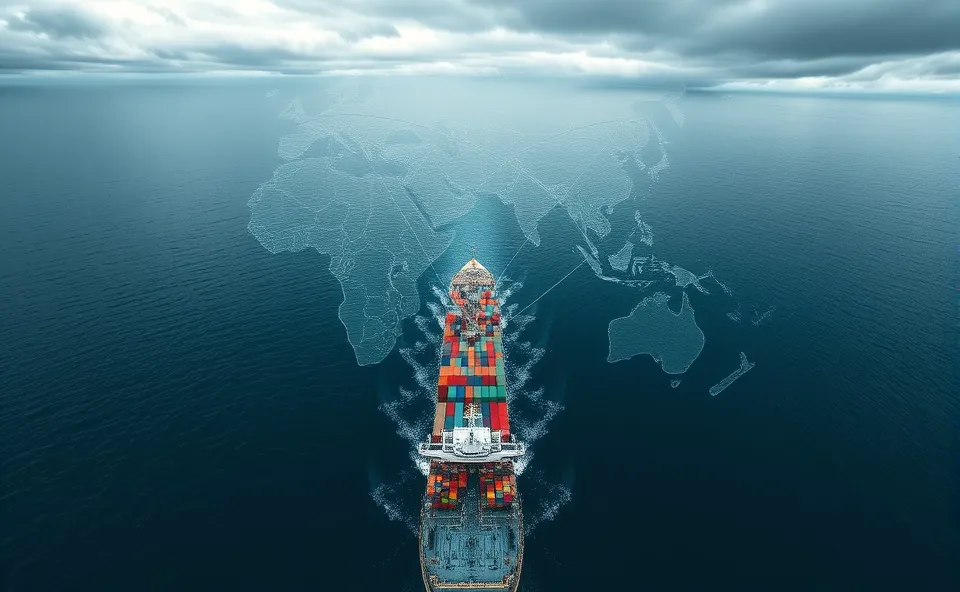
A Major Trade Route Faces a Real Stress Test
Okay, so imagine this massive new shipping highway connecting India, the Middle East, and Europe, right? It’s called the India Middle East Europe Corridor, or IMEC for short. It’s designed to be a super efficient way to move goods. Well, this brand new IMEC is suddenly finding itself in a rather tricky spot. Geopolitical tensions, particularly around the Strait of Hormuz, are really ratcheting up. This is the first major, real world test for IMEC, and it’s highlighting just how important it is to have reliable trade routes in today’s world.
Why Everyone’s Talking About IMEC and Hormuz Right Now
The reason this is suddenly a hot topic, and why you’re probably hearing a lot about the IMEC and the Hormuz Strait, is because of recent events. There’s been a significant increase in conflicts and threats in and around the Persian Gulf, especially impacting shipping lanes that pass through the Strait of Hormuz. This vital chokepoint is like a narrow gateway for a huge amount of the world’s oil and trade. When things get tense there, ships get rerouted, costs go up, and everyone’s supply chain gets a jolt. This is directly challenging the very idea of IMEC as a stable alternative and forcing a closer look at its potential.
Building a Better Path for Trade
To really get why this is a big deal, we need a little background. For years, the main way to move goods between these regions has relied on long sea voyages, often through narrow waterways like the Suez Canal or the Strait of Hormuz. These routes are efficient when everything is calm, but they’re also vulnerable. Think about it – one incident, one disruption, and suddenly you have a global trade headache. The IMEC was conceptualized as a way to spread that risk, by creating a network of rail, road, and sea links that bypass some of these traditional choke points. It’s about building more resilience into global trade, ensuring that if one path gets blocked, others can still function. This idea has been in the works for a while, gaining momentum as countries looked for more secure and diverse supply chain options.
What This Means for Your Stuff and the Economy
So, what’s the actual impact of all this geopolitical tension on IMEC? Well, it’s huge for global trade and supply chains. When shipping lanes like the Strait of Hormuz become unstable, it means longer journeys, higher insurance costs for ships, and delays in getting goods where they need to go. This can translate to higher prices for consumers and disruptions for businesses that rely on timely deliveries. For IMEC, this situation is actually a proving ground. If it can offer a viable and secure alternative when the traditional routes are threatened, it becomes incredibly valuable. It shows the world that these alternative routes are not just theoretical projects, but essential infrastructure for maintaining economic stability. Think about it – if ships can’t safely pass through Hormuz, but can still utilize parts of the IMEC network to move goods, the corridor proves its worth in maintaining a degree of resilience in global trade. It’s a test of its ability to provide that much needed flexibility and security for maritime security.
What’s Next for This Ambitious Corridor?
Looking ahead, the escalating tensions in the Strait of Hormuz will undoubtedly accelerate the development and utilization of alternative routes like IMEC. Countries involved will likely pour more resources into making the India Middle East Europe Corridor fully operational and secure. This means investing in the infrastructure, enhancing maritime security measures along the route, and forging stronger diplomatic ties to ensure its smooth functioning. The key will be demonstrating its reliability and cost effectiveness compared to traditional, more vulnerable shipping lanes. As geopolitical tensions persist, the strategic importance of IMEC will only grow, potentially reshaping global trade patterns and fostering greater economic cooperation between the participating nations. It’s not just about building a new trade route; it’s about building a more robust and adaptable global economy.
Your Questions About IMEC and Global Trade Answered
What is the primary goal of the India Middle East Europe Corridor IMEC?
The main goal of the India Middle East Europe Corridor IMEC is to create a more resilient and efficient trade route connecting India, the Middle East, and Europe. It aims to diversify supply chains and reduce reliance on traditional shipping lanes, especially in times of geopolitical tension.
How do tensions in the Hormuz Strait affect the IMEC?
Tensions in the Hormuz Strait, a critical global shipping lane, directly test the viability of the IMEC. If traditional routes become unsafe or disrupted, the IMEC offers a potential alternative trade route, highlighting its importance for global trade resilience and maritime security.
What kind of infrastructure is involved in the IMEC?
The India Middle East Europe Corridor IMEC involves a combination of transportation networks. This includes new and upgraded rail lines, road networks, and potentially port facilities that work together to create a seamless flow of goods between India, the Middle East, and Europe.
Could the IMEC help reduce the economic impact of supply chain disruptions?
Yes, by offering alternative routes and diversifying shipping lanes, the IMEC has the potential to significantly reduce the economic impact of supply chain disruptions. It provides businesses with more options, helping to mitigate delays and cost increases that often occur during crises impacting traditional trade routes.
What are the long-term implications of the IMEC for global trade?
The long-term implications of the IMEC for global trade are substantial. It could lead to a more interconnected and secure trading system, foster stronger economic partnerships between participating countries, and establish new benchmarks for trade route resilience in the face of evolving geopolitical challenges.











