

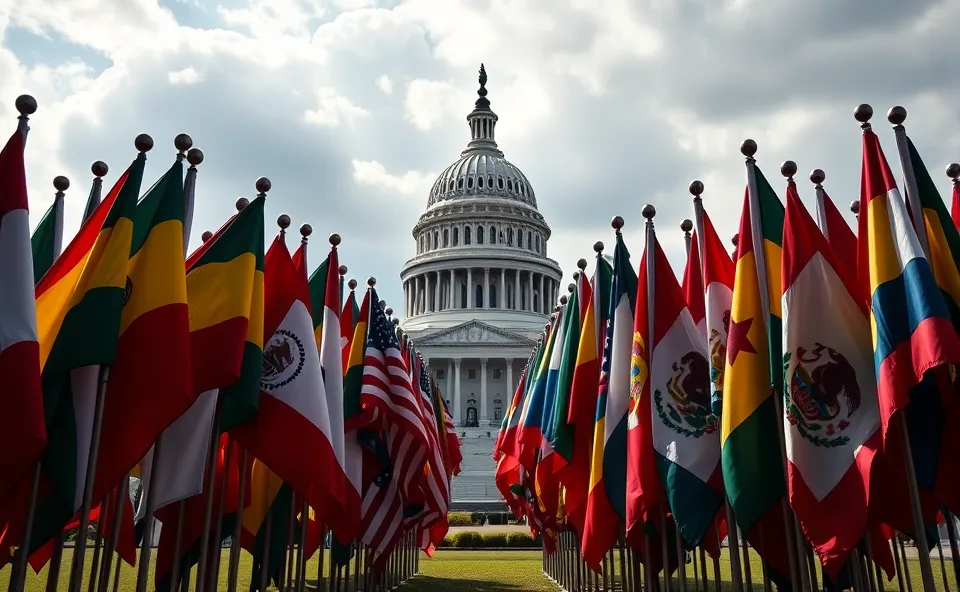
A Glimpse of Trouble Brewing South of the Border
Imagine this: the President of Colombia, a significant player in South America, is issuing a strong warning to the United States. He’s saying, basically, that if US policy towards Latin America doesn’t change, we could see a real stir, maybe even a rebellion, across the region. It’s a pretty serious statement, and it’s got a lot of people talking about the delicate balance of power and the economic realities affecting millions.
Why This Warning Is Echoing Now
So, why is this making waves right this second? It’s all about the current geopolitical climate. Leaders like Colombia’s President Petro are feeling the pressure from their populations who are seeing the effects of long standing US policies. They believe these policies, whether intentionally or not, are contributing to economic instability and hindering progress in South America. This isn’t a sudden outburst; it’s a culmination of ongoing frustrations that are now being voiced at the highest levels, making it a hot topic for anyone tracking international relations and business trends.
A Long Road of Relations and Policies
To really get what President Petro is saying, we need to look back a bit. For decades, the United States has had a significant influence, both politically and economically, across Latin America. This influence has often been framed around things like promoting democracy, fighting drug trafficking, and encouraging trade. However, for many in the region, the outcomes haven’t always lived up to the promises. We’ve seen periods of economic boom and bust, and sometimes policies that were meant to help have inadvertently caused harm or created dependencies.
Think about it like this: imagine a parent trying to guide their adult child. Initially, the guidance might be necessary. But as the child grows and develops their own needs and perspective, the old ways of doing things might start to feel controlling or out of touch. President Petro’s message suggests that many Latin American nations feel they are at that stage. They want more autonomy, different economic partnerships, and policies that are tailored to their unique challenges, rather than a one-size-fits-all approach from Washington.
The historical context also includes different approaches to trade agreements, aid programs, and even interventions that have shaped the economic landscape of South America. These actions, over time, have built a complex web of dependency and resentment in some quarters, leading to the kind of warning we’re hearing today. It’s a signal that the old playbook might not be working anymore, and a shift in US policy is desperately needed.
What This Means for Us All
Okay, so what’s the big deal for us, whether we’re running a business, working in tech, or just trying to understand the world? This isn’t just political noise. President Petro’s warning points to potential economic instability in Latin America, which is a massive market and a key supplier of resources and goods for the rest of the world. If a widespread Latin American rebellion, even a metaphorical one of economic and political defiance, were to gain momentum, it could shake up global markets.
For businesses, this could mean disruptions to supply chains. Many industries rely on raw materials or manufactured goods from South America. Uncertainty and political turmoil could lead to price hikes, shortages, or the need to find alternative sourcing, which is always a costly and complex process. Technology companies, for instance, might see shifts in consumer demand or new opportunities emerge as countries pursue different development paths.
On a geopolitical level, it signals a potential shift in global alliances and trade relationships. If Latin American nations start to look elsewhere for economic partnerships or forge stronger regional blocs, it could alter the influence of major global powers. This kind of shift can create both risks and opportunities. It’s a reminder that the world is constantly changing, and staying informed about these shifts is crucial for making smart decisions in any sector.
Think about investment. Investors often shy away from regions experiencing significant political or economic uncertainty. So, a perceived threat of Latin American rebellion could lead to a slowdown in foreign investment, impacting job creation and economic growth in the region. On the flip side, countries that manage this transition effectively could see new forms of growth and innovation.
Looking Ahead: What’s Next on the Horizon?
So, where does this leave us? President Petro’s warning isn’t a crystal ball, but it does point to a few likely directions. The immediate future will likely involve a lot of diplomatic back-and-forth. The US government will have to decide how seriously to take this warning and whether to adjust its approach to Latin America. We might see increased dialogue, perhaps new proposals for economic cooperation, or a period of increased tension if the current US policy remains unchanged.
For Latin American countries, this could be a moment of increased regional unity. If they feel their concerns are being ignored, they might work more closely together to present a stronger, unified voice to the international community and to chart their own economic courses. This could involve strengthening regional trade agreements, developing new infrastructure projects collectively, or seeking investment from non-traditional partners.
The role of technology in this evolving landscape is also worth noting. As countries seek economic independence, they might invest more in developing their own technological capabilities, fostering innovation in areas like renewable energy, digital infrastructure, and sustainable agriculture. This could lead to new tech hubs emerging in South America, offering different opportunities for collaboration and competition.
Ultimately, the outlook hinges on whether there’s a genuine willingness from all sides to engage in open and honest dialogue, moving beyond old political frameworks to address the economic realities and aspirations of the people in Latin America. A recalibration of US policy could lead to a more stable and prosperous region, while continued resistance to change might indeed fuel the kind of unrest that President Petro is warning about.
Common Questions About Latin American Policy Shifts
What is the core of President Petro’s warning about a potential Latin American rebellion?
President Petro’s warning centers on the idea that if US policy towards Latin America isn’t reconsidered, it could lead to widespread discontent and potentially a significant pushback, or rebellion, from countries across the region seeking more autonomy and better economic outcomes.
How does US policy currently affect economic instability in South America?
US policy, historically and currently, can influence economic stability in South America through trade agreements, aid programs, and its stance on international financial institutions. Critics, like President Petro, argue that certain aspects of these policies can create economic dependencies or fail to address the specific needs of South American economies, contributing to instability.
What are the geopolitical implications of a Latin American rebellion?
A Latin American rebellion, in terms of geopolitical implications, could signify a major shift in global power dynamics. It might lead to a decrease in US influence in the region, strengthen regional blocs like UNASUR or Mercosur, and potentially open doors for other global powers to increase their economic and political ties with South America.
How could a Latin American rebellion impact global business relations?
If a Latin American rebellion were to occur, it could significantly impact global business relations by disrupting supply chains, altering trade routes, and creating uncertainty for foreign investment. Businesses would need to adapt to new economic realities and potentially seek alternative markets and sourcing. This could also spur new business opportunities for companies that align with the region’s evolving economic agenda.
What kind of policy changes is Colombia and other Latin American nations hoping for from the US?
Colombia and other Latin American nations are largely hoping for policy changes that emphasize greater economic sovereignty, fairer trade practices, and a focus on sustainable development rather than solely on issues like drug enforcement or promoting specific US economic interests. They desire partnerships based on mutual respect and tailored solutions for their unique challenges, moving away from what they perceive as outdated Gus policies.











