

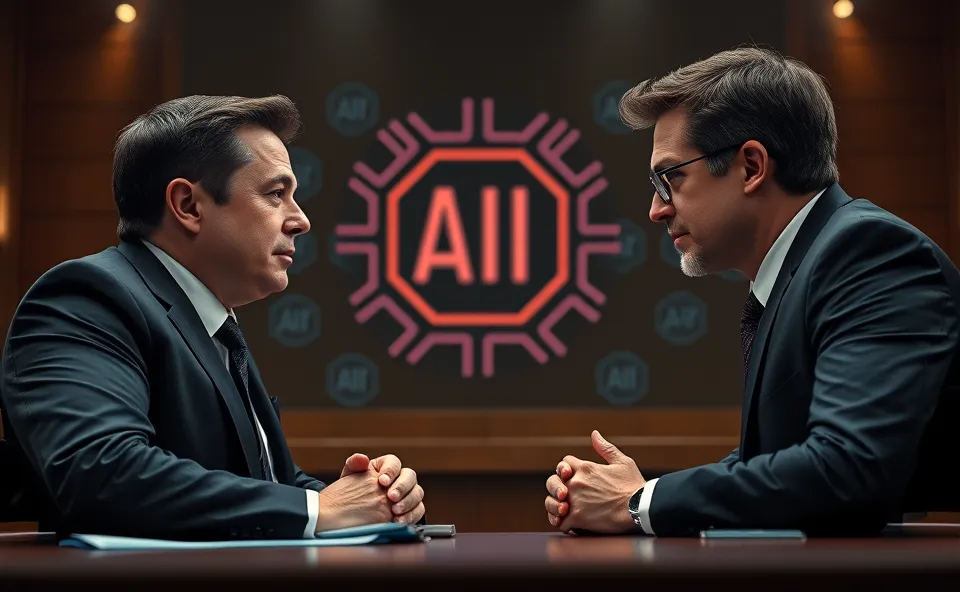
The AI Giant’s Uprising A Legal Battle Brews
It’s not every day that tech titans go head to head in a courtroom, but that’s exactly what’s brewing with the upcoming legal showdown between Elon Musk and Sam Altman, the chief executive of OpenAI. This isn’t just a simple disagreement; it’s a deep dive into the very soul of one of the most influential artificial intelligence companies in the world. Essentially, Musk is suing OpenAI, claiming it has strayed from its original mission and is now prioritizing profit over the open development of AI for the benefit of humanity. Altman and OpenAI see things very differently, of course. This legal entanglement shines a spotlight on the intense dynamics and the often-turbulent journey of pioneering advanced AI.
Why This AI Drama Is Hot Right Now
The reason this story is capturing so much attention today is multifaceted. OpenAI has been a constant headline generator, pushing the boundaries of what artificial intelligence can do with tools like ChatGPT. As AI becomes more integrated into our daily lives and businesses, its future direction becomes a critical concern for everyone. The legal action from Elon Musk, a prominent figure in the tech world himself, brings the simmering tensions and underlying disputes within OpenAI to the forefront. It’s a conversation starter about the ethics, control, and ultimate purpose of powerful AI technology, making it a trending topic for anyone following the tech industry.
From Open Ideals to Closed Doors The Genesis of the Dispute
To truly understand the current OpenAI power struggle, we need to rewind a bit. OpenAI was founded back in 2015 with a grand vision. Elon Musk was one of its initial backers and a key figure in its early days. The idea was to create a research lab that would develop artificial intelligence safely and openly, ensuring that its benefits were shared widely and not concentrated in the hands of a few. It was meant to be a non profit, focused on research and public good. However, as the company started to make significant breakthroughs and the potential for commercialization became clear, shifts began to occur.
A major turning point was the formation of a capped profit subsidiary in 2019. This allowed OpenAI to attract much needed investment, but it also introduced a profit motive into an organization originally built on different principles. Sam Altman took a leading role, steering the company towards rapid development and commercial application. Elon Musk, who had stepped away from day to day involvement by then, began to voice his concerns that the company was moving away from its founding ideals. He felt that the original commitment to openness and safety was being compromised by commercial pressures and a desire for market dominance. This evolution, from an idealistic non profit to a commercial powerhouse, is the bedrock of the current conflict. The Musk lawsuit against Sam Altman and OpenAI highlights this perceived deviation from the original pact.
The Ripple Effects of This AI Leadership Clash
The implications of this OpenAI power struggle are far reaching, touching users, businesses, and the entire tech industry. For users, it raises questions about the accessibility and control of increasingly powerful AI. If OpenAI’s direction shifts significantly, it could influence how these tools are developed and deployed, potentially affecting the services we all rely on. For businesses, it brings uncertainty. Companies that are investing in or building on OpenAI’s technology will be watching closely, concerned about the stability of their partnerships and the future roadmap of the AI leader. Will the core principles of AI development remain intact? Will it remain accessible or become an exclusive resource?
On a broader level, this dispute is a significant event for the tech industry, particularly the artificial intelligence sector. It forces a re examination of corporate governance and ethical considerations in AI development. How should these powerful technologies be managed? Who should have control? What are the responsibilities of those at the helm? The outcome of the Musk lawsuit could set important precedents for the future of AI research and deployment, influencing how other AI companies operate and how society approaches the governance of artificial intelligence.
Peering into the AI Crystal Ball What Comes Next?
Predicting the exact outcome of a legal battle is always tricky, but we can consider some logical possibilities for the future of OpenAI and this power struggle. One scenario is that the lawsuit leads to a settlement. This could involve OpenAI making certain concessions regarding its practices or governance structure, perhaps recommitting to some of its original principles in a public way. Another possibility is that the case goes to trial, and a court makes a ruling. Such a ruling could have significant implications for the interpretation of founding documents and the responsibilities of leadership in technology companies.
Regardless of the legal outcome, the ongoing public debate fueled by this event is likely to have a lasting impact. It will continue to push conversations around AI ethics, transparency, and the balance between innovation and responsibility. The focus on Sam Altman’s leadership and Elon Musk’s accusations highlights the critical need for robust discussions about the future of artificial intelligence and the governance models that will best serve humanity as AI capabilities continue to grow.
Frequently Asked Questions About OpenAI’s Future
What is the core of the legal dispute between Elon Musk and OpenAI?
The central issue in the Musk lawsuit against OpenAI and Sam Altman is whether OpenAI has abandoned its original mission of benefiting humanity by developing AI openly and is instead pursuing commercial goals that benefit a select few.
Why is Elon Musk taking legal action against OpenAI now?
Elon Musk has expressed growing concerns for some time about OpenAI’s direction. The current legal action likely stems from his belief that the company’s recent actions and strategic shifts have solidified his concerns about its deviation from its founding principles.
What was OpenAI’s original mission?
OpenAI was initially founded as a non profit research company with the mission to ensure that artificial intelligence benefits all of humanity. This included a commitment to open development and safety research.
How might this leadership dispute affect the development of AI?
This power struggle could influence the future trajectory of AI development by bringing greater scrutiny to corporate governance and ethical considerations within AI companies. It might also lead to changes in OpenAI’s strategic direction or its relationship with its partners and the public.
Is Sam Altman still leading OpenAI through this conflict?
Yes, Sam Altman remains the CEO of OpenAI and is actively involved in defending the company against the claims made in Elon Musk’s lawsuit. The leadership of OpenAI is a key point of contention in the ongoing dispute.











