

A Messy Clash Over Creativity
Imagine spending years honing a craft, creating a character that becomes a global symbol for stress and chaos, only to find that a company is using your work to build a machine that wants to replace you. That is exactly what is happening right now. An AI startup is facing serious backlash after being accused of AI art theft, and the person leading the charge is the This is Fine creator.
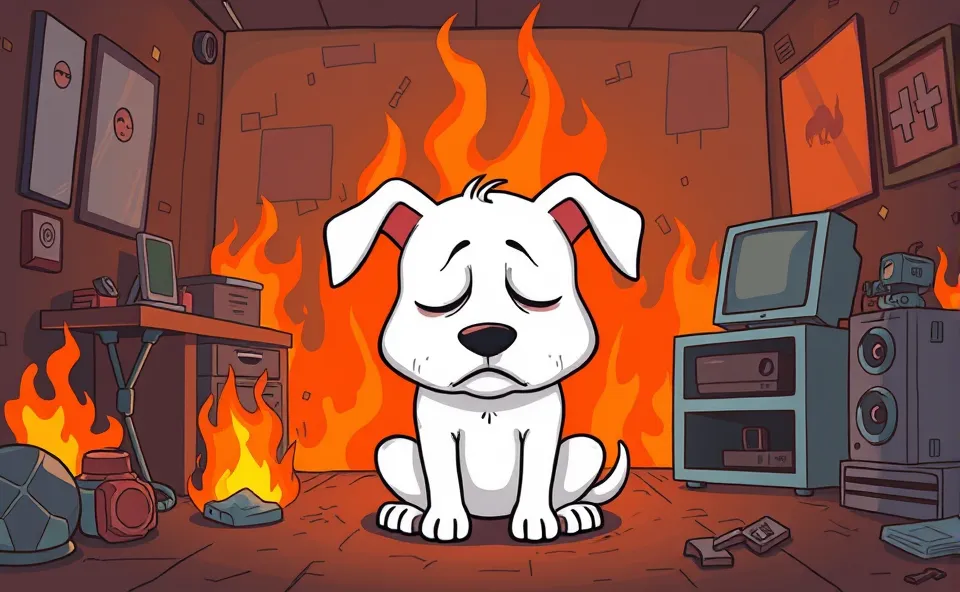
For those who might have missed it, the This is Fine meme is that famous comic where a dog sits in a room full of flames, sipping coffee and pretending everything is okay. It is the ultimate image for modern anxiety. Now, the artist behind that image is calling out an AI company for using his work without permission. But this is not just a simple case of someone using a picture on a blog. This is about how these new tools are built and who they are meant to serve.
The startup in question is not just using art to train its models. They are actively marketing their service to businesses with a very blunt message: stop hiring humans. They are telling companies that they can ditch professional artists and designers in favor of their generative AI tools. This combination of using stolen work to build a product that replaces the original creators has created a storm of anger across the internet.
Why This Story Is Lighting Up the Internet
There are a lot of stories about AI and copyright, so why is this one suddenly everywhere? The reason is the sheer irony of the situation. Using a meme about everything burning down to fuel a tool that is effectively burning down the livelihoods of artists is a level of irony that the internet cannot ignore. It feels like a real life version of the comic.
People are also reacting to the tone of the AI startup. Usually, AI companies try to sound helpful. They say they want to augment human creativity or provide a new set of tools for artists. This company did the opposite. By telling businesses to stop hiring humans, they stripped away the polite corporate mask. They admitted that their goal is not to help artists, but to replace them.
This has turned a legal argument about copyright infringement into a moral argument about AI ethics. It is no longer just about who owns a specific piece of meme art. It is about the value of human effort. When a company openly admits they want to eliminate human jobs using the very work those humans created, it touches a nerve for everyone, not just the artists.
The Hidden Engine Behind Generative AI
To understand why this is happening, we have to look at how generative AI actually works. These systems do not create art out of thin air. They are trained on massive datasets containing billions of images and texts scraped from the internet. This includes everything from classical paintings to digital art and, yes, viral memes.
The process looks like this:
- Data Scraping: AI companies use bots to gather as much data as possible from the web.
- Pattern Recognition: The AI analyzes these images to learn what a dog, a fire, or a specific artist’s style looks like.
- Generation: When a user types a prompt, the AI combines these learned patterns to create a new image.
The big problem is that most of this data was taken without the consent of the original creators. For a long time, AI companies argued that this was fair use because the AI was learning, not copying. However, artists argue that this is a massive violation of intellectual property. They believe that their work is being used to build a commercial product that competes directly against them.
The This is Fine creator represents a larger group of human artists who feel betrayed. They spent their lives creating the culture that these AI companies are now harvesting for profit. When an AI startup uses this data to tell a business to fire a human, it feels less like innovation and more like theft.
What This Means for the People Who Actually Draw
The impact of this conflict goes far beyond one meme. It signals a dangerous shift in how the business world views creative labor. If companies start believing the promise to stop hiring humans, we could see a massive decline in professional creative opportunities.
Here is how this impact ripples through the industry:
- Devaluation of Skill: When AI can produce a decent image in seconds, the perceived value of a human artist who takes days to perfect a piece drops in the eyes of some clients.
- Loss of Income: Entry level roles for illustrators and designers are already disappearing. If AI companies successfully push the stop hiring humans narrative, the ladder for new artists disappears.
- Legal Uncertainty: Because copyright laws were written long before generative AI, there is a gray area. This uncertainty leaves artists vulnerable while AI companies move fast and break things.
Beyond the money, there is a psychological impact. Art is a form of human communication. When we see a piece of art, we are connecting with another person’s perspective and emotion. If the market is flooded with AI generated content, we risk losing that human connection. We move from a world of expression to a world of optimization.
Where We Go From Here
So, what happens next? We are likely heading toward a major showdown in the courts. The case involving the This is Fine creator and this AI startup could be a catalyst for stricter laws. We will probably see a push for three main changes in how AI companies operate.
First, there will be a demand for opt in systems. Instead of taking everything and asking for forgiveness later, companies may be forced to ask artists for permission before using their work in a training set. This would give power back to the creators.
Second, we might see the rise of a royalty model. If an AI uses a specific artist’s style or work to generate an image, that artist should get a small payment. This would turn AI from a replacement tool into a partnership tool.
Third, there will likely be a growing market for human made art. Just as people still pay a premium for handmade furniture or organic food, there will be a luxury market for art created by actual people. We may see certification labels that prove a piece of work was created without the use of generative AI.
In the end, the tension between AI startup goals and human creativity will not disappear. But the backlash against the stop hiring humans mentality shows that people still value the human touch. The fight for intellectual property rights is just beginning.
Common Questions About AI and Art
What exactly is AI art theft?
AI art theft refers to the practice of AI companies using copyrighted images to train their models without the permission of, or payment to, the original artists. This allows the AI to mimic styles and create new works based on stolen intellectual property.
Why is the This is Fine creator suing or complaining?
The This is Fine creator is speaking out because his work was used to train an AI without his consent. He is especially concerned that the company is using the technology to encourage businesses to replace human artists entirely.
Can generative AI really replace human artists?
While generative AI can produce images quickly, it lacks true consciousness, intent, and emotional depth. It can mimic a style, but it cannot innovate or tell a human story from experience. However, it can replace certain repetitive or low budget design tasks.
Is copyright infringement the only issue here?
No, there is a huge debate about AI ethics. The main issue is whether it is moral to build a profitable business using the unpaid labor of millions of artists, especially when that business aims to put those same artists out of work.
How can human artists protect their work from AI companies?
Some artists are using tools that a a d a p t their images to confuse AI training bots. Others are pushing for new laws regarding intellectual property and using platforms that explicitly forbid scraping for AI training.











