

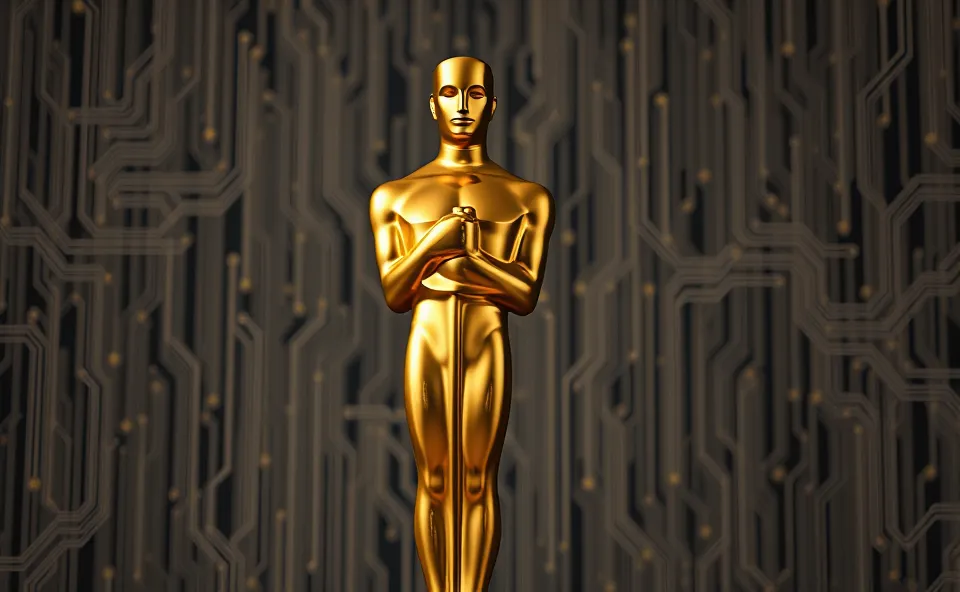
The Academy Draws a Line in the Sand
The world of cinema is currently facing a massive identity crisis. For decades, the Oscars have been the gold standard for human achievement in storytelling and performance. But as artificial intelligence begins to write stories and create faces that look exactly like people, the Academy of Motion Picture Arts and Sciences had to make a choice. They decided to step in and clarify one thing: the trophies are for humans.
In a move that has sent ripples through the film industry, the Academy has effectively disqualified AI generated content from being considered for awards. This means if a movie is written entirely by a bot or features AI actors as lead performers, it will not be walking away with a gold statue. The decision is simple but firm. The Academy believes that the heart of cinema is human emotion, and a machine, no matter how smart, cannot truly feel or express that emotion.
This is not just a small tweak to the rulebook. It is a defensive wall built around the concept of artistry. By banning AI scripts from the screenplay categories, the Academy is telling the world that creativity is a human trait. They are protecting the craft of writing and the vulnerability of acting from being replaced by algorithms that simply predict the next likely word or pixel.
Why Everyone is Talking About This Now
You might wonder why this is suddenly a headline. We have had computer generated imagery for years, so why the panic now? The reason is that artificial intelligence has jumped from being a tool to being a creator. A few years ago, AI helped with background colors or cleaning up a shot. Today, we have tools that can generate a full minute of photorealistic video from a single sentence.
People are searching for this movie news because the technology is moving faster than the laws can keep up. We have seen AI generated songs that sound like famous artists and deepfake videos that can trick the average viewer. The fear is that a studio could eventually produce a high quality film using an AI writer and AI performers, spending almost nothing on talent, and then win an Oscar for it.
This creates a weird tension in AI in entertainment. On one hand, the tech is impressive. On the other hand, it feels like a cheat code. The public is curious to see if the most prestigious awards in the world will bend the knee to technology or stand their ground for human artists. The Academy’s decision provides a clear answer, and that clarity is why the conversation is trending across tech and art circles.
The Battle for the Soul of Cinema
To understand why this ban is so important, we have to look at what has been happening behind the scenes in Hollywood. This is not a random decision. It is the direct result of a massive cultural war. Over the last couple of years, we saw historic strikes by writers and actors. These professionals were not just fighting for better pay. They were fighting for their existence.
Writers were terrified that studios would use AI to write a first draft and then hire a human for a cheap fee to just polish it. Actors were worried about digital twins. Imagine a studio scanning your face and voice, then using that data to put you in a movie forever without you ever stepping foot on a set or receiving a fair paycheck. This battle was about ownership and the right to be paid for human labor.
The Academy Awards are now reflecting those industry battles. By updating their screenplay rules and eligibility requirements, they are essentially codifying the victories won during those strikes. They are acknowledging that a script is not just a sequence of words, but a reflection of a human life experience. They are stating that acting awards must go to people who have actually lived, suffered, and felt the emotions they are portraying on screen.
What This Means for the Future of Movies
So, what happens now? This decision has a huge impact on how movies will be made and marketed. First, it creates a clear divide between prestige cinema and content generation. We are likely to see a world where some movies are made for the Oscars and follow strict human guidelines, while other low budget or experimental films embrace AI to the fullest.
For businesses and tech developers, this is a signal. It shows that while AI is great for efficiency, it is not yet respected as a creative peer. For filmmakers, it means that the human element is now a luxury brand. Being able to say a film was written and performed by humans without AI intervention might actually become a selling point for high end cinema.
There are also some tricky gray areas to consider:
- Hybrid Work: What happens if a human writer uses AI to brainstorm ideas but writes every word themselves?
- VFX vs. AI: Where does a digital effect end and an AI actor begin?
- Indie Films: Small filmmakers who cannot afford a huge cast might rely on AI to tell their stories. Will they be permanently locked out of prestige awards?
The impact is a shift in value. The Academy is placing a premium on the struggle of creation. They are saying that the effort, the mistakes, and the human intuition involved in filmmaking are exactly what make a movie worth rewarding.
Where Do We Go From Here
Looking ahead, it is unlikely that the ban will stay this simple. Technology does not stop evolving. We will likely see the Academy struggle to define exactly how much AI is too much. They will have to create a set of standards for AI eligibility that can be audited. How do you prove a script was not written by a bot? They might eventually require a digital paper trail of drafts to prove human authorship.
We might also see the birth of new categories. Just as we have different categories for animated and live action films, there could eventually be a category for AI assisted cinema. This would allow the industry to celebrate the technical brilliance of AI without taking away the spotlight from human artists.
In the long run, AI will probably become as common as the camera or the editing software. The goal for the film industry will be to integrate these tools without losing the essence of storytelling. The Academy’s current ban is a necessary speed bump. It forces us to ask what we actually value in art before the technology makes the choice for us.
Common Questions About AI and the Oscars
Can AI scripts win an Oscar?
No. The current rules are designed to ensure that screenplay awards go to human writers. Content generated by artificial intelligence is not eligible for these categories because the Academy values human creativity and experience.
Will AI actors be allowed in the future?
Currently, the Academy is focusing on human performances for acting awards. While digital effects are allowed, a character created entirely by AI without a human performer’s guidance and emotion will not be eligible for an Oscar.
How does this change the film industry?
It creates a standard for prestige. It encourages studios to keep hiring human writers and actors if they want their films to be recognized by the Academy Awards. It also protects the intellectual property and livelihoods of creative professionals.
What are the new screenplay rules regarding AI?
The rules now emphasize that the work must be a product of human authorship. This means that using AI to generate the bulk of a script would disqualify the film from the writing categories.
Who decided on the AI eligibility rules?
The decision was made by the Academy of Motion Picture Arts and Sciences. Their goal was to preserve the tradition of honoring human achievement in the arts amidst the rapid rise of artificial intelligence.











