

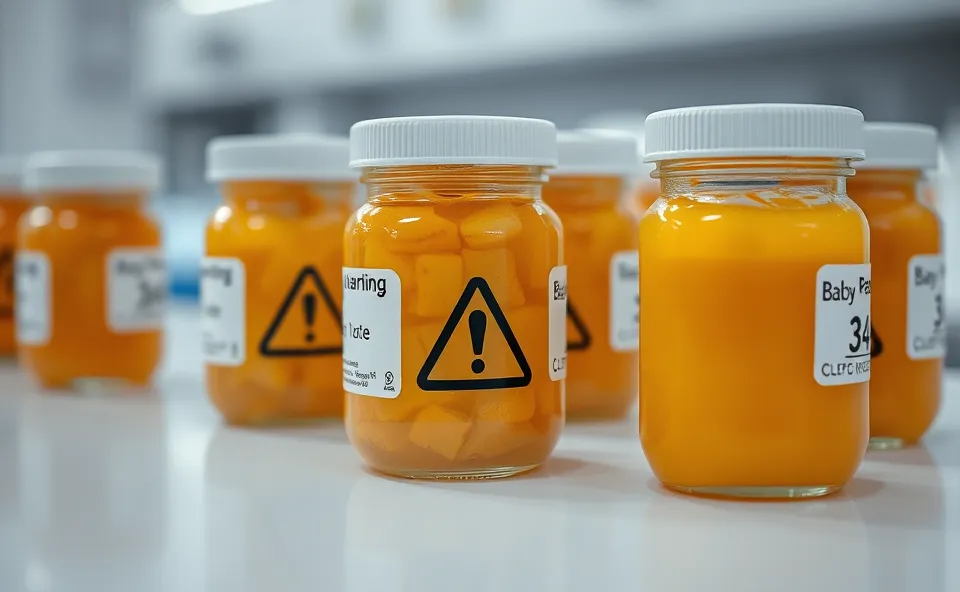
A Chilling Discovery in Our Children’s Food
Imagine the trust we place in the food we give our children. It’s a fundamental promise, an unspoken agreement that what’s in those jars and packets is safe, nourishing, and pure. That trust was deeply shaken across Europe recently, with a discovery so alarming it sent shivers down the spines of parents and authorities alike: rat poison found in baby food jars. It’s a scenario straight out of a nightmare, where the very sustenance meant for our most vulnerable became a source of potential danger.
This wasn’t a simple case of spoilage or an accidental contaminant. This was an intentional act of malice, a deliberate attempt to compromise the safety of food intended for infants. The presence of such a dangerous substance, designed to kill rodents, in something as innocent as baby food, immediately triggered widespread alarm. Imagine a parent, unknowingly reaching for a jar, believing they were offering a wholesome meal, only to later discover the terrifying truth. This incident wasn’t just about a product recall; it was about a profound violation of trust and a direct threat to public health.
The moment the first traces of rat poison were confirmed, a massive effort began to identify the extent of the contamination and, more importantly, to find the person responsible for this heinous act. It’s a story that underscores the vital importance of vigilance in our food supply chains and the relentless pursuit of those who would endanger others.
Why Everyone is Talking About Food Safety Now
You might be wondering why this particular story of food contamination is still making waves, especially with so much else happening in the world. The answer lies at the heart of what matters most to us: the safety and well-being of our children. When news broke about rat poison in baby food, it wasn’t just a headline; it was a personal attack on every parent’s peace of mind.
This isn’t just another recall; it’s a stark reminder of how fragile our systems can be, even those designed to protect us. The discovery and subsequent investigation highlighted a chilling vulnerability, prompting families everywhere to scrutinize labels, question origins, and demand higher assurances of consumer safety. The fear that something so innocent could be deliberately tainted resonated deeply, creating an ongoing discussion about responsibility, security, and the measures in place to prevent such atrocities.
Furthermore, the recent developments in the case, particularly the arrest of a suspect, brought the story back into the spotlight. It offers a glimmer of resolution, a sign that justice is being pursued, but it also reignites the initial horror. This isn’t a fleeting trend; it’s a fundamental concern about the integrity of our food supply and the enduring need for constant vigilance. When the most basic act of feeding a child becomes fraught with fear, it demands our continued attention and collective effort to ensure such events are never repeated.
Tracing the Threads of a Criminal Investigation
The initial discovery of rat poison in baby food jars was, understandably, met with immediate and forceful action across Europe. This wasn’t something that could be ignored or downplayed. Authorities and food safety organizations swiftly launched a comprehensive public health alert, warning parents and retailers to check their products and pull any potentially affected items from shelves. The scale of the threat meant rapid communication was crucial to prevent further harm.
This quickly escalated into a full-blown criminal investigation. Police forces, collaborating across borders, began piecing together clues. It was a complex and challenging task, involving forensic analysis of the contaminated jars, tracking distribution networks, and analyzing intelligence. The goal was clear: identify who was behind this malicious act of product tampering and ensure they faced justice. Detectives worked tirelessly, following leads, interviewing potential witnesses, and sifting through vast amounts of data to find the needle in the haystack.
The breakthrough came after an intense period of investigation, culminating in the arrest of a suspect apprehended in connection with the contamination. This development marked a significant turning point, bringing a measure of relief and a clearer path towards understanding the motive behind such a horrifying crime. The investigation involved multiple agencies and showcased the critical importance of international cooperation in safeguarding public health against deliberate acts of harm.
The Wider Ripple of Product Tampering and Consumer Trust
The discovery of rat poison in baby food across Europe sends a powerful and unsettling message, creating ripples that extend far beyond the immediate scare. For consumers, especially parents, it’s a profound breach of trust. When you pick up a jar of infant formula or baby food, you inherently trust that it’s safe. This incident shatters that confidence, leading to increased anxiety and a heightened sense of vigilance. Parents are now more likely to:
- Double-check packaging for any signs of tampering.
- Scrutinize product labels and origins more closely.
- Seek out brands with explicit and verifiable safety assurances.
This creates an ongoing conversation about consumer safety. It prompts us to ask: What more can be done to protect our food? How can we be certain that what we feed our families is truly safe?
For businesses, particularly those in the food and beverage industry, the impact is equally significant. Brands associated with baby food and infant formula face immense pressure to reassure their customers. This incident highlights the critical need for:
- Enhanced security measures throughout their supply chains, from production to distribution.
- More rigorous quality control and testing protocols.
- Transparent communication about their safety processes.
The financial costs associated with such a scare can be staggering, encompassing product recalls, investigations, and the long-term effort to rebuild damaged reputations. It also puts a spotlight on broader European food safety standards, prompting a review of existing regulations and potentially leading to the implementation of even stricter guidelines to prevent future acts of product tampering.
Ultimately, this event underscores the fragile nature of trust in the marketplace. It’s a reminder that businesses must not only produce quality products but also tirelessly protect their integrity against any and all threats, ensuring consumer confidence remains intact.
Looking Ahead: Stronger Safeguards for Our Little Ones
As the legal process unfolds for the suspect apprehended in the baby food contamination case, the focus for authorities and the food industry is firmly on the future. The incident involving rat poison has forced a serious re-evaluation of existing protocols and has paved the way for stronger safeguards across the board. While no system can ever be 100% foolproof against determined malicious acts, steps are being taken to minimize future risks and rebuild shattered trust.
One likely outcome is an increase in security measures at every stage of the food production and distribution process. This might include more sophisticated tamper-evident packaging, enhanced surveillance in manufacturing facilities, and stricter controls on who has access to production lines. The goal is to make it significantly harder for any individual to introduce contaminants, whether it’s rat poison or any other harmful substance.
We can also expect continued strengthening of cross-border collaboration among European nations regarding food contamination detection and prevention. Incidents like these highlight that threats to public health do not respect national boundaries, necessitating a unified and proactive approach to European food safety. This means more coordinated intelligence sharing, faster alert systems, and perhaps even harmonized standards for ingredient sourcing and product integrity checks across the continent.
For consumers, this hopefully translates into greater peace of mind. While the memory of this specific scare will undoubtedly linger, the industry’s response aims to reinforce the message that the safety of our food, especially for infants, remains the absolute highest priority. The journey to fully restore public trust will be long, but the commitment to ensuring our children’s food is safe and pure is unwavering.
Your Questions Answered About This Baby Food Scare
What exactly was found in the baby food jars?
Authorities confirmed the presence of rat poison in several jars of baby food. This discovery immediately triggered a wide-ranging public health alert due to the extreme danger this substance poses to infants.
How can I be sure my baby’s food is safe after this scare?
While authorities and manufacturers have strengthened security, it’s always wise to check packaging for any signs of product tampering before opening. Look for broken seals, unusual labels, or anything that seems out of place. Trustworthy brands are also proactively communicating about their enhanced consumer safety measures.
What will happen to the suspect apprehended in connection with this case?
The individual who was arrested is currently undergoing legal proceedings. A criminal investigation of this magnitude involves a thorough legal process, and the suspect will face charges related to the deliberate contamination of food products, with potential severe penalties.
Are European food safety standards changing because of this incident?
This incident has indeed prompted a review and discussion about existing European food safety standards. While already robust, there is a strong emphasis on implementing even stricter security measures, particularly against intentional food contamination and tampering, to prevent future occurrences.
Were specific brands of infant formula or baby food affected by the initial alert?
While the initial alerts were widespread across Europe, specific details about affected brands or types of infant formula or baby food were disseminated through official channels during the height of the scare. These specific products would have been removed from shelves promptly based on the public health alert.











