

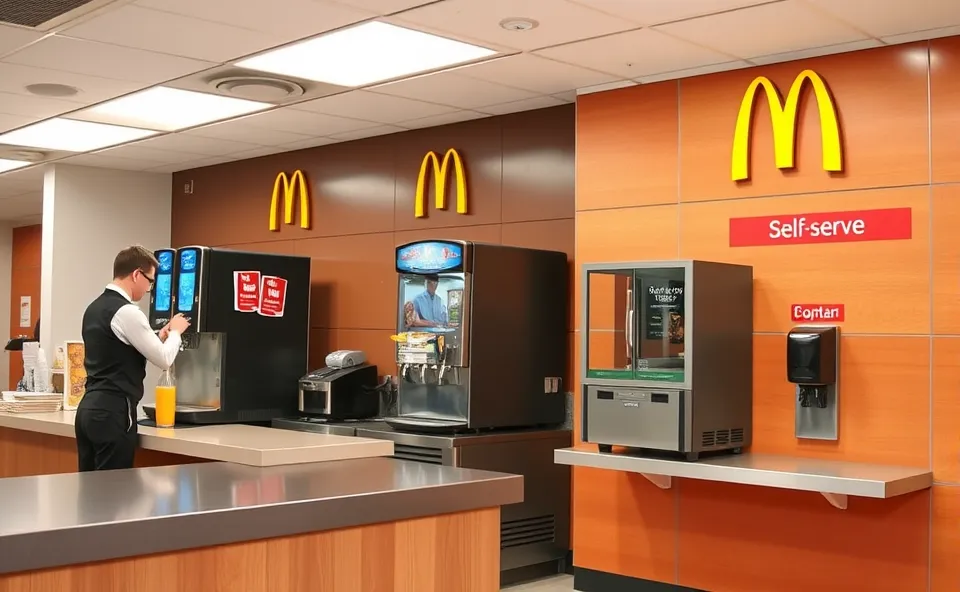
Saying Goodbye to Self-Serve: What’s Happening with McDonald’s Soda Fountains?
If you’re a regular visitor to McDonald’s, you might have noticed a subtle but significant change brewing in some locations, and it’s something that’s soon to become a nationwide standard. For decades, a trip to the Golden Arches often involved a stop at the familiar self-serve soda fountain, a beloved in-store feature where you could fill your cup just the way you liked it. That era is drawing to a close. McDonald’s is making a big shift, moving all drink preparation, including those iconic sodas, behind the counter.
This isn’t just a minor tweak; it’s a strategic move as part of McDonald’s broader restaurant modernization efforts. Imagine walking up to the counter or using a kiosk, ordering your meal, and your drink is handed to you, already prepared, much like it is in many other fast food establishments today. The days of grabbing an empty cup and filling it yourself are being phased out. This change impacts a classic part of the customer experience at McDonald’s and marks a new chapter in their operational approach to beverage service.
This initiative is rolling out across the country, aiming for completion by 2032. That might sound like a long time, but given the sheer number of McDonald’s restaurants, it’s a substantial undertaking. It reflects a shift in how the company views efficiency, hygiene, and overall customer interaction within their updated restaurant model. For many, the self-serve soda fountain was an ingrained part of the fast food ritual, offering a sense of control and even a bit of nostalgia. Its removal signals a significant evolution in how one of the world’s largest fast food chains operates.
Why Everyone’s Buzzing About McDonald’s Soda Fountains Right Now
You might be wondering why this particular topic, the removal of McDonald’s self-serve soda machines, is generating so much discussion and curiosity right now. It’s not a sudden, overnight change; it’s a gradual rollout. However, as more and more individual stores implement the new system, people are encountering it firsthand. This often leads to a moment of surprise, a quick social media post, or a conversation with friends. Suddenly, a change that was quietly in the works becomes a hot topic online and offline.
The conversation isn’t just about convenience or habit; it touches on several aspects that resonate with consumers and industry watchers alike. For many, the self-serve option was a small but significant perk. It allowed for custom ice-to-soda ratios, the occasional refill, or the simple satisfaction of pouring your own drink. Its removal sparks discussions around:
- Nostalgia: The self-serve fountain is a core memory for many McDonald’s patrons.
- Customer Control: People appreciate the ability to customize their drink.
- Efficiency and Speed: Will this make service faster or slower?
- Hygiene Concerns: Is this decision driven by health and cleanliness?
- The Future of Fast Food: What do these menu changes and operational shifts tell us about the broader direction of the fast food industry?
These questions and observations naturally drive interest, making “McDonald’s self-serve soda” a trending search as people seek to understand why this familiar in-store feature is disappearing and what it means for their next visit to the restaurant. It’s a noticeable shift in the everyday experience that prompts reflection on how even the smallest details contribute to our overall perception of a brand.
A Look Back: The Self-Serve Era at McDonald’s
To truly understand the impact of McDonald’s decision, it’s helpful to glance back at why the self-serve soda fountains became such a staple in the first place. For decades, offering customers the ability to fill their own drinks was seen as a win-win. From a business perspective, it decentralized a step in the order fulfillment process, potentially speeding up service at the counter and reducing labor costs for beverage service. Instead of an employee pouring every single drink, customers did a portion of the work themselves.
For the customer, it was about perceived value and convenience. The ability to control the ice level, ensure a fresh pour, and sometimes, for better or worse, even grab an extra refill before leaving, contributed to a sense of freedom and personalized service. It was a common sight in virtually all fast food restaurants, not just McDonald’s, becoming an expected part of the dining experience. These self-serve stations were a cornerstone of the casual, quick-service dining model that defined fast food for generations.
The presence of these large beverage machines, often prominently displayed in the dining area, also contributed to the overall ambiance and efficiency of the restaurant layout. They were part of the practical design, allowing guests to move freely and manage their own drinks while waiting for food or after receiving their order. It was a simple, effective solution that stood the test of time for many years, shaping how millions of people interacted with their fast food meals.
More Than Just a Drink: The Real Impact of This McDonald’s Shift
The removal of McDonald’s self-serve soda fountains might seem like a small detail, but it carries several layers of impact, affecting customers, the company, and potentially the broader fast food landscape. For customers, the most immediate change is the loss of choice and control. No more customizing your ice-to-soda ratio or getting a quick top-up. Your drink will now be prepared by staff and handed to you, just like at many drive-thrus or counter-service restaurants. This could change the perception of value for some, especially those who enjoyed the “free refill” aspect, though McDonald’s hasn’t explicitly promised free refills with the new system.
From McDonald’s perspective, this move is deeply tied to their ongoing restaurant modernization strategy. One significant factor is likely operational efficiency. Preparing drinks behind the counter streamlines the workflow, potentially allowing staff to manage orders more effectively, especially with the rise of digital ordering, delivery services, and kiosk usage. It centralizes control over inventory, portions, and waste.
Another strong consideration is hygiene. In a post-pandemic world, reducing common touchpoints is often seen as a positive step. While self-serve stations are regularly cleaned, eliminating public access to nozzles and ice dispensers can reduce potential germ spread and address customer concerns about cleanliness. This enhancement of the overall customer experience through improved hygiene is a key driver.
The shift also signals a move towards a more premium or controlled beverage service. By having staff prepare drinks, McDonald’s can ensure consistency in presentation and potentially introduce more complex or custom beverage options down the line without the need for customers to navigate intricate machines. It also means tighter control over product costs and potentially reduced instances of unauthorized refills or “sharing” of purchased drinks. This centralized approach to beverage service aligns with many other modern quick-service restaurants that prioritize efficiency and controlled environments.
In essence, this change moves McDonald’s away from a historical operational model and towards one that prioritizes efficiency, hygiene, and a more controlled interaction, reflecting broader trends in the industry.
What’s Next for Fast Food Beverage Service?
The decision by McDonald’s to phase out its self-serve soda fountains by 2032 offers a glimpse into the future of fast food beverage service. While the self-serve model was a hallmark for decades, its decline suggests a shift towards several key trends. We can expect to see an increased emphasis on speed and precision, with drinks prepared by staff who are trained to be efficient and consistent. This could lead to faster order fulfillment times, especially as mobile ordering and drive-thru continue to dominate the customer journey.
Another natural progression will be further innovation in beverage offerings. When drinks are prepared behind the counter, it opens the door for more complex concoctions, customized flavors, and perhaps even premium options that require staff expertise. Think specialty coffees, custom lemonades, or seasonal drinks that go beyond the standard soda fountain fare. This centralization allows for greater control over ingredients and preparation, leading to more diverse and potentially higher-margin beverage choices.
Furthermore, technology will likely play an even larger role. While customers might not be pouring their own drinks, automation in beverage dispensing could become more prevalent for staff. Smart machines that perfectly mix and dispense drinks based on digital orders could further enhance speed and consistency. The focus will shift from customer interaction with the machine to a seamless, quick handoff from staff.
This move is part of a larger trend of restaurant modernization where chains are rethinking every aspect of the in-store feature, from kitchen layouts to dining room flow, to optimize for speed, digital orders, and an evolving customer base. The self-serve fountain, once a symbol of autonomy, is giving way to a more managed, efficient, and potentially more diverse beverage service that aligns with the fast-paced, digitally-driven world of modern fast food.
Your Burning Questions About McDonald’s Beverage Changes
What exactly is happening with McDonald’s self-serve soda?
McDonald’s is gradually removing all self-serve soda fountains from its restaurants nationwide. This means that instead of filling your own cup, staff will prepare and hand you your drink from behind the counter, much like they do with other beverages.
Why is McDonald’s removing soda fountains?
This change is part of McDonald’s broader restaurant modernization efforts. Key reasons likely include improving operational efficiency, enhancing hygiene by reducing shared touchpoints, streamlining workflow, and better controlling product portions and waste.
When will McDonald’s self-serve soda be gone from all locations?
McDonald’s aims to complete this transition across all its U.S. restaurants by 2032. The change is being implemented gradually, so you might see it in some locations sooner than others.
How will this change affect the customer experience at McDonald’s?
Customers will no longer have the ability to self-pour or customize their drink in terms of ice level or specific mix-ins. Drinks will be prepared by staff. While some may miss the control, it could lead to faster service and a more consistent, hygienic beverage service.
Are other fast food chains also ditching self-serve soda?
While McDonald’s is making a significant nationwide move, many fast food and quick-service restaurants have already moved away from self-serve soda fountains, often integrating drink preparation into their main counter service or drive-thru operations. It’s a growing trend in the industry as part of broader operational and customer experience improvements.











