

When Dreams of a Watch Mashup Start Becoming Real
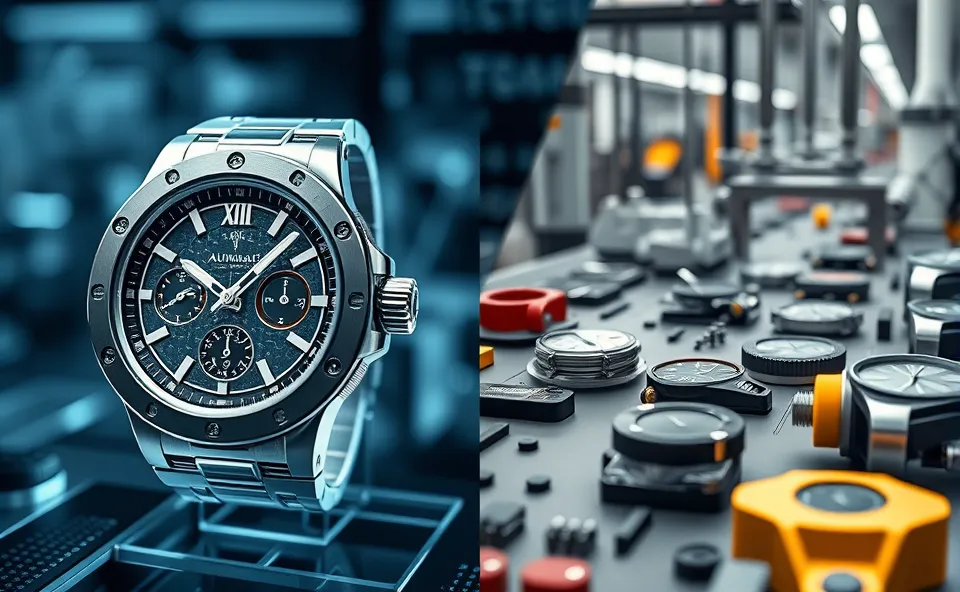
Imagine this: two totally different watch brands, one a titan of haute horlogerie known for its ultra-luxurious Royal Oak, and the other a pioneer of accessible, fun, and famously Swiss timepieces. What if they teamed up? That was the wild idea that sparked a lot of chatter online. People started playing with AI, feeding it prompts like “Audemars Piguet x Swatch collaboration,” and out came these amazing, imaginative watch designs. They were beautiful, a little bit bonkers, and definitely a product of our AI-powered creative moment. But here’s the kicker: what started as a fun, purely digital fantasy is now looking like it might actually lead to something real, with whispers of exploring actual manufacturing, especially in places like China.
Why This “What If” Just Became a Hot Topic
So, why is everyone suddenly talking about an Audemars Piguet Swatch team-up that only existed in the digital realm a few months ago? It boils down to a few things. First, AI is getting incredibly good at generating realistic and even innovative product designs. What used to take teams of designers weeks or months can now be conjured up in minutes. This has captured the public’s imagination, showing us the potential of AI in creative fields. Second, the idea of a luxury watch brand like Audemars Piguet collaborating with a brand as widely recognized and accessible as Swatch is just inherently exciting. It sparks curiosity about what such a fusion would look and feel like. Plus, the sheer visual appeal of these AI-generated watches made them instantly shareable. They looked cool, and that’s a powerful driver for online conversation. The ease with which AI can visualize these concepts has blurred the lines between what’s possible and what’s just a cool idea, pushing conversations towards reality.
A Little History: Worlds Apart, Now Maybe Closer
To really get why this Audemars Piguet Swatch notion is so intriguing, you need to know a bit about the players. Audemars Piguet is one of the oldest independent watchmakers, founded way back in 1875 in Switzerland. They are famous for their iconic Royal Oak, a watch that redefined luxury sports watches with its bold design and exquisite craftsmanship. Think serious prestige, serious price tags. On the other side, you have Swatch. Born in the early 1980s, Swatch basically saved the Swiss watch industry from the quartz crisis. They championed colorful, affordable, and fun plastic watches, making Swiss watchmaking accessible to the masses. They’ve had their own successful collaborations, often with artists or other brands, but usually within a more contemporary and accessible space. The idea of these two brands, representing such different ends of the watch spectrum, coming together was always a bit of a dream, a “what if” scenario that felt unlikely. Until AI started showing us what that “what if” could look like, making the impossible seem just a little bit closer.
What This AI Watch Design Buzz Means for Everyone
This whole Audemars Piguet Swatch AI design exploration has some pretty cool implications. For enthusiasts, it’s a peek behind the curtain of what innovation looks like. It shows that even for established luxury brands, AI can be a powerful tool for brainstorming and concept generation. Imagine the possibilities for AI watch design. It could lead to completely new aesthetics and functionalities that human designers might not have conceived of. For businesses, especially in the watch manufacturing world, this is a fascinating trend. If these AI-generated concepts, particularly for a hypothetical Audemars Piguet Swatch product, are being considered for actual production, it signals a shift. It suggests that companies are more open to exploring AI’s role not just in marketing or customer service, but in the very core of product development. The fact that China is being mentioned for watch manufacturing is also significant. China has become a global powerhouse in production, capable of handling complex manufacturing processes with efficiency and scale. This could mean that if such a collaboration were to happen, it might be more accessible or produced in larger numbers than a typical ultra-luxury piece, thanks to advanced manufacturing capabilities. It also highlights the evolving landscape of global supply chains and production partnerships in the consumer tech and luxury goods sectors. Ultimately, this AI watch design story is about the democratization of creativity and the blurring lines between imagination and tangible products, potentially impacting how future watches are conceived and made.
Looking Ahead: What’s Next for AI in Watches?
So, what could be next after this fascinating exploration of AI-generated Audemars Piguet Swatch designs? It’s not unreasonable to think that other luxury watch brands might start seriously investigating how AI can help them in their design process. If the idea of a luxury watch collaboration fueled by AI concepts gains traction and, crucially, proves viable for manufacturing, it could pave the way for more unconventional pairings or entirely new product lines. We might see AI used not just for aesthetics, but also to optimize movement design, material usage, or even to personalize watches on a mass scale. The exploration of China production for such projects suggests a growing comfort with leveraging global manufacturing expertise for even high-end products, potentially making innovative designs more accessible. We could see more “fantasy watches” transition from digital renders to real-world objects, driven by AI’s ability to visualize and iterate rapidly. The key will be how well these AI-driven designs can be translated into high-quality, desirable products that still carry the soul and craftsmanship expected from brands like Audemars Piguet, or the accessibility that Swatch is known for. It’s an exciting, evolving space to watch, quite literally.
Your Top Questions About Audemars Piguet Swatch and AI
What exactly is the Audemars Piguet Swatch collaboration people are talking about?
It’s not an official collaboration that has been announced. Instead, people have been using AI tools to generate designs imagining what a partnership between the luxury watchmaker Audemars Piguet and the more accessible Swatch brand might look like. These AI-generated watches have sparked widespread interest and discussion about the possibilities.
Is AI watch design a real thing for major brands?
Yes, AI is increasingly being explored for watch design. While the Audemars Piguet Swatch concept is currently a fantasy created by AI, many watch companies are looking at AI as a tool to help generate new ideas, explore different aesthetics, and even optimize design processes. It’s a growing area within the watch industry trends.
Could a luxury watch collaboration like Audemars Piguet Swatch actually happen?
While there’s no official announcement, the buzz around the AI-generated Audemars Piguet Swatch designs shows there’s a consumer appetite for such imaginative pairings. Brands are always looking for innovative ways to engage customers, and unexpected collaborations can be very successful. The exploration of AI designs is making such “fantasy watches” seem more plausible.
What is the role of China in watch manufacturing for these kinds of projects?
China has a highly developed and efficient watch manufacturing sector that can produce a wide range of timepieces, from affordable to complex luxury watches. For potential collaborations or new AI-generated products, China offers the capability for large-scale and precise watch production, which could make innovative designs more accessible.
How does AI-generated products like these impact the watch industry?
AI-generated products, exemplified by the Audemars Piguet Swatch concept, are pushing the boundaries of creativity in the watch industry. They demonstrate the potential for AI to accelerate design, generate novel ideas, and even influence future manufacturing approaches. This trend could lead to more diverse and innovative watches reaching the market, and a greater focus on rapid prototyping and exploration in watch manufacturing.











