

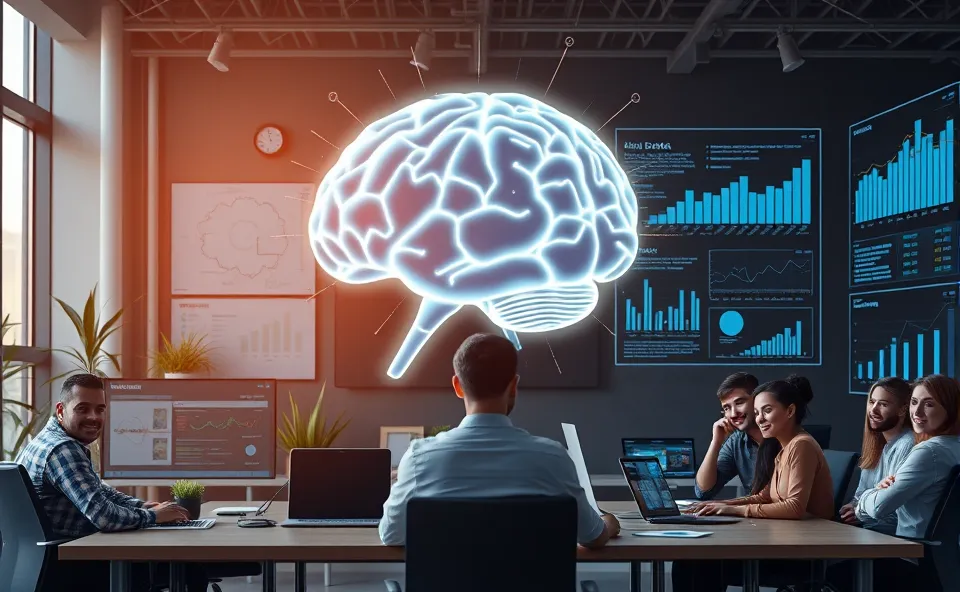
From Fear to Function: How AI Is Reshaping Our Workdays
Remember when the buzz around AI in business was all about robots taking our jobs? It felt like a sci-fi movie playing out in real time, and honestly, it sparked a lot of worry. But something interesting is happening. That initial fear of job displacement is slowly giving way to a new perspective: AI isn’t just a threat; it’s a powerful partner that can actually boost our productivity and change how we work for the better. We’re seeing a real shift from anxiety over automation in the workplace to actively leveraging artificial intelligence for business productivity.
Why This Conversation Is Heating Up Now
The reason this topic is suddenly everywhere is simple. AI tools are no longer confined to research labs or giant tech companies. They’re becoming accessible, user-friendly, and incredibly good at specific tasks. Think about the recent surge in generative AI capabilities. Suddenly, writing assistants, code generators, and image creators are available to almost anyone. Businesses are not just hearing about AI they are actively experimenting with it, integrating it into their daily operations. This widespread adoption and tangible demonstration of its benefits are pushing the conversation from theoretical to practical, from a future worry to a present reality. People are searching for answers because they are experiencing the artificial intelligence impact firsthand and want to understand what it means for their careers and businesses.
A Quick Look Back: The AI Journey So Far
For years, AI in business was more about behind-the-scenes improvements. Think about algorithms that optimized supply chains or chatbots that handled basic customer service inquiries. These were forms of business process automation, quietly making things more efficient. The focus was on efficiency and cost savings, and while impressive, it didn’t always directly touch the average employee’s daily tasks in a visible way. The idea of AI as a creative or analytical partner was still largely in the realm of advanced concepts. Now, with generative AI and more sophisticated analytical tools, AI is stepping out from behind the curtain and into our workflows, making its impact undeniable. This digital transformation has been a long time coming, and its acceleration is what’s driving the current interest.
The Real-World Ripple Effect: AI as Your New Colleague
So, what does this mean in practice? Instead of worrying about AI replacing them, many people are starting to see it as a tool that can handle the repetitive, time-consuming parts of their jobs. This frees them up to focus on the more strategic, creative, and human-centric aspects of their work. For example, a marketer might use AI to draft initial social media posts, analyze campaign data, or generate diverse ad copy variations. This doesn’t mean they’re out of a job; it means they can spend more time refining the strategy, building relationships with clients, or developing innovative campaign ideas.
This shift is a key part of the future of work. AI for business productivity isn’t about cutting headcount; it’s about augmenting human capabilities.
Here’s how AI is proving itself as a productivity enhancer:
- Automating the Mundane: AI excels at tasks like data entry, scheduling, and initial report generation. This takes the burden off employees, reducing burnout and errors.
- Accelerating Creativity: Generative AI benefits are becoming apparent in content creation, design, and even coding. It provides a starting point, allowing professionals to iterate and refine rather than starting from scratch.
- Enhancing Decision Making: AI can analyze vast amounts of data far quicker than humans, identifying patterns and insights that inform better business decisions.
- Personalizing Experiences: From customer service to internal training, AI can tailor interactions and content to individual needs, making them more effective.
This isn’t just about making work faster; it’s about making work more engaging and impactful. The fear of job displacement concerns is being replaced by the excitement of exploring new possibilities enabled by these advanced technologies.
Looking Ahead: A Symbiotic Future
The trajectory for AI in business services seems to be moving towards a more collaborative model. We’ll likely see AI evolve from a tool into more of an integrated team member. Imagine AI assistants that proactively identify potential problems, suggest solutions based on company data, and even help train new employees by providing personalized guidance. This workforce evolution will require continuous learning and adaptation, but the potential rewards are immense. Businesses that embrace this integration will likely be more agile, innovative, and competitive. The focus will continue to be on how humans and AI can work together to achieve outcomes that neither could accomplish alone. This continued digital transformation promises a dynamic and exciting future for how we conduct business.
Frequently Asked Questions About AI and Work
How is AI for business changing the way we work?
AI for business is transforming workplaces by automating routine tasks, enhancing creativity through tools like generative AI, and providing deeper data insights. This allows employees to focus on more strategic and complex aspects of their roles, ultimately boosting overall AI productivity.
What are the main benefits of generative AI for businesses?
Generative AI benefits include accelerating content creation, personalizing customer interactions, streamlining product development through rapid prototyping, and assisting in complex problem-solving, all contributing to significant gains in business process automation and efficiency.
Does AI mean more job displacement in the workplace?
While some roles might evolve or be automated, the prevailing trend is towards AI augmenting human capabilities rather than outright replacing jobs. The focus is shifting towards workforce evolution, where AI tools help employees become more productive and effective.
What is the future of work with increased AI integration?
The future of work with increased AI integration points towards a more collaborative environment where humans and artificial intelligence work together. This partnership will likely lead to new job roles focused on managing AI, higher levels of productivity, and more engaging work experiences.
How can businesses prepare for the artificial intelligence impact on their operations and employees?
Businesses can prepare by investing in digital transformation, providing training for employees to upskill and adapt to new AI tools, fostering a culture of continuous learning, and strategically integrating AI to enhance existing processes rather than just seeking automation for its own sake.











