

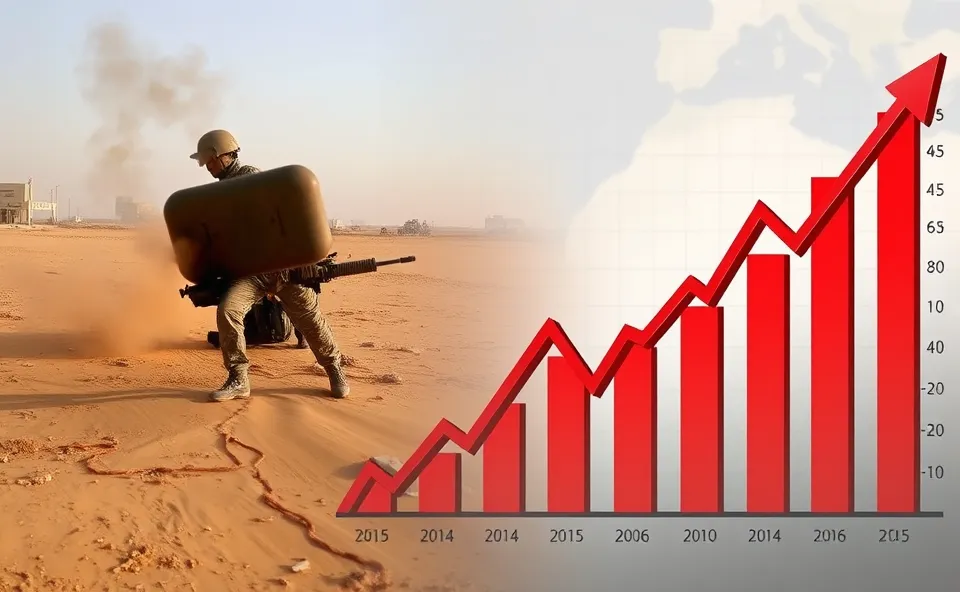
The world is watching closely as tensions simmer between the United States and Iran. It’s a situation that has many people worried, not just about the immediate geopolitical risk, but also about the potential ripple effect on our wallets. Let’s break down why this is a hot topic and what it could mean for the global economy.
Is a US-Iran Conflict Brewing?
Lately, there’s been a lot of talk about the possibility of a direct conflict between the US and Iran. It’s not a new story, but recent events and statements have put it back in the spotlight. Think of it as a tense standoff that could potentially escalate. While a full scale war isn’t a certainty, the rising geopolitical risk is undeniable. Many analysts believe a deal to ease tensions is unlikely in the current climate, making the situation even more precarious.
Why the Sudden Urgency?
You might be wondering why this is suddenly on everyone’s radar. Well, a few things have happened recently that have cranked up the anxiety. These could include specific incidents in sensitive regions, sharp words exchanged between leaders, or shifts in military posturing. When these kinds of developments occur, people naturally start to think about the worst case scenarios. And in today’s interconnected world, that often means considering the economic impact, especially concerning crucial resources like oil.
A Look Back: The Long Road to Here
To really get a grip on the current situation, it helps to understand a bit of the history. The relationship between the US and Iran has been complicated for decades. There have been periods of relative calm and periods of intense friction. Key moments include past conflicts, the imposition of strict Iran sanctions, and various attempts to negotiate agreements that ultimately didn’t stick. Understanding this long, often bumpy, road is crucial to grasping why current events are so significant and why reaching a lasting deal seems so difficult.
The Potential Shock to Your Wallet: Inflation on the Horizon?
This is where things get personal for many of us. The most immediate and widely discussed economic impact of a US-Iran conflict is its effect on oil prices. Iran is a significant oil producer, and any disruption to its exports, whether through conflict or tightened sanctions, could significantly reduce the global supply of oil. When supply goes down and demand stays the same or increases, prices inevitably go up. This doesn’t just mean higher gas prices at the pump, though that’s a big part of it. Think about it: almost everything we buy, from the clothes we wear to the food we eat, is transported. Higher oil prices mean higher transportation costs, which businesses often pass on to consumers in the form of increased prices. This is the core of inflation. We could be looking at a real inflation shock that affects the global economy. Furthermore, such a conflict could trigger widespread market volatility. Businesses relying on stable supply chains would face significant disruption, and uncertainty would breed caution across industries.
Here’s a breakdown of how this could play out:
- Oil Price Surge: Any escalation would likely send oil prices soaring as supply becomes uncertain.
- Rising Energy Costs: This directly impacts fuel for transportation and heating, increasing costs for households and businesses.
- Supply Chain Woes: Disruptions in the Middle East can have a domino effect on global shipping and trade routes, leading to shortages and higher prices for goods.
- Increased Inflation: The combination of higher energy and transportation costs fuels broader inflation, making everyday items more expensive.
- Market Jitters: Geopolitical risk often translates to investor nervousness, leading to stock market fluctuations and uncertainty.
What Comes Next?
Looking ahead, the situation remains fluid. The likelihood of a US-Iran conflict isn’t something that can be predicted with absolute certainty. However, the current trajectory suggests that tensions are likely to persist. A diplomatic solution seems unlikely in the immediate future, meaning the geopolitical risk will remain elevated. For markets, this means continued vigilance. Businesses will likely continue to assess their supply chain vulnerabilities and perhaps look for ways to diversify their sources away from regions prone to instability. Consumers should brace for potential price increases, particularly in energy and goods that rely heavily on global transportation. The focus will be on how governments and international bodies try to de-escalate the situation and how resilient the global economy proves to be in the face of such significant geopolitical risk.
Frequently Asked Questions
What is the main concern regarding a US-Iran War?
The primary concern surrounding a potential US-Iran War is the significant geopolitical risk it poses to global stability and the potential for a severe economic impact, particularly through oil price spikes and resulting inflation.
How could a US-Iran War affect oil prices and inflation?
A conflict would likely disrupt oil supplies from Iran, leading to a sharp increase in global oil prices. This, in turn, would drive up transportation costs and the prices of various goods, contributing to widespread inflation and impacting the global economy.
Is a deal to avoid conflict between the US and Iran likely?
Based on current political climates and past negotiations, many analysts believe a comprehensive deal to ease tensions and avoid conflict between the US and Iran is unlikely in the near future, increasing concerns about geopolitical risk.
What is the broader economic impact of Iran sanctions and potential conflict?
Beyond oil prices, Iran sanctions and the threat of conflict can cause significant supply chain disruption, lead to market volatility, and negatively affect the global economy by increasing uncertainty and hindering international trade.
How can individuals prepare for the economic impact of geopolitical risk like a US-Iran conflict?
Individuals can prepare by being mindful of potential inflation, reviewing personal budgets for increased costs especially in energy, and staying informed about global economic trends to make informed financial decisions, while understanding that a deal to reduce geopolitical risk is currently unlikely.











